

General Dentistry
Periodontal (Gum) Disease Treatment in Washington, DC
Periodontal disease is a common and treatable condition affecting the gums and the structures that support your teeth — and the earlier it is found, the simpler the treatment tends to be.

Google Rating
4.9 · 303 reviews
Availability
Same-day consults
Payments
Financing available
Definition
What Is Periodontal Disease?
Periodontal disease, commonly called gum disease, is inflammation and infection of the gums and the tissues that hold the teeth in place. It begins as gingivitis — early, plaque-driven gum inflammation that is generally reversible — and can progress to periodontitis, which affects the deeper supporting tissue and bone.
The underlying cause is the same at every stage: plaque, a bacterial film that forms constantly on the teeth, hardening into tartar that cannot be removed by brushing. The body responds with inflammation, and it is that sustained inflammation — not the bacteria alone — that damages gum tissue and bone over time.
How it is assessed
- Pocket depths measured around each tooth with a small probe
- Whether the gums bleed on gentle probing, and where
- Recession — how much root surface is exposed
- Bone levels seen on X-rays, which show what support remains
- Tooth mobility and any change in how the bite feels
These measurements are taken as part of a routine exam and X-rays, and they are what determines whether a standard cleaning is appropriate or whether the gums need treatment.
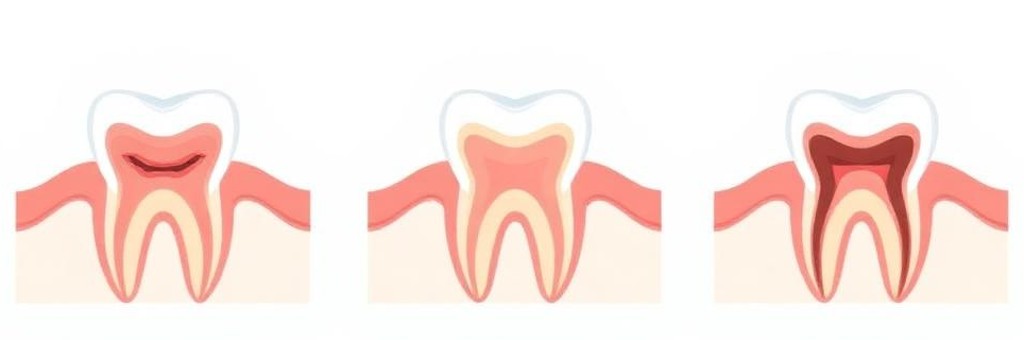
At a glance
Periodontal Disease
- Stages
- Gingivitis → Periodontitis
- Main cause
- Plaque buildup
- Reversible in early stage
- Yes — gingivitis
- Assessed at
- Every routine exam
or call (202) 363-2810
Symptoms
Signs and Symptoms of Gum Disease
None of these confirm gum disease on their own, and gum disease can also progress quietly. They are reasons to be evaluated rather than a checklist to diagnose yourself with.
Red, swollen, or bleeding gums
Gums that bleed when you brush or floss are the most common early sign. Bleeding is not normal, even if it has been happening for years.
Persistent bad breath
Breath odor or a bad taste that returns quickly after brushing can come from bacteria collecting below the gumline.
Gum recession
Gums pulling away from the teeth, so teeth look longer or the root surface becomes visible near the gumline.
Loose or shifting teeth
Teeth that feel mobile, or a bite that suddenly feels different, can reflect loss of the bone and tissue supporting them.
New spacing between teeth
Gaps opening where there were none, or teeth that appear to be drifting, are worth having assessed rather than watching.
Tenderness when chewing
Soreness or discomfort on biting, especially in one area, is a reason to be examined rather than to change how you chew.
If any of these are familiar, book an evaluation. Most cases seen early are handled with a cleaning and a change in home care — the treatment gets more involved the longer it waits.
Progression
How Periodontal Disease Progresses
Gingivitis — the early, reversible stage
Gingivitis is inflammation limited to the gum tissue. The gums may look red or puffy and bleed when brushed, but the bone and attachment holding the teeth are still intact. At this stage the condition is generally reversible: a professional cleaning to remove plaque and tartar, plus consistent brushing and flossing at home, is usually enough for the tissue to settle back to health.
Periodontitis — the deeper stage
When inflammation extends below the gumline, the attachment between gum and tooth breaks down and pockets form. Bacteria collect in those pockets where a toothbrush cannot reach, and over time the supporting bone is lost. That lost support does not regrow, and untreated periodontitis is a leading cause of tooth loss in adults. It can be stabilized — the aim of treatment is to stop further loss and keep the teeth you have.
Periodontal disease is common among adults, and it often progresses without pain, which is why gums are measured at routine visits rather than only when something feels wrong. The National Institute of Dental and Craniofacial Research overview of gum disease is a reliable place to read more.
| Gingivitis | Periodontitis |
|---|---|
| Affects the gum tissue only | Affects gum, connective tissue, and bone |
| Generally reversible | Manageable, but lost support does not return |
| Cleaning and better home care | Deep cleaning and ongoing maintenance |
| No tooth loss risk at this stage | A leading cause of adult tooth loss |
Whole-Body Health
The Connection to Overall Health
Gum health and general health are genuinely connected — worth understanding accurately rather than dramatically.
Periodontal disease is a chronic inflammatory condition, and research over several decades has established associations between it and broader health — most consistently with cardiovascular disease and with blood sugar control in people with diabetes. The relationship with diabetes appears to work in both directions: poorly controlled blood sugar makes gum disease harder to manage, and active gum disease can make blood sugar harder to control.
These are associations rather than proof that gum disease causes those conditions, and we will not tell you otherwise. What is fair to say is this: treating gum disease is worthwhile on its own terms, and if you are managing diabetes or heart disease, your physician and your dentist are working on related problems. Tell us about your medical history and medications so your care can account for it.
Treatment
Periodontal Disease Treatment Options
Treatment is matched to the stage of disease, starting with the least invasive option that will work. Most patients we see never need anything beyond the first two.
Professional Cleaning & Improved Home Care
Gingivitis
At the earliest stage, a professional cleaning to remove plaque and tartar, combined with better brushing and flossing at home, is often enough for the gums to recover. This is standard care at a routine hygiene visit.
Scaling and Root Planing
Early periodontitis
A deep cleaning below the gumline. Tartar and bacteria are removed from the root surfaces and the roots are smoothed so the gum tissue can reattach. It is usually done with local anesthetic and often split across two visits.
Periodontal Maintenance
Ongoing
After active treatment, gums are monitored on a shorter recall — commonly every three to four months — with pocket depths recorded each time so any relapse is caught while it is still small.
Laser-Assisted & Surgical Care
Advanced cases
Some cases need more than deep cleaning. Where that is true, we discuss what is appropriate for your case and coordinate care with a periodontist when surgical treatment is the right step, rather than delaying it.
Risk Factors
Are You at Risk for Gum Disease?
Risk factors raise the odds; they do not decide the outcome. Knowing yours changes how often you should be seen.
What raises your risk
- 1Smoking or any tobacco use — one of the strongest single factors
- 2Inconsistent brushing, flossing, or long gaps between cleanings
- 3Diabetes, particularly where blood sugar is not well controlled
- 4Medications that reduce saliva flow or cause gum overgrowth
- 5Family history, hormonal changes, and increasing age
What that means in practice
Having risk factors does not mean you will lose teeth. It means your gums deserve closer monitoring — often a shorter recall interval — so that changes are caught while they are still reversible or easily stabilized.
Gum health also matters for future treatment: active periodontal disease is treated and stabilized before dental implants can be planned, because implants depend on healthy gums and adequate bone.
Assessment and non-surgical treatment are handled in-house by Dr. Kambez Shukoor.
Dental Cleanings
Routine hygiene and deep cleaning — the first and most effective line of treatment for gum disease.
Dental CleaningsExams & X-Rays
Pocket measurements and images show how much bone support is present, which is what stages the disease.
Exams & X-RaysTobacco & Oral Health
Smoking is one of the strongest risk factors for gum disease and makes treatment less predictable.
Tobacco & Oral HealthInvestment
What Does Periodontal Treatment Cost in Washington, DC?
There is no single price, because treatment ranges from a routine cleaning to deep cleaning across several areas of the mouth. Here is what moves the number.
Stage of disease
- Gingivitis is usually addressed within a routine hygiene visit
- Periodontitis needs deep cleaning, priced by area treated
- Advanced cases may involve additional or specialist care
Treatment type needed
- Scaling and root planing is quoted by quadrant, not per mouth
- Ongoing periodontal maintenance visits are priced separately
- Any imaging or additional diagnostics is set out in advance
Your written quote
- You receive the fee in writing before treatment starts
- Benefits are verified first — periodontal care is often part-covered
- CareCredit and Cherry financing available where you want it
We verify your benefits before treatment and confirm your out-of-pocket amount in writing. Monthly payment options, including CareCredit and Cherry, are explained on our financial information page.
Why Choose
DC Implant & Cosmetic Dentistry
Dr. Kambez Shukoor is a U.S. Navy veteran dentist who stages gum disease before treating it, in one Connecticut Avenue office.
Staged Before Treated
Dr. Kambez Shukoor measures pocket depths and reviews bone levels before recommending anything, so the treatment matches the stage of disease rather than defaulting to a deep cleaning.
Experienced Clinician
FAGD, FICOI, and MICOI credentials across restorative and surgical dentistry, and a U.S. Navy background — with gum health assessed at every routine visit.
Findings You Can See
Images and measurements are shown to you and explained during your exam, so a recommendation is never something you simply have to take on trust.
Comfort-Focused Deep Cleaning
Scaling and root planing is done under local anesthetic, at a pace that suits you, and split across visits where that makes it easier to tolerate.
Referral When It's Warranted
Advanced cases that need periodontal surgery are referred promptly and coordinated with us, rather than being managed indefinitely with repeat cleanings.
Transparent Costs
Written treatment plans, benefits verified in advance, and financing through CareCredit and Cherry explained on our financial information page.
FAQ
Gum Disease Questions
The questions Washington, DC patients ask most often about periodontal disease and its treatment.
Related
Related Services
Gum health sits underneath almost everything else in dentistry. These pages cover the care around it.
Dental Cleanings
Routine hygiene, deep cleaning, and periodontal maintenance visits.
Dental CleaningsExams & X-Rays
The exam that measures gum pockets and checks the bone supporting your teeth.
Exams & X-RaysOral Hygiene
The daily brushing and flossing routine that keeps gum disease from returning.
Oral HygieneDental Implants
Healthy gums and adequate bone are prerequisites for implant treatment.
Dental ImplantsBleeding gums? Get them looked at.
Gum disease is easiest to treat at the stage where it barely bothers you. Book an evaluation at our Connecticut Avenue office and we will measure where your gums actually stand.
4444 Connecticut Ave NW #106, Washington, DC 20008