
General Dentistry
Dentures in Washington, DC
Custom full and partial dentures that replace missing teeth with a removable, natural-looking prosthetic — impressed, tried in, fitted, and adjusted by Dr. Kambez Shukoor in our Connecticut Avenue office.

Google Rating
4.9 · 303 reviews
Availability
Same-day consults
Payments
Financing available
Definition
What Are Dentures?
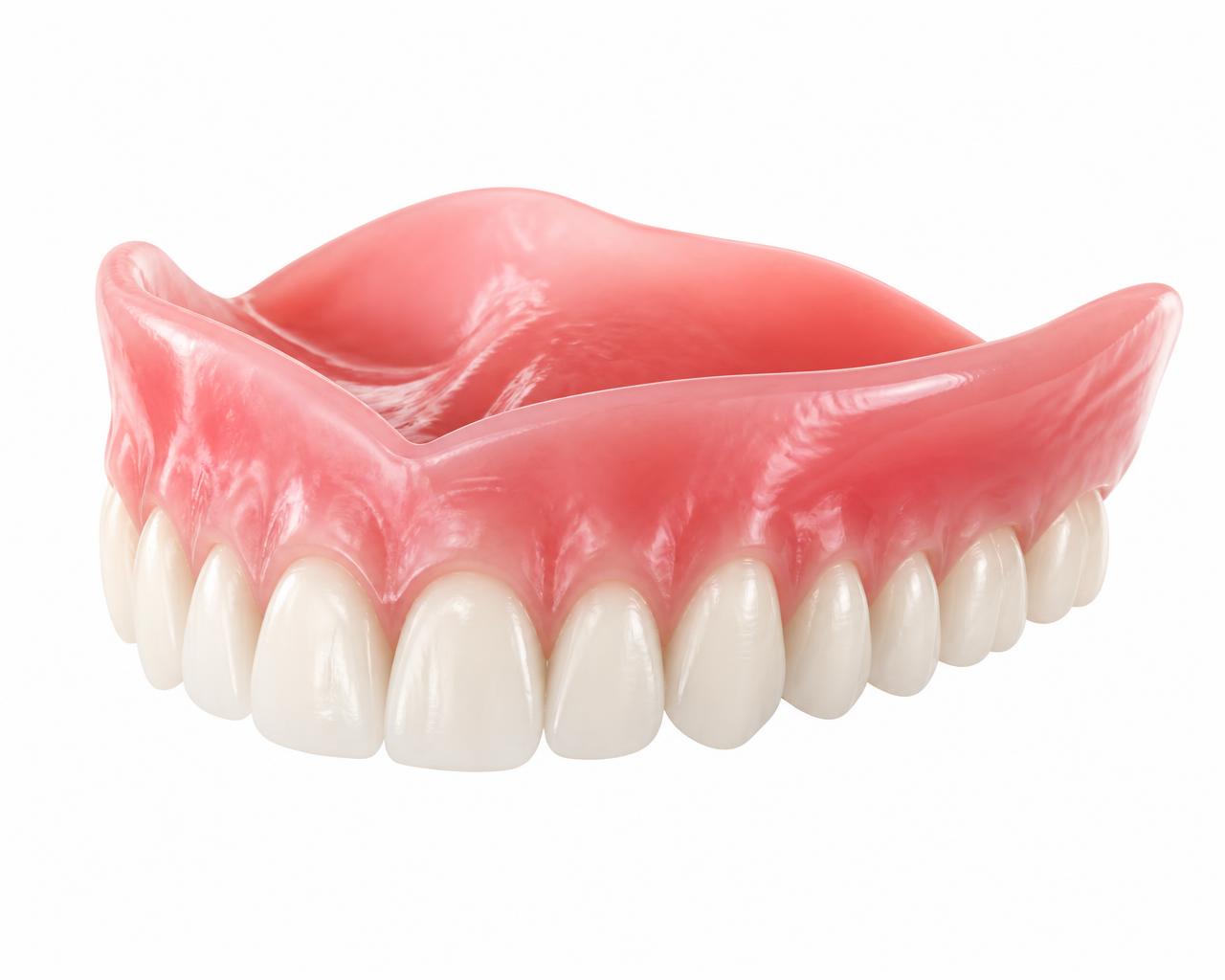
Dentures are removable prosthetics that replace missing teeth and the gum tissue around them. A full denture replaces every tooth in an arch and rests on the gum ridge; a partial denture replaces only some teeth and is held in place by clasps or attachments on the natural teeth that remain.
This page covers conventional dentures — the removable kind that sits on the gums and comes out for cleaning. Dentures can also be anchored onto implants so they snap firmly into place, which is a different treatment with its own surgery and cost; if that is what you are after, the fixed full-arch options on our dental implants hub are the place to start. The ADA's patient guide to dentures covers the same ground from a neutral source.
The two main types
- Full dentures — replace all teeth in the upper arch, the lower arch, or both
- Partial dentures — fill in around remaining natural teeth, clasped to them for retention
- Immediate dentures — placed the same day teeth are extracted, then relined as healing finishes
- Both types are removed daily for cleaning and usually left out overnight
- Both need periodic adjustment as the ridge underneath changes shape
If only one or two teeth are missing and you need something quickly, a dental flipper is often the simpler interim answer.
At a glance
Dentures
- Treatment time
- About 4–8 weeks start to finish
- Number of visits
- Typically 4–5, including adjustments
- Anesthesia
- None — the denture itself is non-surgical
- Adjustment period
- 2–4 weeks to adapt; longer to feel routine
- Removable
- Yes — out for cleaning and usually overnight
or call (202) 363-2810
Compare
Full Dentures vs. Partial Dentures
Which one applies is decided by what is still in your mouth: a full denture takes over an entire arch, while a partial works around the natural teeth you still have and borrows retention from them.
Full Dentures
Replace every tooth in an arch with a removable prosthetic that rests directly on the gum ridge.
- Restores a complete arch of teeth in one prosthetic
- Non-surgical and the fastest route back to a full smile
- Upper dentures hold well by suction across the palate
- Held only by fit and suction — lower dentures can feel less stable
- Covers the palate on upper dentures, which affects taste and feel at first
- Needs relining as the ridge changes shape over the years
Partial Dentures
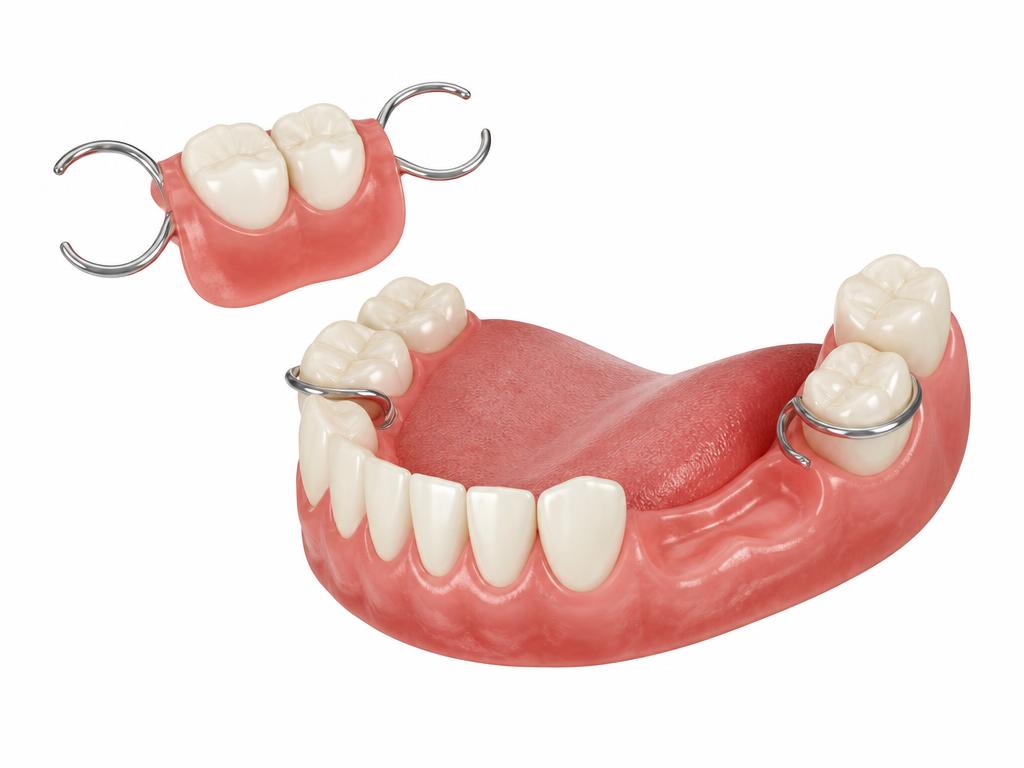
Replace some missing teeth while your remaining natural teeth stay in place, clasped or attached to them.
- Keeps your remaining healthy natural teeth in service
- Clasps or precision attachments add real retention
- Stops remaining teeth drifting into the empty spaces
- Smaller and usually easier to adapt to than a full denture
- Clasps can be visible depending on where the gaps are
- Depends on the health of the teeth it clasps onto
The short version: if every tooth in the arch is gone or failing, it is a full denture. If you still have sound teeth worth keeping, a partial preserves them and is usually easier to adapt to.
Compare
Dentures vs. Dental Implants
This is the comparison most patients are really weighing. Both replace an arch of missing teeth; they differ in whether the teeth rest on your gums or are anchored into the bone — and that decides cost, comfort, chewing, and what happens to your jaw over time.
Dentures
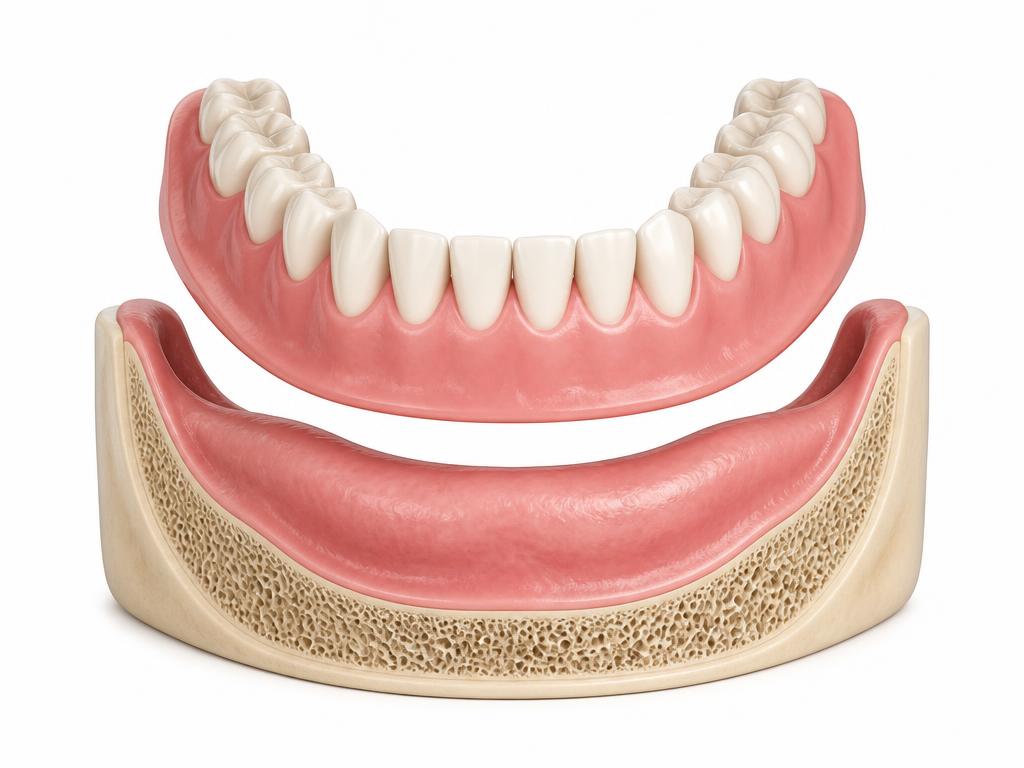
A removable prosthetic resting on the gums — no surgery, no healing period, and the shortest path to replacing a full arch.
- No surgery and no osseointegration wait
- Lowest up-front cost of the full-arch options
- Suitable when bone volume or health rules out surgery
- Removable — taken out for cleaning and usually overnight
- Does not stimulate the jawbone, so the ridge keeps resorbing
- Chewing force is a fraction of natural teeth; some foods stay difficult
Dental Implants
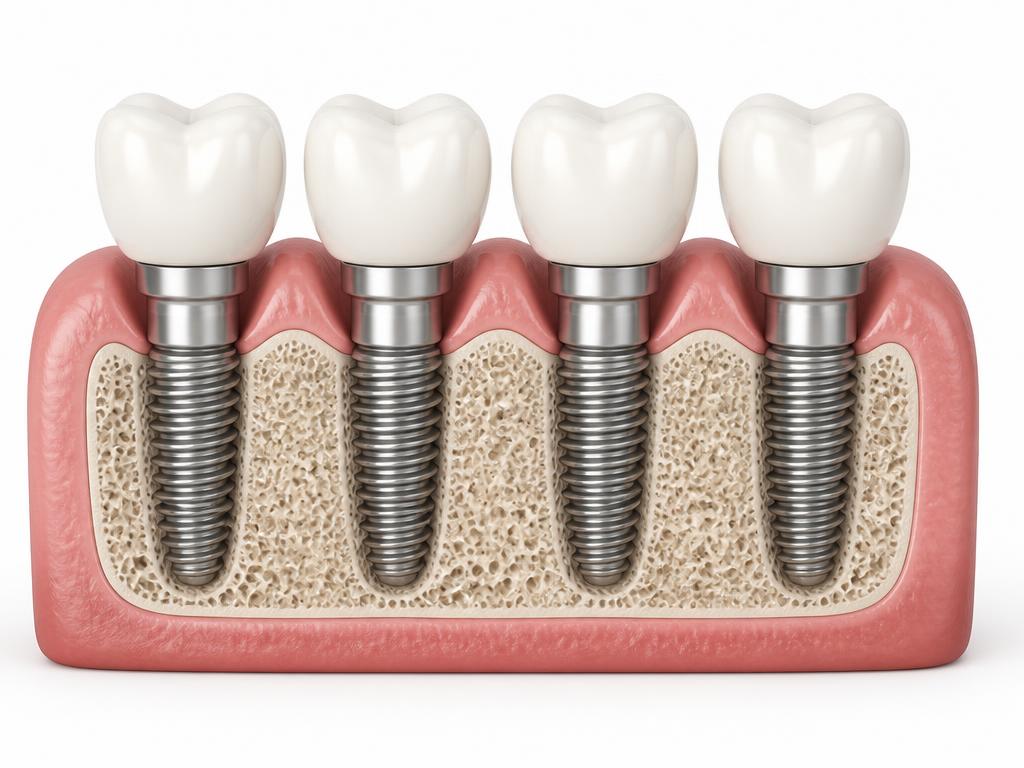
Teeth anchored into the jawbone — see our dental implants hub for the full range of options.
- Fixed in place — nothing to remove, nothing to slip
- Stimulates the jawbone and slows ridge resorption
- Chewing function much closer to natural teeth
- Cleaned in the mouth, like teeth, rather than taken out
- Requires surgery and a multi-month integration period
- Higher up-front investment, and grafting may be needed first
A denture-comparing visitor is rarely choosing between one denture and one implant — the real choice runs from a single implant to a fixed full arch. Our implant and surgical hub lays those options out side by side.
The Process
The Denture Process
Roughly four to eight weeks across several short visits, with a try-in stage so nothing is finalized until you have seen and approved how the denture will look.
Consultation & Impressions
Visit 1
We examine your gums, ridge shape, and any remaining teeth, discuss full versus partial, and take impressions or a digital scan of the arch. Any extractions or gum treatment needed first are planned at this stage.
Try-In
Visit 2
A wax or trial denture is placed so you can see the tooth position, shade, and lip support before anything is finalized. This is the point to say what you want changed — it is far easier now than after processing.
Final Denture Fabrication
About 2–3 weeks
Once you approve the try-in, the lab processes the final denture in acrylic to the approved setup, matching the shade and contours agreed at the try-in appointment.
Fitting & Adjustment
Delivery visit
The finished denture is seated, and we check retention, bite, and any pressure points, adjusting the fit surface until it sits comfortably. You leave with care instructions and a realistic picture of the first two weeks.
Follow-Up Adjustments
First weeks and beyond
Almost every new denture needs a few small adjustments as the gums settle and sore spots reveal themselves. These visits are part of the process, not a sign that something went wrong.
Candidacy
Are You a Candidate for Dentures?
Almost anyone missing most or all of an arch can wear a denture. The more useful question is whether a denture is the best answer for your case, or a stepping stone toward something fixed.
What makes a good denture candidate
- 1Most or all teeth missing or failing in an arch
- 2Not a candidate for implant surgery, medically or because of bone volume
- 3A preference for avoiding surgery and a months-long healing period
- 4Cost or timeline considerations that rule out a fixed solution now
- 5Healthy gum tissue, with any active gum disease treated first
When implants fit better
If what you want is teeth that never come out, that you clean in your mouth rather than over a sink, and that chew close to natural, a fixed solution from our implant and surgical range is the honest recommendation — All-on-4 and All-on-6 are the usual full-arch routes.
Bone preservation is the other consideration: a denture rests on the ridge and does not stimulate it, so the bone keeps shrinking. Full mouth implants hold that bone where implants are placed. A denture now does not close the door — many patients start here and move to implants later.
Every option above is planned and delivered in-house by Dr. Kambez Shukoor.
Dental Implants
The fixed alternative — our implant hub walks through every option from a single tooth to a full arch.
Dental ImplantsDental Flippers
A lightweight temporary partial that fills a gap while a longer-term plan is being made.
Dental FlippersBone Grafting
If a resorbed ridge is what stands between you and implants, grafting can rebuild the site.
Bone GraftingAdapting
Adjusting to Your Dentures
A new denture is not something you simply put in and forget. It takes weeks of practice, and the first two are the hardest. Knowing that in advance is the difference between a patient who adapts and one who gives up in week one.
Fit and soreness
- Sore spots are common in the first weeks and are fixed with a quick chairside adjustment
- Some looseness, especially on a lower denture, is normal while the muscles learn to hold it
- Extra saliva for the first several days is a normal reaction and settles down
- Wear the denture through the day early on — the mouth adapts faster with use
- Never adjust or file a denture yourself; call us and we will relieve the pressure point
Speech
Certain sounds — s, f, and th especially — can feel awkward at first because the tongue is working against a new shape. Reading aloud for ten minutes a day is the fastest fix, and most patients sound normal again within two to three weeks. If a specific sound is still wrong after that, it is usually a fit issue we can adjust.
Eating
Chewing with a denture is a learned skill, not an automatic one. Start with soft foods cut into small pieces, chew evenly on both sides at once so the denture does not tip, and add tougher textures back gradually over several weeks. Sticky and very hard foods stay awkward long term — that is an honest limitation of a removable prosthetic, and one of the main reasons some patients move to implants later.
| Timeframe | What to expect |
|---|---|
| Days 1–3 | Extra saliva, bulky feeling, soft foods only |
| Week 1 | Sore spots appear; first adjustment visit relieves them |
| Weeks 2–4 | Speech normalizes with practice; diet widens gradually |
| Months 2–3 | The denture starts to feel routine rather than foreign |
| Ongoing | Annual check-ups; reline every few years as the ridge changes |
Aftercare
Recovery & Care
Daily cleaning
- Rinse after meals to clear trapped food
- Brush daily with a soft denture brush and non-abrasive denture cleanser
- Clean over a folded towel or water-filled basin so a drop does not crack it
- Brush your gums, tongue, and palate too, before reinserting
Overnight storage
- Leave the denture out overnight to give the gum tissue a rest
- Store in water or a soaking solution so the acrylic does not dry out
- Never soak in hot water — heat warps the base and ruins the fit
- Rinse a soaked denture thoroughly before putting it back in
Check-ups, relines & remakes
- Jawbone and gum shape change continuously under a denture
- Annual check-ups catch a loosening fit before sore spots start
- A reline restores fit to the tissue surface every few years
- Most dentures need replacing after roughly five to ten years
Investment
What Do Dentures Cost in Washington, DC?
We do not publish a single price, because a denture is quoted by what it replaces and by the quality tier you choose. Here is exactly what moves the number.
Full or partial
- A full denture replaces an entire arch; a partial only fills the gaps
- Partials with cast metal frameworks are priced differently from acrylic
- Upper and lower arches are quoted separately
Material and quality tier
- Denture teeth range from standard acrylic to premium multi-layer sets
- Higher tiers hold shape and shade longer and look more natural
- Reinforced bases resist fracture better in heavy bites
Visits and preparatory work
- Extractions or gum treatment needed before impressions add to the plan
- An immediate denture worn during healing is a separate appliance
- The number of adjustment and reline visits included is set out in writing
Insurance frequently contributes toward dentures as a major restorative service. We verify your benefits in advance and offer CareCredit and Cherry financing — see our financial information page.
Why Choose
DC Implant & Cosmetic Dentistry
Dr. Kambez Shukoor plans, fits, and adjusts removable work himself, in one Connecticut Avenue office.
Fitted & Adjusted In One Office
Dr. Kambez Shukoor takes the impressions, approves the try-in with you, and handles every adjustment himself in our Washington, DC office — no referral out mid-treatment.
Restorative & Implant Training
FAGD, FICOI, and MICOI credentials, with continuing education across removable prosthetics and the implant options that can support them later.
Digital Scanning & Imaging
Imaging shows how much ridge you have to work with, and digital records make future relines and remakes far more accurate.
Comfort-First Care
Dentures themselves are non-surgical, and when extractions are needed first, sedation options are available for patients who find treatment stressful.
Honest Case Planning
Dentures are the right answer in plenty of cases, and dental implants are in plenty of others. You get both sides of that comparison for your own mouth, including the trade-offs nobody enjoys hearing.
Transparent Costs
Itemized written treatment plans, insurance coordination, and CareCredit and Cherry financing explained on our financial information page.
FAQ
Denture Questions
The questions Washington, DC patients ask most often when considering dentures or comparing them with implants.
Related
Tooth Replacement Options
Dentures are one of several ways to replace missing teeth. These are the pages most often read alongside this one.
Full-Arch Implant Solutions
A removable denture that snaps onto two to four implants for far more stability than gum support alone.
Full-Arch Implant SolutionsDental Flippers
A temporary removable partial for one or a few teeth while a permanent plan is decided.
Dental FlippersDental Implants
The implant and surgical hub — every fixed option for replacing missing teeth.
Dental ImplantsDental Bridges
A fixed option when only a few teeth are missing and healthy teeth remain on either side.
Dental BridgesDentures or implants — let's work out which suits your mouth and your budget.
One consultation answers it: what shape your ridge is in, whether a full or partial denture applies, what implants would involve if you want them, and what each option costs. Book online or call the office.
4444 Connecticut Ave NW #106, Washington, DC 20008