
Implants & Oral Surgery
Multiple Teeth Dental Implants in Washington, DC
Replace two or more missing teeth with individual implants or an implant-supported bridge — planned, placed, and restored by Dr. Kambez Shukoor in our Connecticut Avenue office.

Google Rating
4.9 · 303 reviews
Availability
Same-day consults
Payments
Financing available
Definition
What Are Multiple Teeth Dental Implants?
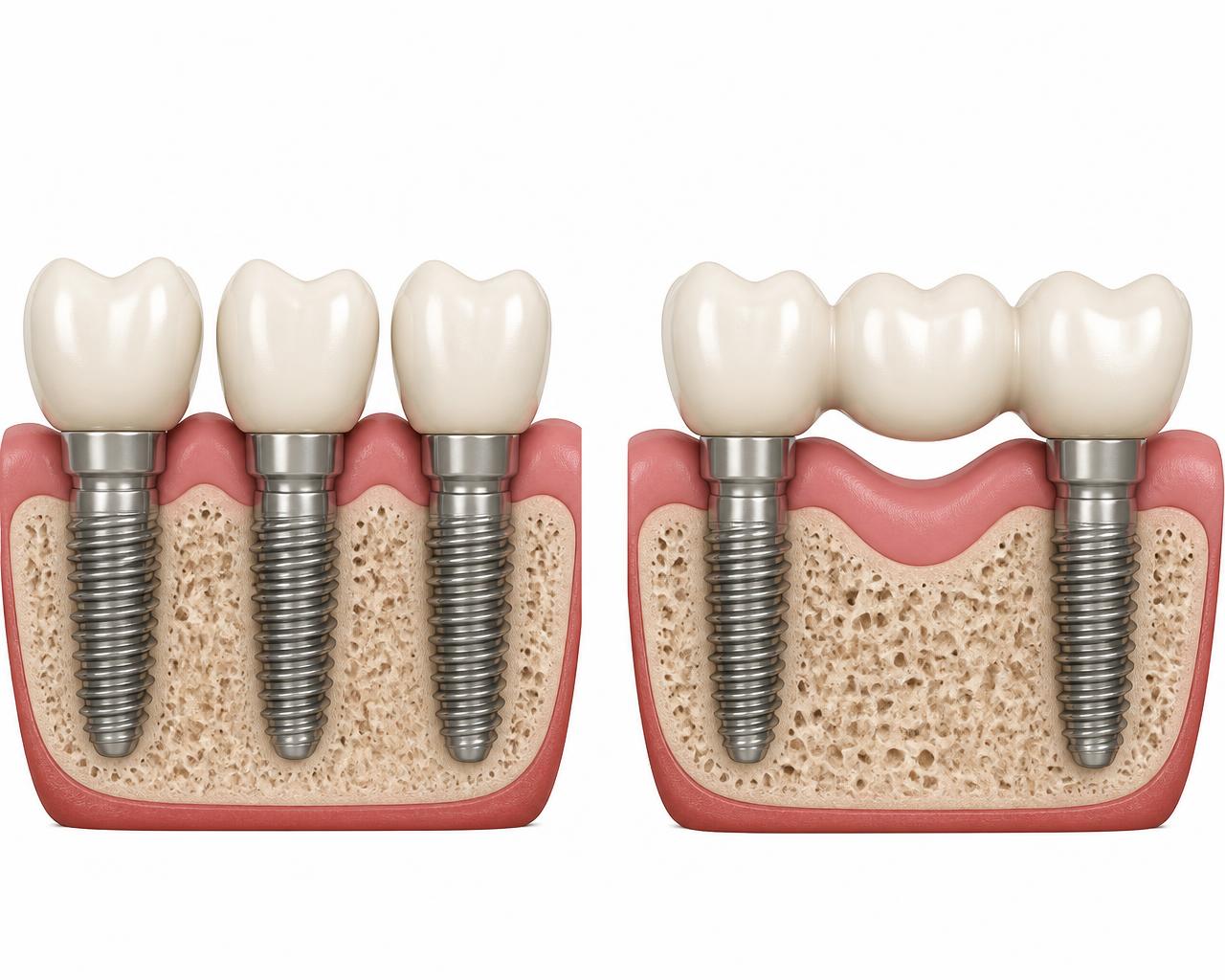
Multiple tooth implants replace two or more missing teeth in the same arch using titanium posts set into the jawbone. There are two ways to do it: an individual implant and crown for each missing tooth, or two implants anchoring a fixed bridge across a span of three or more.
Both approaches are fixed — nothing is taken out at night — and both rely on osseointegration, the fusing of the implant to bone. If only one tooth is missing, our single tooth implant page covers that case instead.
The two configurations
- Individual implants: one implant and one crown per missing tooth, each independent
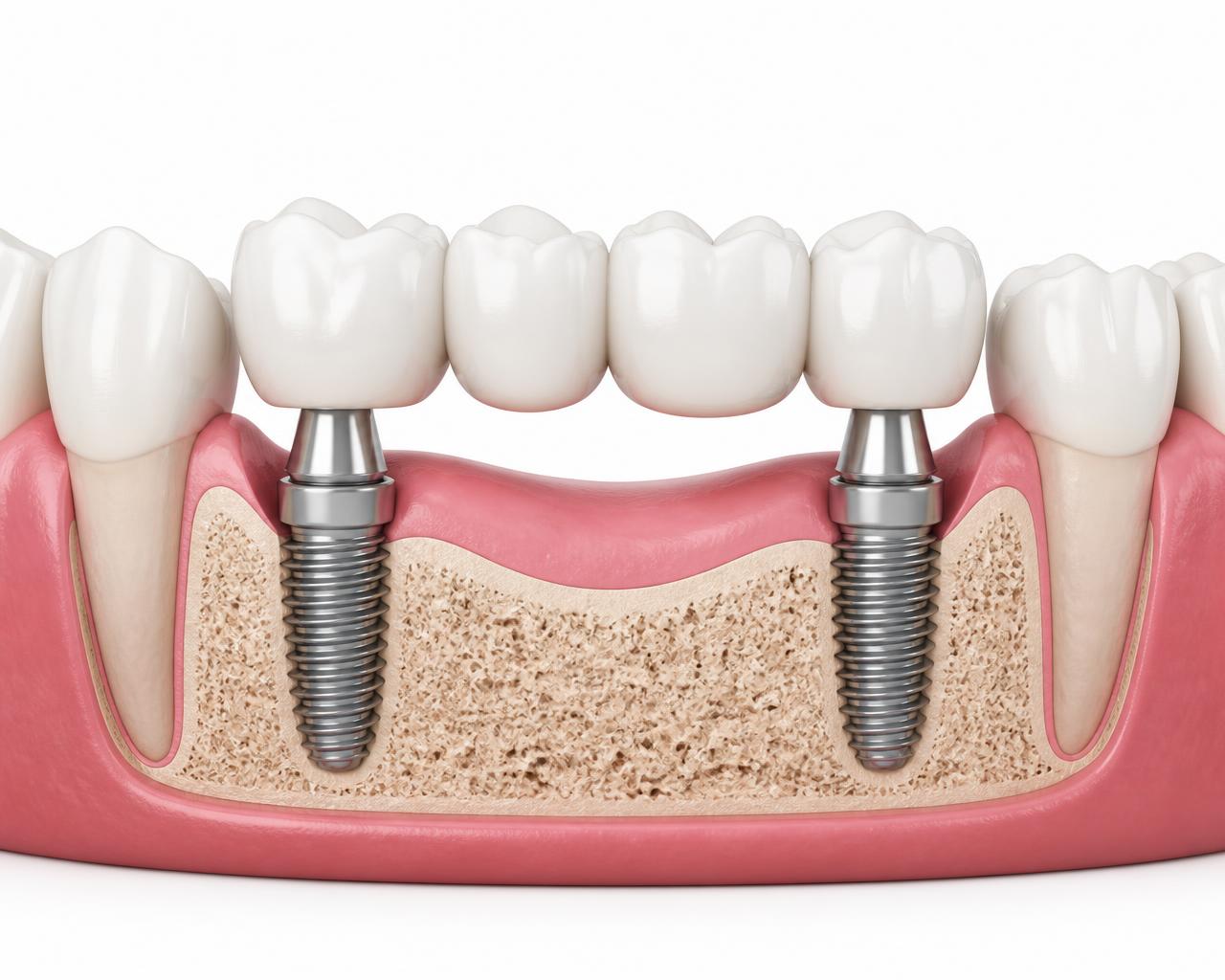
- Implant bridge: two implants carry a bridge over three or more missing teeth in a row
- Neighbouring natural teeth are never shaved down to hold anything, unlike a traditional bridge
- Chewing force travels into bone at each implant site instead of pressing on the gum
At a glance
Multiple Teeth Dental Implants
- Treatment time
- 3–6 months, start to finish
- Surgery length
- About 1–2.5 hours, by site count
- Anesthesia
- Local, with sedation available
- Longevity
- Decades with routine care
- Approach options
- Individual implants or implant bridge
or call (202) 363-2810
Compare
Implants vs. Bridge
Both are fixed and implant-supported. The difference is how many implants go in, what happens to the bone between them, and what it takes to fix one tooth later.
Individual Implants
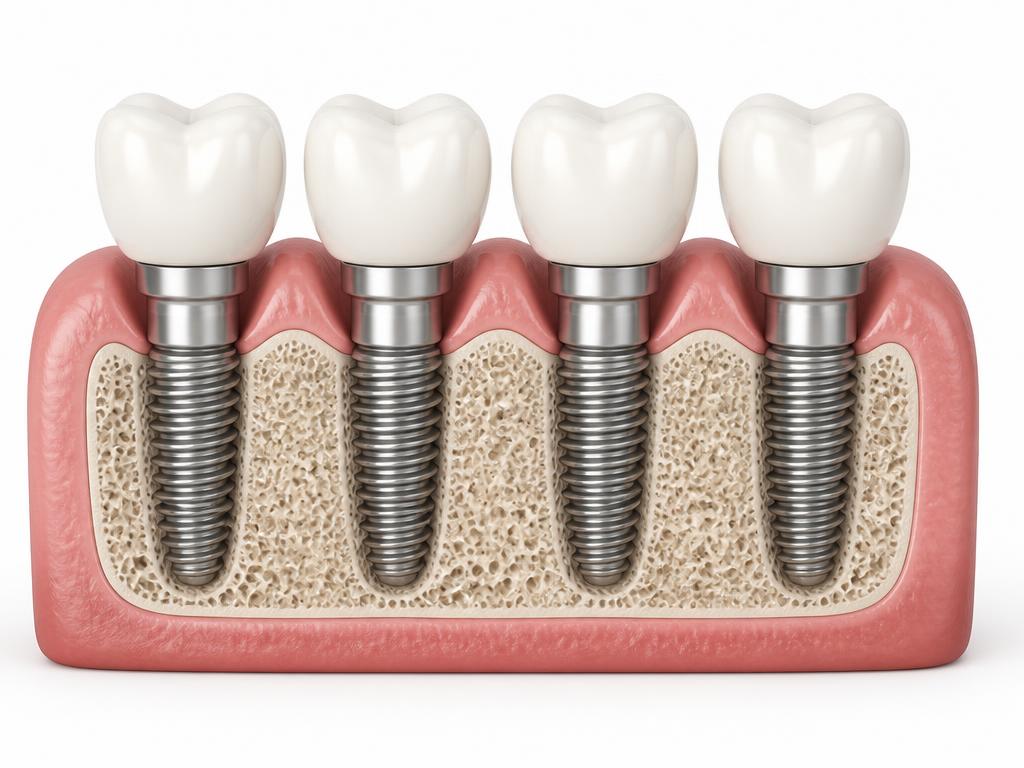
One implant and one crown for each missing tooth, so every replacement stands on its own root.
- Bone is stimulated at every site, not just at the ends of a span
- Each tooth is independently cleanable, repairable, and replaceable
- A problem with one crown never affects the neighbouring teeth
- Flossing works tooth by tooth, like natural dentition
- Higher total cost — one implant per missing tooth
- More surgical sites, so slightly more healing overall
Implant-Supported Bridge
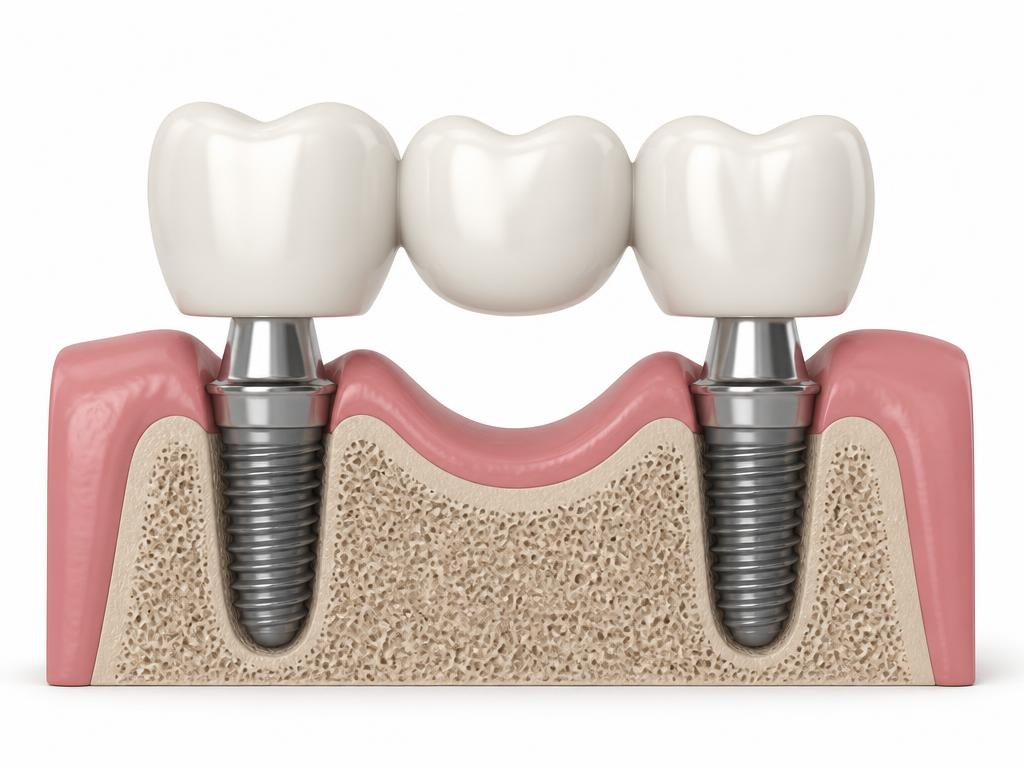
Two implants anchor a fixed implant bridge that spans three or more missing teeth in a row, with no implant under the middle tooth.
- Lower total cost — fewer implants for the same number of teeth
- Fixed in place and never removed, like individual crowns
- Fewer surgical sites and a simpler surgical day
- Bone is only stimulated at the two anchor sites
- If one anchor implant fails, the whole span is affected
- Cleaning under the pontic needs a threader or water flosser
Neither option is universally better. Where bone allows and budget permits, individual implants give the most long-term flexibility; where three or more teeth sit in a row, an implant bridge often gives the same fixed result for less. Both plans are priced at the consultation.
Approach 1
Individual Implants for Each Missing Tooth
One implant, one abutment, one crown — repeated at each gap. This is the default plan when the gaps are scattered, and the preferred plan for adjacent gaps whenever bone and budget allow.
How the teeth are supported
- Each implant is placed into sound bone directly beneath the missing tooth
- Each implant fuses to bone over three to six months on its own timeline
- Every crown is screwed or cemented to its own implant — no shared support
- Bone is loaded and preserved at every replaced site, not just at the ends
- You floss straight down between the crowns, exactly like natural teeth
When this is the right choice
Separated gaps — a missing premolar on one side and a molar on the other — cannot be bridged, so individual implants are the only fixed option. Adjacent gaps can be done either way, and individual implants are the more flexible answer: a single crown can be remade years later without disturbing anything else, and a problem at one site never takes the neighbouring teeth with it.
The trade-off is cost and surgical sites. Replacing three teeth this way means three implants and three crowns rather than two implants and one bridge.
Approach 2
Implant-Supported Bridges for Several Teeth in a Row
Two implants at either end of the gap carry a fixed bridge over three or more missing teeth, with no implant beneath the middle tooth.
An implant bridge is not the same restoration as a traditional bridge. A traditional bridge borrows support from the natural teeth beside the gap, which have to be shaped down and crowned to hold it — our dental bridges page covers that tooth-anchored version. Here the support comes from titanium implants in the bone, and the healthy teeth you still have are never touched.
How the span is supported
- One implant is placed at each end of the gap, into sound bone
- The implants fuse with the bone over three to six months
- A single bridge is built to attach to those two implants
- The teeth in the middle of the span are suspended above the gum, not rooted
- Your remaining natural teeth carry none of the load and are left as they are
- Longer spans or heavy bite forces sometimes call for a third implant mid-span
Cleaning beneath the span
You cannot floss straight down between bridged units, so the underside of the span is cleaned sideways with a floss threader, superfloss, or an interdental brush — a water flosser makes it quick. Daily cleaning under the span is the single biggest factor in how long the bridge lasts.
If one anchor implant has a problem
Because the span depends on both anchors, a failing implant means the bridge comes off while the site is treated. Depending on the cause, the implant can be replaced after healing — sometimes with grafting first — and a new bridge fitted. This shared dependency is the main trade-off against individual implants, which fail one at a time.
Bridge materials
- Monolithic zirconia
- Milled from one high-strength ceramic block, with no weak joint between units. Our usual recommendation for implant spans, because an implant has no ligament to cushion chewing force. Best for back-tooth spans, heavier bites, and grinders.
- E.max lithium disilicate
- Transmits light much the way enamel does, so it is the most lifelike beside natural teeth. Reserved for short front spans where esthetic demand is highest and load is lower; span length is limited compared with zirconia.
- Porcelain-fused-to-metal
- The longest clinical record in bridgework and still sensible on longer spans, though the metal core limits translucency and can show as a thin dark line if the gum recedes over many years.
The Process
The Multiple Teeth Implant Process
Extractions, implant placement, and the final crowns or bridge are all handled in our Washington, DC office. You know the number of visits and the wait between them before you start.
Consultation & 3D Imaging
Visit 1
A cone-beam scan measures bone at each gap and maps nerve and sinus position, so we can settle on individual implants or a bridge before treatment day.
Extractions & Placement
Surgery day
Any failing teeth are removed and the planned implants are placed — one per gap, or two anchors for a bridged span — usually in a single appointment.
Healing & Osseointegration
3–6 months
The implants fuse to bone. Temporary teeth keep the space and your appearance while the sites integrate.
Crown or Bridge Fabrication
Lab stage
Digital scans of the healed sites are sent to the lab, where individual crowns or a single bridge are milled and shade-matched to your teeth.
Final Restoration
Final visit
The restorations are seated on the implants, the bite is adjusted, and contacts are checked so floss or a threader passes cleanly.
Candidacy
Are You a Candidate for Multiple Teeth Implants?
Most adults missing two to four teeth are candidates. The deciding factors are bone at each individual site, gum health, and how the gaps are spaced.
What we check first
- 1Bone volume at each separate implant site on a 3D cone-beam scan
- 2Gum health and any active periodontal disease
- 3Spacing between the gaps and whether they sit in a row
- 4Bite forces, grinding habits, and the opposing teeth
- 5Medical history, including diabetes control and smoking
If bone volume is short at a site
A gap that has been empty for years loses width and height, and each site is measured separately — one gap may be ready while the one beside it is not. Where a middle site is thin, bridging over it with two anchor implants is sometimes the cleaner answer than grafting.
Where grafting or a sinus lift is genuinely needed, it rebuilds the site and adds three to six months before placement.
Both preparatory procedures below are performed in-house by Dr. Kambez Shukoor.
Options
Restoration Options
The implants are titanium in every case. What sits on them is the real decision — separate crowns, one bridge, or a combination across different parts of the arch.
Individual Crowns
One implant, one crown, one tooth
Each missing tooth gets its own implant and its own crown. This is the default when the gaps are separated by natural teeth, and it is usually preferred even for adjacent gaps when bone volume and budget allow.
Best for
Non-adjacent gaps, and adjacent gaps where each site has good bone.
- Bone is preserved at every replaced site
- One crown can be remade without touching the others
- Cleaned exactly like natural teeth
Material detail for the visible teeth lives on our dental crowns page, and span design in the implant bridge section above.
Recovery
Recovery After Multiple Teeth Implants
Recovery scales with the number of sites
There is no single fixed timeline here. Two implants in one quadrant settle faster and with less swelling than four implants spread across an arch, and grafted sites take longer than untouched ones. Your written post-op plan reflects the sites actually treated.
The first 72 hours
- Ice the treated side in 20-minute intervals through the first day
- Soft foods only, chewed away from the surgical sites
- Take prescribed medication on schedule rather than waiting for pain
- No smoking and no straws — both disturb the implant sites
- Gentle warm salt-water rinses starting the day after surgery
The osseointegration period
- Chew on the untreated side while the implants fuse
- Temporary teeth keep the space and your appearance in the interim
- Short follow-up visits confirm each site is integrating as planned
- Sites that were grafted are given extra healing time before restoration
Long-term maintenance
- Brush twice daily; floss between individual crowns as you would natural teeth
- Use a threader or water flosser beneath a bridge pontic every day
- Keep six-month professional cleanings so the tissue around each implant is checked
- Wear a nightguard if you grind, to protect the restorations
Anxious patients can have the surgery done with sedation available alongside local anesthetic.
| Timeframe | What to expect |
|---|---|
| Day 1–3 | Swelling and soreness peak; ice, soft food, prescribed medication |
| Week 1 | Swelling resolves; more sites generally means a slower first week |
| Weeks 2–4 | Sutures settle; normal routine resumes; chew away from the sites |
| Months 2–6 | Osseointegration at each site; grafted sites take the longer end |
| Restoration visits | Digital scan, then seating of the crowns or bridge |
| Ongoing | Home care plus six-month cleanings and implant checks |
Investment
What Does Multiple Teeth Implant Treatment Cost in Washington, DC?
We do not publish a single price, because replacing two teeth and replacing four are not the same case. Here is exactly what moves the number.
Teeth being replaced
- Every additional missing tooth adds a restoration to the plan
- Two gaps in one quadrant cost less than four spread across the arch
- Extractions, where needed, carry their own surgical fee
Implants or bridge
- One implant per tooth costs more than two implants and a bridge
- Individual implants buy long-term flexibility for that difference
- A bridge needs the missing teeth to sit in a row
Bone grafting
- A long-empty gap often needs the ridge rebuilt before placement
- Grafting adds both a surgical fee and healing time
- Only the sites that need it are grafted, not the whole arch
At your consultation you receive an itemized written quote covering surgery, any preparatory work, and the final restorations — no surprise line items later. We verify your insurance benefits and explain monthly payment options on our financial information page, including CareCredit and Cherry financing.
Why Choose
DC Implant & Cosmetic Dentistry
Dr. Kambez Shukoor is a U.S. Navy veteran dentist with fellowship-level implant training who handles the surgery and the final prosthesis himself.
Surgery & Crown in One Office
Dr. Shukoor places the implant and restores it himself, so there's no hand-off between a surgeon and a separate restorative dentist.
Implant-Focused Credentials
FAGD, FICOI, and MICOI credentials backed by continuing education specific to implant surgery and prosthetics.
Guided 3D Planning
Cone-beam imaging and digital scanning position every implant before the day of surgery, not during.
Comfort-First Care
Local anesthetic, sedation options, and a slow, explained pace for patients who are anxious about oral surgery.
Honest Case Planning
If a bridge or a different treatment is the better long-term fit for a case, that's what gets recommended.
Transparent Costs
Written treatment plans with itemized fees, insurance coordination, and third-party financing through CareCredit and Cherry.
FAQ
Multiple Teeth Questions
The questions Washington, DC patients ask most often when replacing more than one missing tooth.
Related
Implant Services
One gap, a full arch, or an implant placed somewhere else? These pages cover the rest of our implant care.
Single Tooth Implants
One implant and one crown for a single gap, without touching the neighbouring teeth.
Single Tooth ImplantsTraditional Dental Bridges
A tooth-supported bridge when implants are not the right fit for the span.
Traditional Dental BridgesFull-Arch Implant Solutions
A fixed full arch on four implants when most or all of the teeth in an arch are gone.
Full-Arch Implant Solutions