
Implants & Oral Surgery
Dental Implant Repair in Washington, DC
Loose, painful, chipped, or failing implant? Dr. Kambez Shukoor diagnoses and repairs existing implants — including implants placed by another dentist — with imaging, diagnosis, and repair handled in our Connecticut Avenue office.

Google Rating
4.9 · 303 reviews
Availability
Same-day consults
Payments
Financing available
Diagnosis
When Repair Is Needed
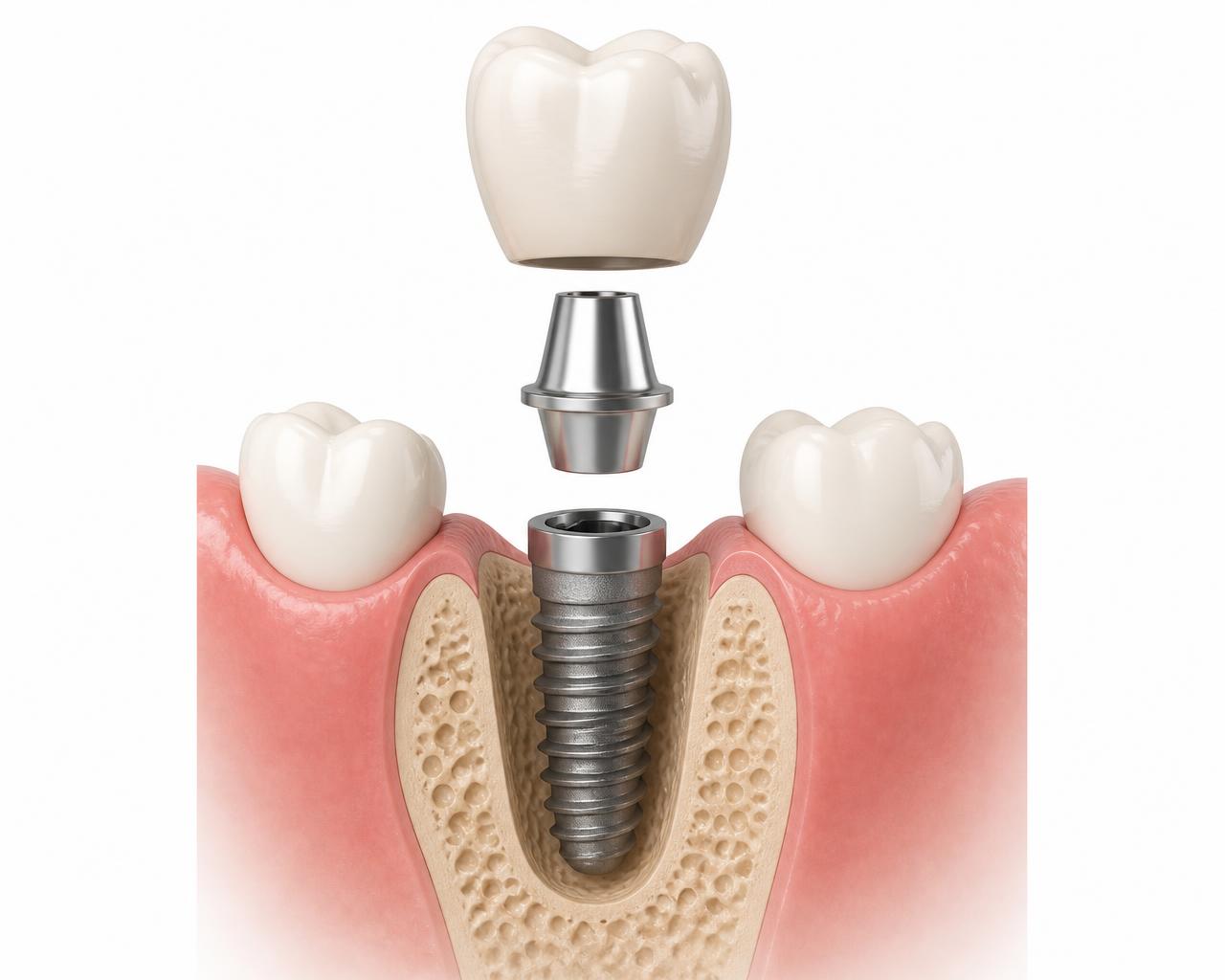
A dental implant that feels loose or hurts is almost always failing at one of three points: the crown on top, the abutment connecting it, or the implant's own bond with the bone. Which one it is decides whether the fix is a short appointment or a full replacement — and only an exam with 3D imaging can tell them apart.
Implant repair covers a loose implant, a chipped or cracked crown, a loose or broken abutment, inflamed tissue around the implant (peri-implantitis), a failed integration, and bite problems that appear after placement. Most of these are fixable, and most do not mean losing the implant.
What we can tell you at the first visit
- Whether the implant itself is stable or genuinely mobile
- Whether the bone level around the implant has changed
- Whether the problem is the crown, the abutment, or the implant
- Whether the tissue is infected and how far it has progressed
- What the repair involves, how long it takes, and what it costs
At a glance
Implant Repair
- Diagnosis visit
- About 45–60 minutes, including imaging
- Repair timeline
- One visit to several months, by diagnosis
- Anesthesia
- Often none; local with sedation available
- Who placed it
- Implants from any provider are evaluated
- Most common fix
- Crown or abutment, not the implant
or call (202) 363-2810
Symptoms
Common Problems
Six issues account for nearly every implant repair we see. Each card notes what the problem usually is, what the repair involves, and whether it needs attention now or can wait for a scheduled visit.
Loose or Wobbly Implant
Movement can come from a loosened abutment screw — common and straightforward — or from the implant itself losing its bond with the bone, which is far more serious.
Typical repair: Imaging distinguishes a loose screw from a mobile implant. A screw is retightened or replaced; a truly mobile implant has to be removed and the site allowed to heal.
Chipped or Cracked Crown
The ceramic crown on top can chip from grinding, a hard bite, or age, while the implant beneath it remains perfectly healthy.
Typical repair: Small chips are polished or repaired directly. A cracked crown is scanned and remade, then reseated on the existing abutment.
Loose or Broken Abutment
The abutment is the connector between implant and crown. Its screw can loosen over years of chewing, and in rare cases the component fractures.
Typical repair: The crown is removed, the screw retorqued or the abutment replaced with a new component, then the crown is reseated the same day where possible.
Gum Inflammation (Peri-Implantitis)
Red, swollen, or bleeding tissue around an implant signals infection that, untreated, destroys the bone holding the implant in place.
Typical repair: Deep cleaning of the implant surface, targeted antimicrobial therapy, and a tightened hygiene program — with grafting if bone has already been lost.
Implant Failure / Lack of Integration
Occasionally an implant never fuses to the bone, or fails years later. Signs include persistent pain, mobility, and radiographic bone loss.
Typical repair: The implant is removed, the site is grafted and given time to heal, and a new implant is planned once the bone is rebuilt.
Bite or Alignment Issues
An implant crown that sits high, catches when you close, or traps food changes how force travels through the whole arch.
Typical repair: The bite is measured and the crown adjusted, or remade where the contour is the problem — quick to fix, and worth fixing before it stresses the implant.
Not sure which one describes your situation? That is exactly what the diagnostic visit is for — and if the implant turns out to be beyond saving, the single tooth implant page covers what replacing it looks like.
The Process
The Implant Repair Process
Repair starts with diagnosis, not with a treatment plan. Nothing is replaced until we can show you on the scan why it needs replacing.
Diagnostic Exam & 3D Imaging
Visit 1
We test the implant for mobility, probe the tissue around it, and take a cone-beam scan to see the bone level and the implant-to-bone interface directly.
Diagnosis & Options Explained
Same visit
You are told exactly which component is failing — crown, abutment, or the implant itself — with the repair options, timeline, and fees in writing before anything is done.
Repair or Restoration
Repair visit
Depending on the diagnosis: a new crown, an abutment or screw replacement, treatment of the infected tissue, or removal of a failed implant with grafting for a future replacement.
Follow-Up Check
2–6 weeks later
We re-check the bite, the torque on the components, and the tissue health, then set the maintenance interval that keeps the repair stable long-term.
Triage
Is It an Emergency
Some implant problems need to be seen today; others are safe to book into the schedule. Here is how to tell the difference.
Call right away
- 1Severe or escalating pain around the implant
- 2Visible movement of the implant or its crown when you touch it
- 3Swelling of the gum, cheek, or jaw
- 4Fever, or pus and a bad taste around the implant
- 5A crown or abutment that has come off completely
Call (202) 363-2810 and say it is an implant problem. Our emergency dental care page explains how urgent visits are handled.
Safe to schedule
- A small chip in the crown with no pain and no sharp edge
- Mild sensitivity or awareness of the implant when chewing
- Cosmetic concerns — shade, shape, or a visible margin
- Food catching beside the implant without inflammation
- A crown that has worn or discoloured over the years
Book these into a regular appointment. If anything changes — pain, swelling, or movement — treat it as urgent instead and call the office.
Book AppointmentOptions
Repair Options
Repair outcomes fall into three levels. Which one applies is a diagnostic question, not a preference — the scan and the mobility test decide it.
Crown-Only Replacement
The implant stays, the tooth is remade
By far the most common repair. If the implant is stable and integrated, only the visible restoration is addressed — a digital scan, a new crown milled in zirconia or lithium disilicate, and a single seating appointment.
Best for
Chipped, cracked, worn, or discoloured crowns on a healthy implant.
- No surgery and essentially no recovery
- Usually two short visits, scan and seat
- Material and shade re-matched to your current teeth
Crown material detail lives on our dental crowns page, replacement placement on our single tooth implants page, and site rebuilding on our bone grafting page.
Recovery
Recovery After Implant Repair
Recovery branches by repair type
There is no single recovery for implant repair. A crown swap or a retightened screw has essentially no downtime. Treating infected tissue means a short healing period and a stricter hygiene routine. Removing and replacing an implant follows the same timeline as new placement.
After a crown or abutment repair
- Eat normally the same day, easing onto the repaired side
- Mild tenderness in the gum for a day or two is expected
- Report anything that feels high when you bite — it is a quick adjustment
- No restrictions on brushing or flossing around the restoration
After peri-implantitis treatment
- Soft foods and gentle cleaning around the site for the first week
- Complete any prescribed antimicrobial course in full
- Warm salt-water rinses to settle the tissue
- Shorter recall intervals until the tissue is stable again
After implant removal and replacement
- Ice, soft food, and prescribed medication for the first 72 hours
- A grafted site heals for three to six months before the new implant is placed — see bone grafting
- Keep six-month professional cleanings so tissue and bone level around every implant are monitored
- Wear a nightguard if grinding contributed to the original failure
Anxious patients, or anyone arriving in discomfort, can have the work done with sedation available alongside local anesthetic.
| Repair | What to expect |
|---|---|
| Bite adjustment | Same day; no downtime at all |
| Screw retightening | Same day; mild tenderness for a day |
| New crown | Two visits over 1–3 weeks; no recovery period |
| Abutment replacement | One to two visits; tenderness for a few days |
| Peri-implantitis care | 1–2 weeks of soft food and tighter hygiene |
| Removal & replacement | 3–6 months of healing before the new implant |
Investment
What Does Implant Repair Cost in Washington, DC?
Repair costs range from a short adjustment to a full replacement case, so we diagnose before quoting. Here is what moves the number.
What actually failed
- A screw retightening or bite adjustment is the lowest-cost fix
- A replacement crown sits in the middle of the range
- Removing and replacing an implant is the most involved case
Components & materials
- Matching parts for an implant placed elsewhere can add a component fee
- Zirconia and e.max crowns are priced differently
- Bring records or the implant brand if you have them — it helps
Grafting & rebuilding
- A failed implant often leaves bone that needs rebuilding
- Grafting adds both a surgical fee and healing time
- Treating infected tissue early is far cheaper than replacing an implant
We diagnose first and quote second. After the exam you receive an itemized written estimate covering the components, the lab work, and any surgical steps — no surprise line items later. We verify your insurance benefits and explain monthly payment options on our financial information page, including CareCredit and Cherry financing.
Why Choose
DC Implant & Cosmetic Dentistry
Dr. Kambez Shukoor is a U.S. Navy veteran dentist with fellowship-level implant training who handles the diagnosis, the surgery, and the final restoration himself.
Diagnosis & Repair in One Office
Dr. Shukoor evaluates the implant, performs the surgical work, and makes the restoration himself — no referral out and no hand-off mid-repair.
Implant-Focused Credentials
FAGD, FICOI, and MICOI credentials backed by continuing education specific to implant surgery and prosthetics.
Guided 3D Diagnostics
Cone-beam imaging shows the bone level and implant interface directly, so the diagnosis is based on evidence rather than guesswork.
Comfort-First Care
Local anesthetic, sedation options, and a slow, explained pace for patients who are anxious or already in discomfort.
Honest Case Planning
If a crown swap will solve it, that is what you are quoted. If the implant genuinely has to come out and be replaced with a new implant, you hear that straight, with the reasoning shown on the scan.
Transparent Costs
Written treatment plans with itemized fees, insurance coordination, and third-party financing through CareCredit and Cherry.
FAQ
Implant Repair Questions
The questions Washington, DC patients ask when an existing dental implant starts causing trouble.
Related
Implant Services
If an implant cannot be saved, these pages cover what replacing it looks like — one tooth, several, or a full arch.
Single Tooth Implants
If a failed implant has to be replaced, this is the process for the new one.
Single Tooth ImplantsMultiple Teeth Implants
Individual implants or an implant bridge when more than one tooth is involved.
Multiple Teeth ImplantsFull-Arch Implant Solutions
A fixed full arch on four implants when an arch can no longer be patched tooth by tooth.
Full-Arch Implant Solutions