
Oral & Implant Surgery
Sinus Lift for Dental Implants in Washington, DC
If you were reading about an upper-arch implant and were told the sinus may be in the way, this is that step. A sinus lift raises the sinus floor above the upper back teeth to create the bone height an implant needs — performed in-house by Dr. Kambez Shukoor as part of the same treatment plan, not a referral elsewhere.

Google Rating
4.9 · 303 reviews
Availability
Same-day consults
Payments
Financing available
Definition
What Is a Sinus Lift?
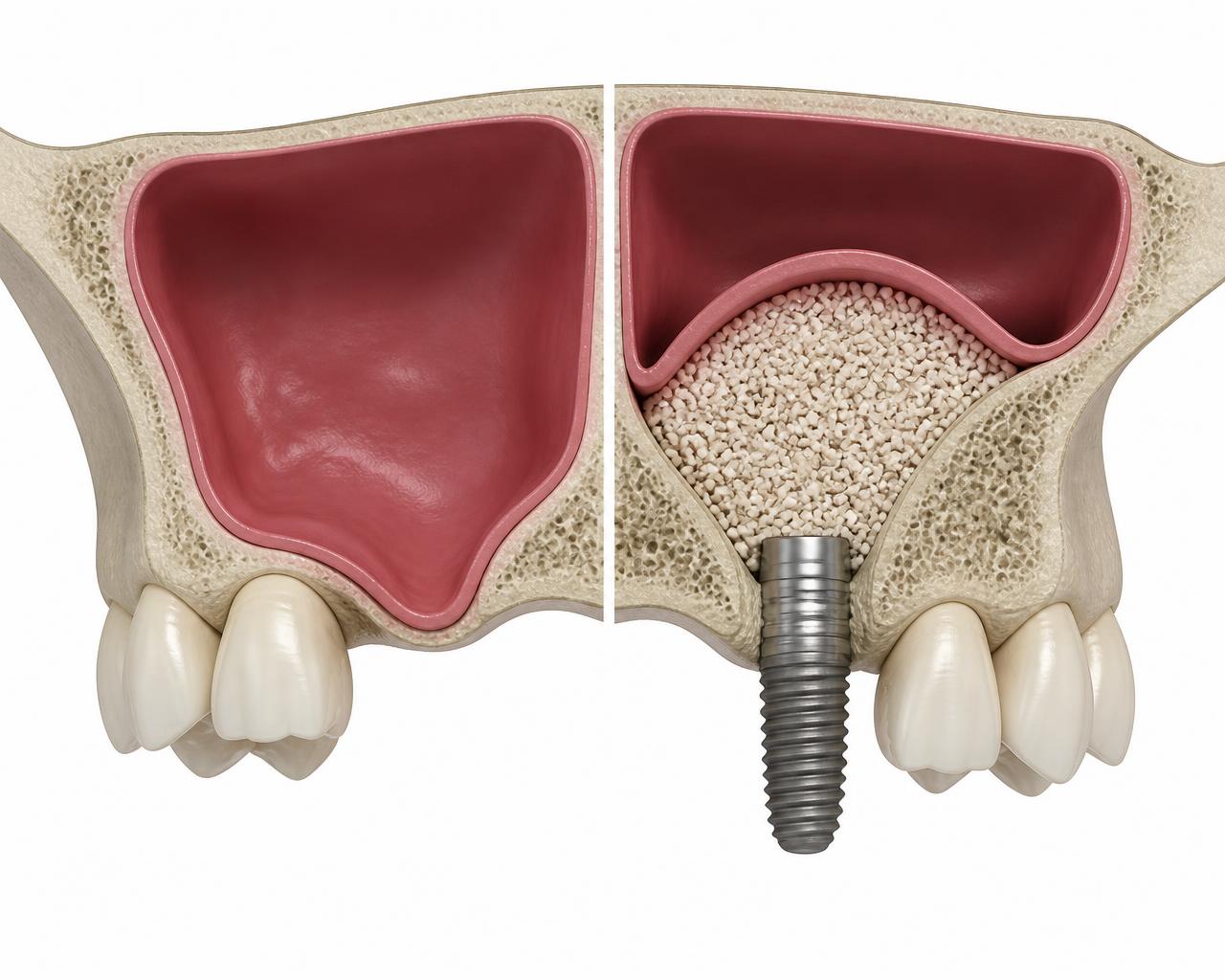
A sinus lift is a procedure that raises the floor of the maxillary sinus above the upper back teeth and packs bone graft material underneath, creating the vertical bone height a dental implant needs. It is used when an upper back tooth has been missing long enough for the sinus cavity to expand downward into the space where bone used to be.
Technically, a sinus lift is a type of bone grafting — but a very specific one. General grafting can be done in either jaw and often rebuilds ridge width; a sinus lift applies only to the upper back jaw and is done to gain height beneath the sinus. That distinction matters, because it decides which procedure your case actually needs. Once the graft has matured, the implant is placed and osseointegration proceeds as it would at any other site.
Why the upper back jaw is different
- The maxillary sinuses sit directly above the upper premolars and molars
- Losing those teeth removes the bone stimulation that held the sinus floor up
- The sinus pneumatizes — expands downward — over the months and years that follow
- Upper back bone is naturally softer than the dense bone of the lower jaw
- The result is often only a few millimetres of height where an implant needs far more
At a glance
Sinus Lift
- Procedure length
- About 60–90 minutes, by approach
- Anesthesia
- Local, with sedation available
- Healing before implant
- Typically 4–9 months
- Applies to
- Upper back teeth only
- Same-appointment option
- Possible with a minor internal lift
or call (202) 363-2810
Technique
Two Approaches
There are two standard ways to raise a sinus floor. Which one your case calls for comes down to a single number on the scan: how much bone height you still have beneath the sinus.
Lateral Window Approach
A small window is opened in the side wall of the upper jaw, the sinus membrane is gently lifted, and graft material is placed beneath it. The standard technique when a substantial amount of height is needed.
- Handles large height gains that the internal approach cannot
- Direct visibility of the sinus membrane during lifting
- Predictable volume for multiple upper back implants
- More involved surgery with more swelling afterward
- Usually staged — implants are placed at a later appointment
Osteotome (Internal) Approach
The sinus floor is raised through the implant site itself using calibrated instruments, with graft material introduced through the same channel. Used when only a few millimetres of height are missing.
- Less invasive — no separate window in the side of the jaw
- Shorter procedure and a noticeably easier recovery
- Often allows the implant to be placed at the same appointment
- Only suitable for small, minor lifts
- Requires enough starting bone height to stabilise the implant
As a rule of thumb, larger height gains go through the lateral window and minor gains go through the implant site. If the scan shows the problem is ridge width rather than height, the right procedure is ridge augmentation or standard bone grafting instead — and in some upper arches, angled implants avoid the sinus entirely.
The Process
The Sinus Lift Process
A sinus lift is one stage inside a longer upper-arch implant plan. The surgery is short; the months afterward are what turn the graft into bone an implant can hold in.
Consultation & 3D Imaging
Visit 1
A cone-beam scan measures how far the sinus floor has dropped and exactly how much bone height remains beneath it. That measurement decides whether a lift is needed at all, and which approach it calls for.
Sinus Lift Procedure
Surgery day
Under local anesthetic, the sinus membrane is lifted — through a lateral window or internally through the implant site — and graft material is packed into the space created beneath it.
Initial Healing
Weeks 1–2
The gum closes over the site. Swelling and mild sinus pressure fade over the first week or two, and a short review visit confirms the area is sealed and settling as planned.
Bone Integration
4–9 months
This is the long step. The graft matures into load-bearing bone beneath the raised sinus floor. Larger lifts sit at the longer end of that range, and nothing is rushed.
Implant Placement
Once integrated
A follow-up scan confirms the new height, then the implant is placed. In minor internal-lift cases the implant may already have gone in at the time of the lift itself.
Candidacy
Do You Need One
A sinus lift is only ever a question for the upper back jaw. The 3D scan settles it — but these are the patterns that point one way or the other.
Signs a lift is likely needed
- 1Imaging shows insufficient bone height beneath the sinus in the upper back jaw
- 2An upper molar or premolar has been missing for a year or more
- 3The sinus floor has visibly dropped into the planned implant site
- 4Bone was lost around a failing upper back tooth before it was extracted
- 5Long-term upper denture wear has flattened the posterior ridge
When a lift isn't the answer
Implants planned for the lower arch or the upper front teeth do not involve the sinus at all — it simply is not above those sites. Upper back sites that still have adequate height need nothing added, and a recent extraction with intact bone walls often holds enough on its own.
If the shortfall is width rather than height, or the site is outside the sinus zone, one of these two procedures is the correct one.
Both are performed in-house by Dr. Kambez Shukoor.
Recovery
Recovery After a Sinus Lift
Sinus-specific precautions come first
Recovery here has one difference that matters more than anything else: pressure changes in the sinus can disturb a freshly placed graft. For the period your written post-op instructions specify, the goal is to keep sinus pressure as neutral as possible. Follow the instructions you are given at the appointment — they are written for the procedure actually performed.
Sinus pressure precautions
- Do not blow your nose — dab or wipe instead, for as long as instructed
- Sneeze with your mouth open so pressure escapes rather than pushing on the graft
- Avoid straws, smoking, and anything else that creates suction
- Ask before flying or diving during early healing — cabin and depth pressure both matter
- Skip heavy lifting and strenuous exercise while the site is settling
The first 72 hours
- Ice in 20-minute intervals on the first day; swelling peaks around day two
- Soft foods only, chewing away from the surgical side
- Take prescribed medication — including any antibiotic or decongestant — on schedule
- Sleep with your head slightly elevated to reduce pressure and swelling
- Some congestion or minor nasal spotting is expected; heavy bleeding is not — call us
Weeks one to six
- Gentle warm salt-water rinses from the day after surgery — no forceful rinsing
- A short review visit checks the gum has closed and the sinus is quiet
- Return to normal diet and activity gradually, as cleared at that visit
- Report ongoing pressure, discharge, or a bad taste rather than waiting it out
The integration months
- The graft matures into load-bearing bone over roughly four to nine months
- Large lateral-window lifts take the longer end; minor internal lifts the shorter
- A follow-up scan confirms the new height before implant surgery is booked
- Routine cleanings continue through this period to protect the surrounding tissue
Anxious patients can have the procedure done with sedation available alongside local anesthetic.
| Timeframe | What to expect |
|---|---|
| Day 1–3 | Swelling and sinus pressure peak; ice, soft foods, medication as prescribed |
| Week 1 | Discomfort eases; nose-blowing and suction still off-limits |
| Week 2 | Soft tissue closed; review visit confirms the sinus is settling |
| Weeks 3–6 | Normal diet and activity resume as cleared — graft still immature |
| Months 4–9 | Bone integration beneath the raised sinus floor; the real wait |
| Implant placement | Follow-up scan confirms height, then the implant is placed |
Investment
What Does a Sinus Lift Cost in Washington, DC?
We do not publish a single price, because a minor internal lift and a full lateral-window graft are not the same procedure. Here is what moves the number.
Which approach is used
- An internal osteotome lift is the less costly of the two
- A lateral window involves more surgical time and materials
- The scan — not preference — decides which one your site allows
Amount of graft material
- More height to gain means more material and a longer procedure
- One site costs less than lifting both sinuses
- Barrier membranes are quoted as their own line item
Combined or separate visit
- A minor lift with the implant placed at the same visit shares one surgical fee
- A staged lateral-window lift carries its own surgical and anesthesia fee
- Sequencing is planned to keep total visits down where it's safe to do so
A sinus lift is quoted as part of the whole upper-arch implant plan, not as an isolated surprise — surgery, graft material, and the implant work that follows are itemized in writing before anything begins. We verify your insurance benefits and explain monthly payment options on our financial information page, including CareCredit and Cherry financing.
Why Choose
DC Implant & Cosmetic Dentistry
Dr. Kambez Shukoor is a U.S. Navy veteran dentist with fellowship-level implant training who handles the surgery and the final prosthesis himself.
Surgery & Crown in One Office
Dr. Shukoor places the implant and restores it himself, so there's no hand-off between a surgeon and a separate restorative dentist.
Implant-Focused Credentials
FAGD, FICOI, and MICOI credentials backed by continuing education specific to implant surgery and prosthetics.
Guided 3D Planning
Cone-beam imaging and digital scanning position every implant before the day of surgery, not during.
Comfort-First Care
Local anesthetic, sedation options, and a slow, explained pace for patients who are anxious about oral surgery.
Honest Case Planning
If a lift isn't necessary — or an angled implant approach avoids one — that's what gets recommended.
Transparent Costs
Written treatment plans with itemized fees, insurance coordination, and third-party financing through CareCredit and Cherry.
FAQ
Sinus Lift Questions
The questions Washington, DC patients ask most often before a sinus lift for an upper dental implant.
Related
Where This Leads
A sinus lift prepares the upper back jaw for an implant. These are the procedures it leads to, and the two related bone-building options.