
Oral Surgery
Sedation & Anesthesia Options in Washington, DC
Dr. Kambez Shukoor offers a range of anesthesia and sedation options — from local anesthetic for routine treatment to deeper sedation for anxious patients and longer surgery — so every procedure we perform in our Washington, DC office can be done comfortably.

Google Rating
4.9 · 303 reviews
Availability
Same-day consults
Payments
Financing available
Overview
Your Options
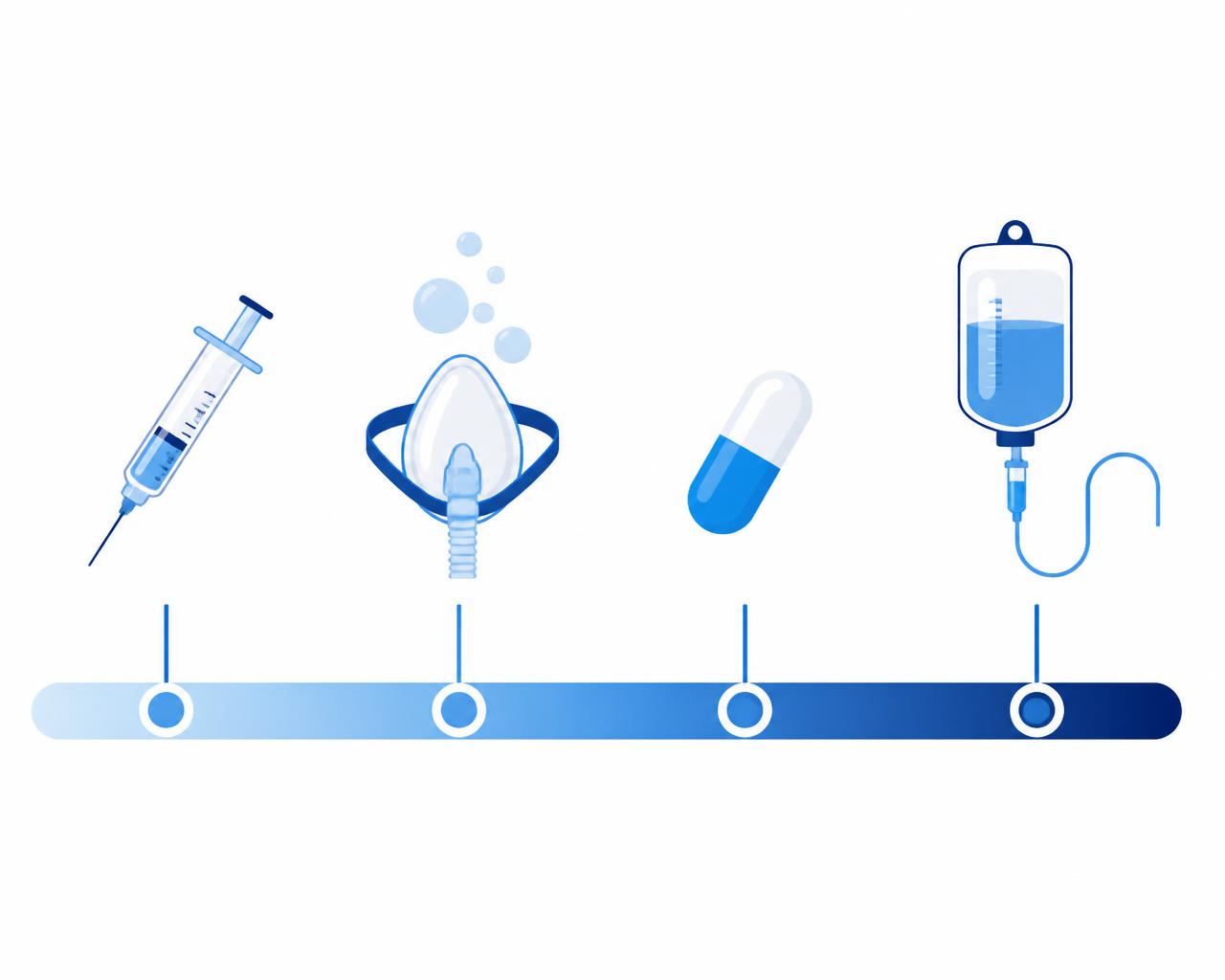
Dental anesthesia and sedation fall along a spectrum. Local anesthesia numbs the treatment area while you stay fully awake, nitrous oxide adds light relaxation that wears off within minutes, oral sedation leaves you drowsy but responsive, and IV sedation provides the deepest relaxation with monitoring throughout. The right level depends on the procedure and on how anxious you are about it.
Anesthesia is not a treatment you book on its own. It accompanies whatever you are actually having done — a filling, an extraction, an implant, a graft — which is why nearly every service page on this site mentions that sedation is available. This page explains what those mentions mean. The ADA's patient guide to anesthesia and sedation covers the same categories independently.
The four categories
- Local anesthesia — numbs the treatment area, you remain fully awake
- Nitrous oxide — light relaxation through a nose mask, clears in minutes
- Oral sedation — a pill before the visit, drowsy but responsive
- IV sedation — deeper relaxation, adjusted precisely and monitored throughout
What decides the level
- How long the appointment will run and how involved the surgery is
- Your level of dental anxiety, including past experiences that went badly
- Medical history, current medications, and airway or breathing conditions
- Whether you want several procedures completed in a single visit
At a glance
Sedation & Anesthesia
- Options offered
- Local, nitrous, oral, IV sedation
- Who administers
- Dr. Kambez Shukoor and trained staff
- Monitoring
- Oxygen, pulse, and blood pressure
- Driver required
- Yes for oral and IV sedation
- Paired with
- Any procedure, decided in advance
or call (202) 363-2810
Levels
Sedation Explained
Each level is a step deeper than the one before it. Most patients need only the first or second — the deeper options exist for longer surgery and for genuine dental anxiety.
Level 1
Local Anesthesia
- What it feels like
- You are fully awake and aware. The treatment area is completely numb, so you feel pressure and movement but not pain.
- How it's given
- A topical gel numbs the gum first, then anesthetic is injected next to the tooth or surgical site. It takes effect within a few minutes.
- Commonly used for
- Used in some form for essentially every procedure we perform, and often on its own for fillings, crowns, and straightforward extractions.
- Recovery & driving
- Numbness fades over a few hours. You can drive yourself home and return to work the same day.
Level 2
Nitrous Oxide
- What it feels like
- A light, floating calm. You stay awake, conversational, and in control — the edge simply comes off, and time passes faster.
- How it's given
- Breathed through a small nose mask throughout the appointment, always combined with local anesthetic. The level is adjusted minute to minute.
- Commonly used for
- A common addition for nervous patients during cleanings, fillings, and single implant placement.
- Recovery & driving
- Effects clear within minutes of the mask coming off, after a short period of breathing pure oxygen. No driver required in most cases.
Level 3
Oral Sedation
- What it feels like
- Deeply relaxed and drowsy, but still responsive. Many patients remember very little of the appointment afterward.
- How it's given
- A prescribed pill taken before the appointment, per written instructions. Local anesthetic is still used, and vital signs are monitored during treatment.
- Commonly used for
- Chosen for significant dental anxiety, long restorative visits, and surgical wisdom tooth removal.
- Recovery & driving
- A driver is required in both directions, and you should plan to rest for the remainder of the day. No driving or machinery for 24 hours.
Level 4
IV Sedation
- What it feels like
- The deepest level offered in a dental office — a twilight state where you are not asleep under general anesthesia, but are unlikely to recall the procedure.
- How it's given
- Delivered through an IV line so the depth can be adjusted precisely, with continuous monitoring of oxygen, pulse, and blood pressure throughout.
- Commonly used for
- Reserved for longer or more involved surgery such as full mouth implants, All-on-4 and All-on-6 cases, multiple extractions, or grafting combined with placement in one visit.
- Recovery & driving
- A driver is required, recovery is monitored before discharge, and grogginess usually lasts the rest of the day. No driving for 24 hours.
The level is agreed at your consultation, never improvised on treatment day — and it is quoted on the same written plan as the procedure it accompanies, alongside our financial information.
Choosing
Which Is Right
There is no single correct answer. The question is whether local anesthetic alone will get you comfortably through the appointment, or whether something more will.
Points toward local anesthesia only
- The appointment is routine and relatively short
- You have no real anxiety about dental treatment
- You have no objection to being fully aware during the procedure
- You would rather drive yourself and return straight to work
- Your medical history makes deeper sedation less straightforward
Points toward sedation
- 1Dental anxiety, or a past experience that has kept you away for years
- 2A strong gag reflex that makes back-of-mouth work difficult
- 3Lengthy or complex surgery such as full-arch implant treatment
- 4Sensitivity to needles or to the sounds and sensations of treatment
- 5Wanting several procedures completed in one visit rather than many
- 6Difficulty staying comfortable in the chair for long stretches
Wisdom Tooth Removal
Simple cases use local alone; impacted teeth are where sedation is most often chosen.
Wisdom Tooth RemovalFull Mouth Implants
Long full-arch surgical visits, where deeper sedation keeps a multi-hour appointment comfortable.
Full Mouth ImplantsBone Grafting
Often combined with extraction or placement in one visit — a common reason to sedate.
Bone GraftingThe Day
What to Expect on the Day
What a sedation appointment looks like from the instructions you get beforehand to the moment you are cleared to go home.
Pre-Appointment Instructions
Before the visit
You receive written instructions covering fasting requirements where they apply, which regular medications to take, and arranging a driver for any level beyond local or nitrous.
Check-In & Health Review
On arrival
We confirm your medical history, current medications, allergies, and baseline vital signs, then reconfirm the sedation plan before anything is administered.
Sedation Administered
Same visit
Nitrous begins through a nose mask, oral sedation has already taken effect, or an IV line is placed. Local anesthetic is given once you are comfortable.
Procedure Performed
Same visit
Your actual treatment goes ahead — implant placement, extraction, grafting, or restorative work — with oxygen, pulse, and blood pressure monitored the whole time.
Monitored Recovery
Before discharge
You rest in the office until you are alert and stable enough to leave. Aftercare instructions are given in writing and repeated to whoever is driving you home.
Aftercare
After Sedation
Plan the rest of the day around it
Sedation aftercare is separate from surgical aftercare. Your surgical site has its own written instructions; this is about the medication itself. With oral or IV sedation, assume the rest of the day is gone — no work, no driving, no decisions that matter. Follow the written instructions you are given over anything general you read online.
The first 24 hours
- No driving and no operating machinery for a full 24 hours
- A responsible adult drives you home and stays with you for the first few hours
- Grogginess, mild unsteadiness, and patchy memory of the visit are expected
- No alcohol, and take only the medications you were told to take
- Start with clear liquids and light food, following your surgical diet instructions
Nitrous oxide is different
- Effects clear within minutes after breathing pure oxygen at the end of the visit
- Most patients drive themselves home and return to work the same day
- Occasional brief light-headedness or nausea settles quickly
- Local anesthetic numbness may still take a few hours to fade
When to call us
- Grogginess or confusion that is still significant the next morning
- Persistent vomiting, or an inability to keep fluids down
- Difficulty breathing, chest discomfort, or a rash after medication
- Anything that does not match the written instructions you were given
For anything urgent after hours, call the office or see emergency dental care. Breathing difficulty is a 911 call, not a dental one.
| Level | What to expect afterward |
|---|---|
| Local only | Numbness for a few hours; drive yourself, normal day |
| Nitrous oxide | Clears within minutes; no driver needed in most cases |
| Oral sedation | Groggy the rest of the day; driver required; no driving 24h |
| IV sedation | Monitored before discharge; driver required; no driving 24h |
| Next morning | Most patients are fully alert and back to normal activity |
| Surgical site | Follows its own separate healing timeline and instructions |
Investment
How Does Sedation Affect the Cost of Treatment?
Anesthesia is almost never a standalone cost — it is an add-on to the procedure it accompanies. Here is how it affects the total.
The level chosen
- Local anesthetic is included in the fee for the procedure itself
- Nitrous oxide is a modest addition, usually billed per appointment
- Oral and IV sedation cost more, and are typically billed by time
Included or separate
- Local anesthetic is not itemized — it is part of the treatment fee
- Deeper sedation appears as its own line on the written plan
- Longer surgery means longer sedation, so the two costs move together
Insurance & financing
- Sedation is more often covered when tied to surgical treatment
- We verify your benefits before the appointment is scheduled
- CareCredit and Cherry spread the combined cost over monthly payments
We don't publish sedation prices, because the cost depends entirely on the procedure it accompanies and how long that procedure runs. Sedation is always included in the itemized written quote you receive for the underlying treatment — see our financial information page for insurance coordination and monthly payment options.
Why Choose
DC Implant & Cosmetic Dentistry
Dr. Kambez Shukoor is a U.S. Navy veteran dentist with advanced surgical training who performs surgery and administers sedation in our own Washington, DC office.
Surgery Done In-House
Dr. Shukoor performs surgical treatment and administers anesthesia in our own Washington, DC office, so your sedation plan and your surgical plan come from the same clinician.
Advanced Surgical Training
FAGD, FICOI, and MICOI credentials backed by continuing education in oral surgery and sedation.
3D Imaging Before Surgery
Cone-beam scans define the length and complexity of a case in advance, which is exactly what determines the right level of sedation.
Comfort-First Care
A range of options, monitoring throughout, and a slow explained pace for patients whose anxiety has kept them out of a dental chair for years.
Honest Recommendations
If local anesthetic alone is genuinely enough for your procedure, we say so rather than adding a sedation fee — and we review your medical history before recommending any level.
Transparent Costs
Sedation appears as its own line on your written treatment plan, alongside the procedure it accompanies — with insurance coordination and CareCredit and Cherry financing.
FAQ
Sedation Questions
The questions Washington, DC patients ask most often about dental sedation and anesthesia.
Related
Related Care
The procedures where a sedation decision comes up most often — each one can be done at whichever level suits you.
Wisdom Tooth Removal
Simple and surgical removal of impacted third molars.
Wisdom Tooth RemovalBone Grafting
Rebuilding bone volume before implant placement.
Bone GraftingSinus Lift
Adding vertical height for upper back implants.
Sinus LiftRidge Augmentation
Restoring width to a collapsed jaw ridge.
Ridge AugmentationFinancial Information
Insurance coordination, CareCredit, and Cherry financing.
Financial Information