
4444 Connecticut Ave NW #106 · Washington, DC

(202) 363-2810
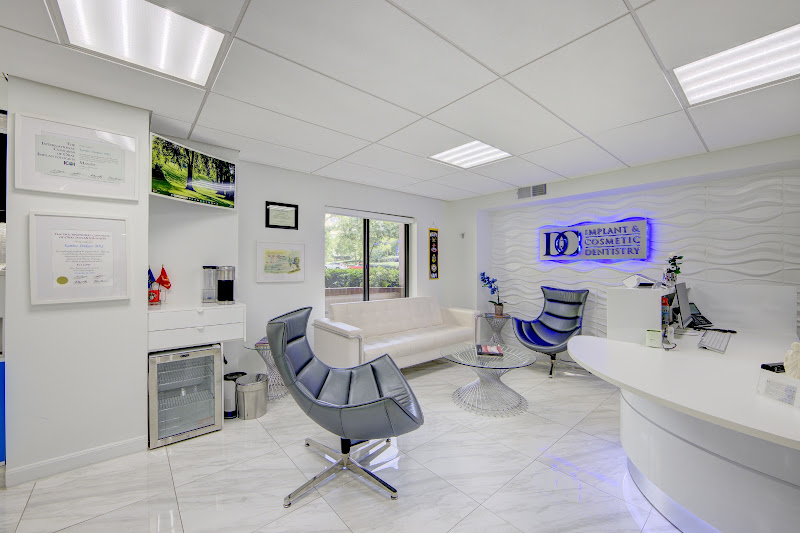
Reception area at DC Implant & Cosmetic Dentistry in Washington, DC

Cosmetic Dentistry

Clear Aligners in Washington, DC

A removable, nearly invisible series of custom trays that gradually straightens crowding or spacing — planned and monitored from first scan to final retainer by Dr. Kambez Shukoor.

Google reviews rating for DC Implant & Cosmetic Dentistry in Washington, DC

Google Rating

4.9 · 303 reviews

Availability

Same-day consults

Payments

Financing available

Definition

What Are Clear Aligners?

Clear aligners are a series of custom-fitted clear plastic trays, each worn for about one to two weeks, that gradually shift teeth into a planned position. For many cases of crowding or spacing they replace the need for traditional metal braces entirely.

Each tray in the series is shaped fractionally differently from the one before it. Worn in order, they apply gentle, continuous pressure that guides teeth along a mapped path — the same biological process behind orthodontic treatment with braces, delivered without brackets or wires.

What aligners commonly address

  • Mild to moderate crowding, where teeth overlap or twist
  • Gaps and spacing between teeth
  • Teeth that shifted years after childhood braces
  • Minor bite issues that do not require full orthodontic mechanics
  • Alignment as the first stage of a broader cosmetic plan

Unlike a crown or a veneer, this is not a procedure completed in a visit or two. It is a months-long treatment you take an active part in, which is why wear time matters as much as the plan itself.

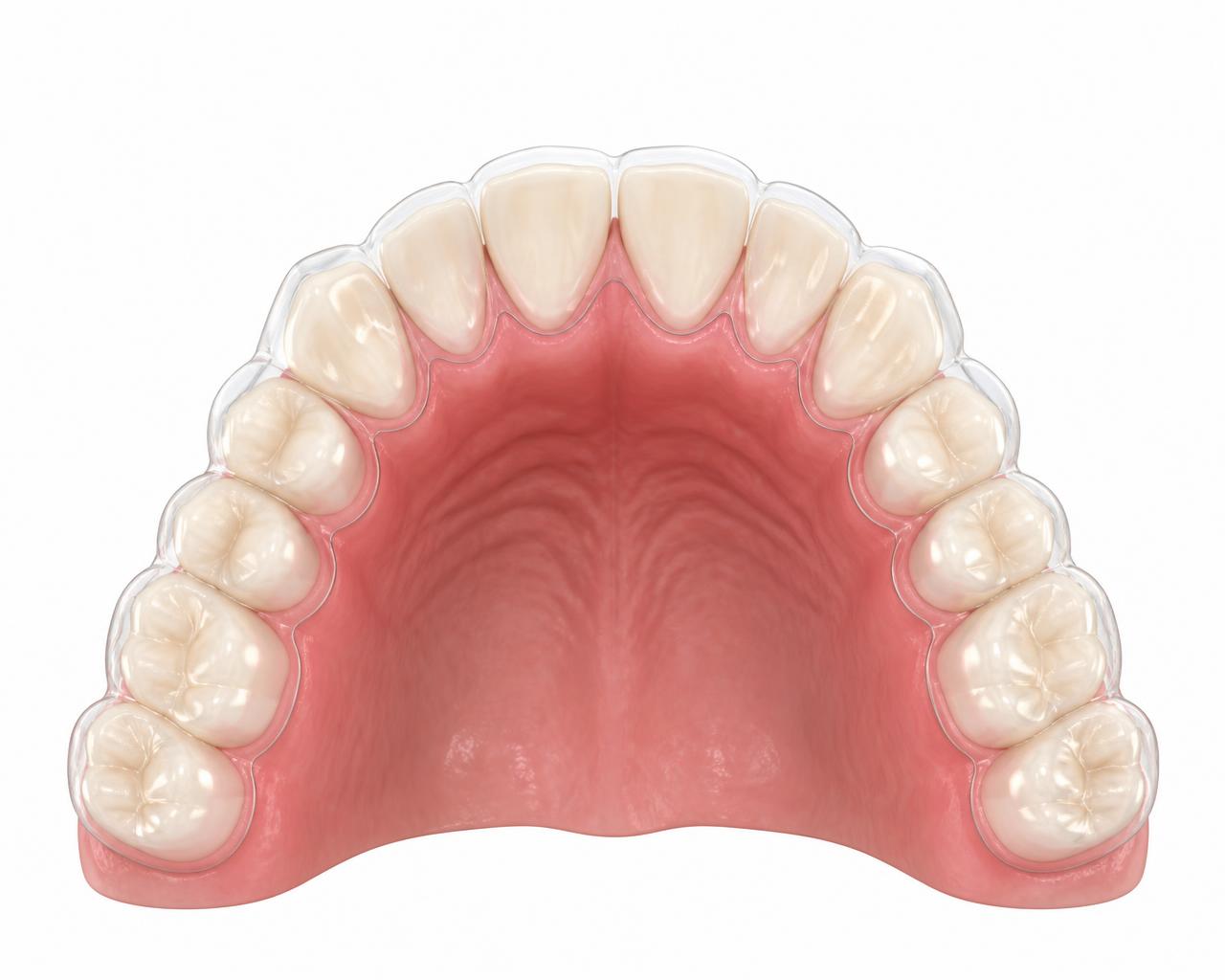
Illustration of a transparent clear aligner tray fitted over a full upper arch of natural teeth
Each tray fits the arch closely, which is what makes it both nearly invisible and able to apply controlled pressure.

At a glance

Clear Aligners

Treatment length
Varies by case — months to over a year
Number of trays
Varies by case, set by your plan
Daily wear time
Typically 20–22 hours
Removable
Yes — for eating and brushing
After treatment
Nightly retainer, long term
Book Appointment

or call (202) 363-2810

Real Cases

Real Clear Aligner Results From Our Office

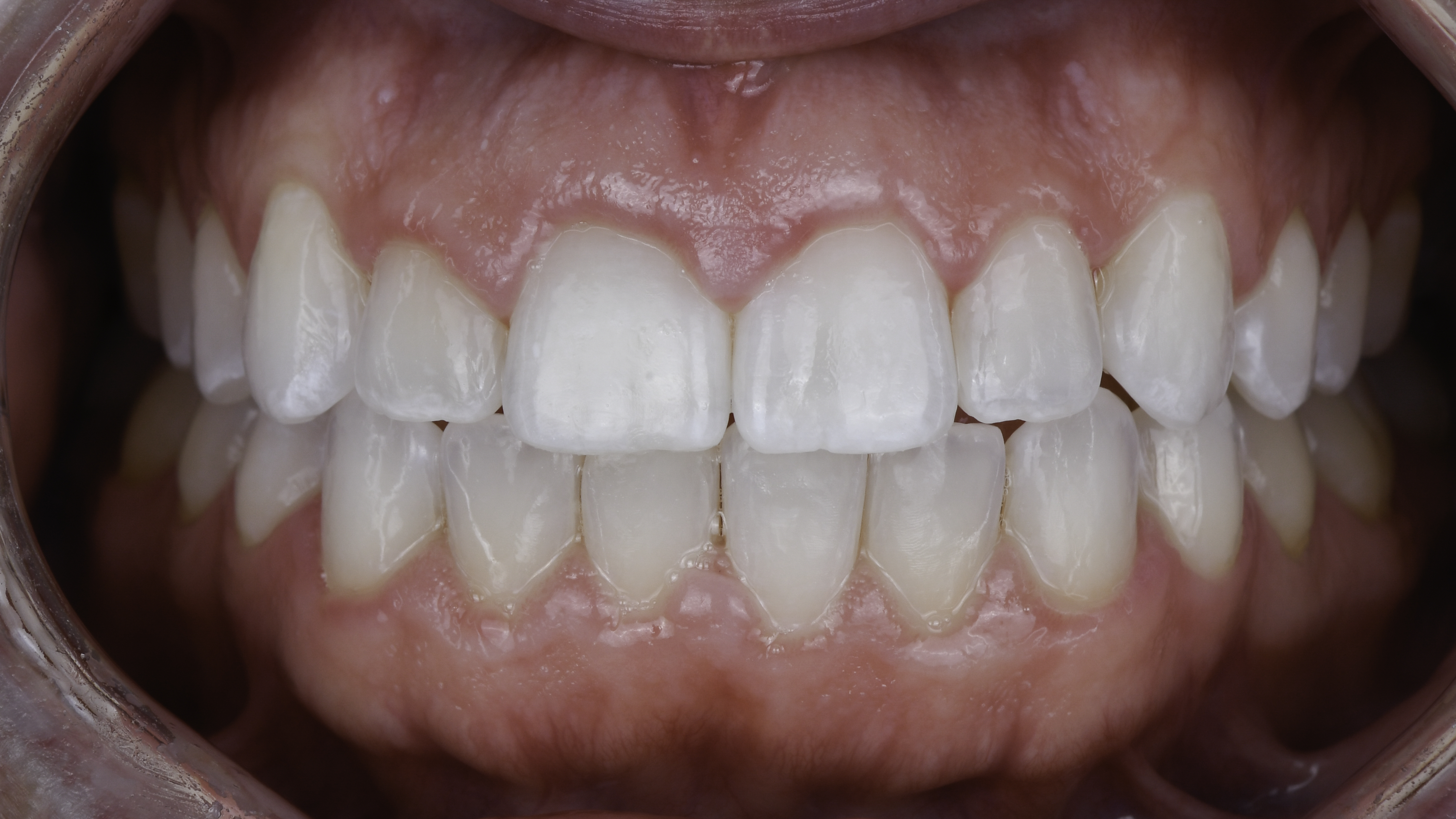
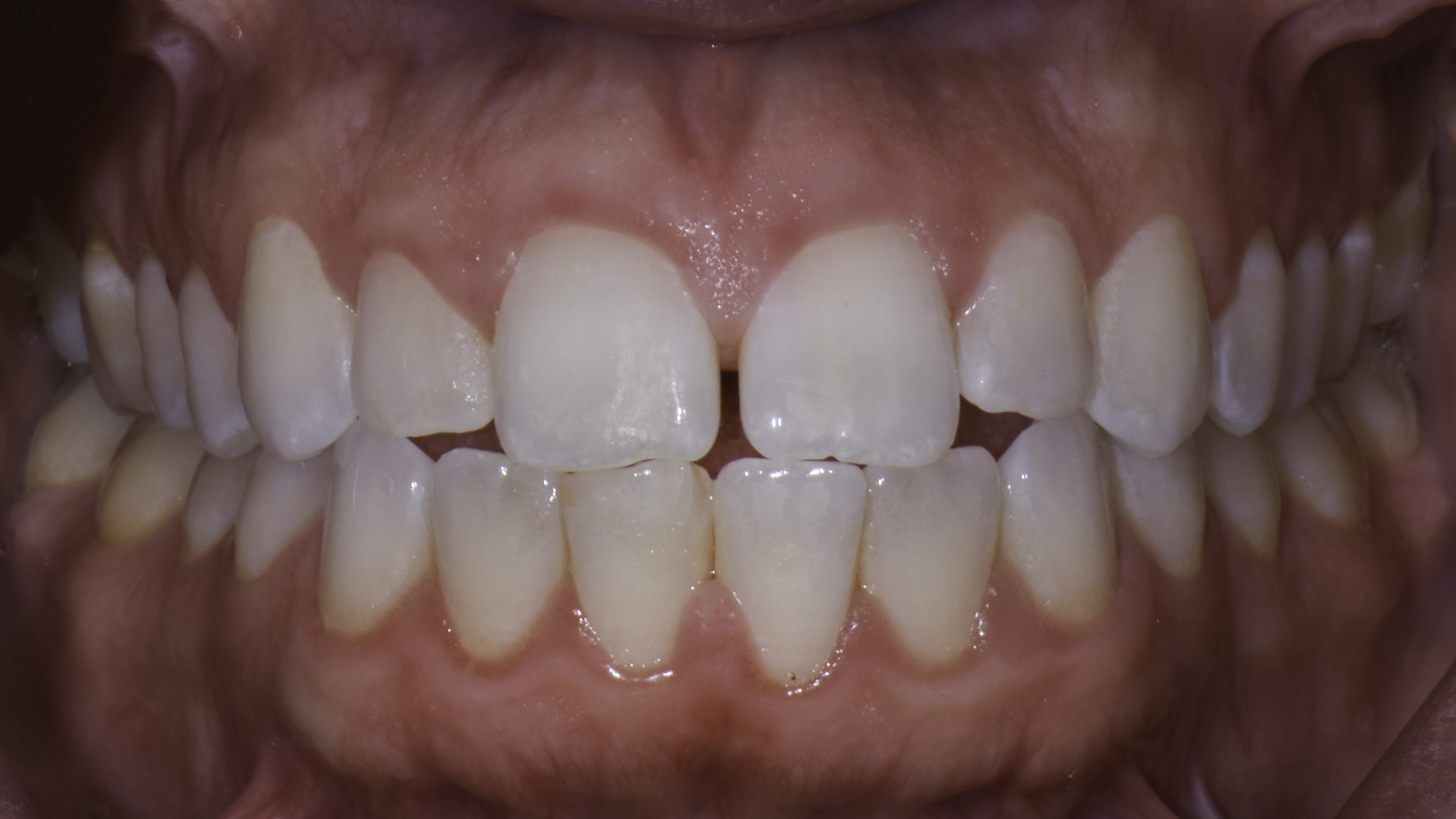
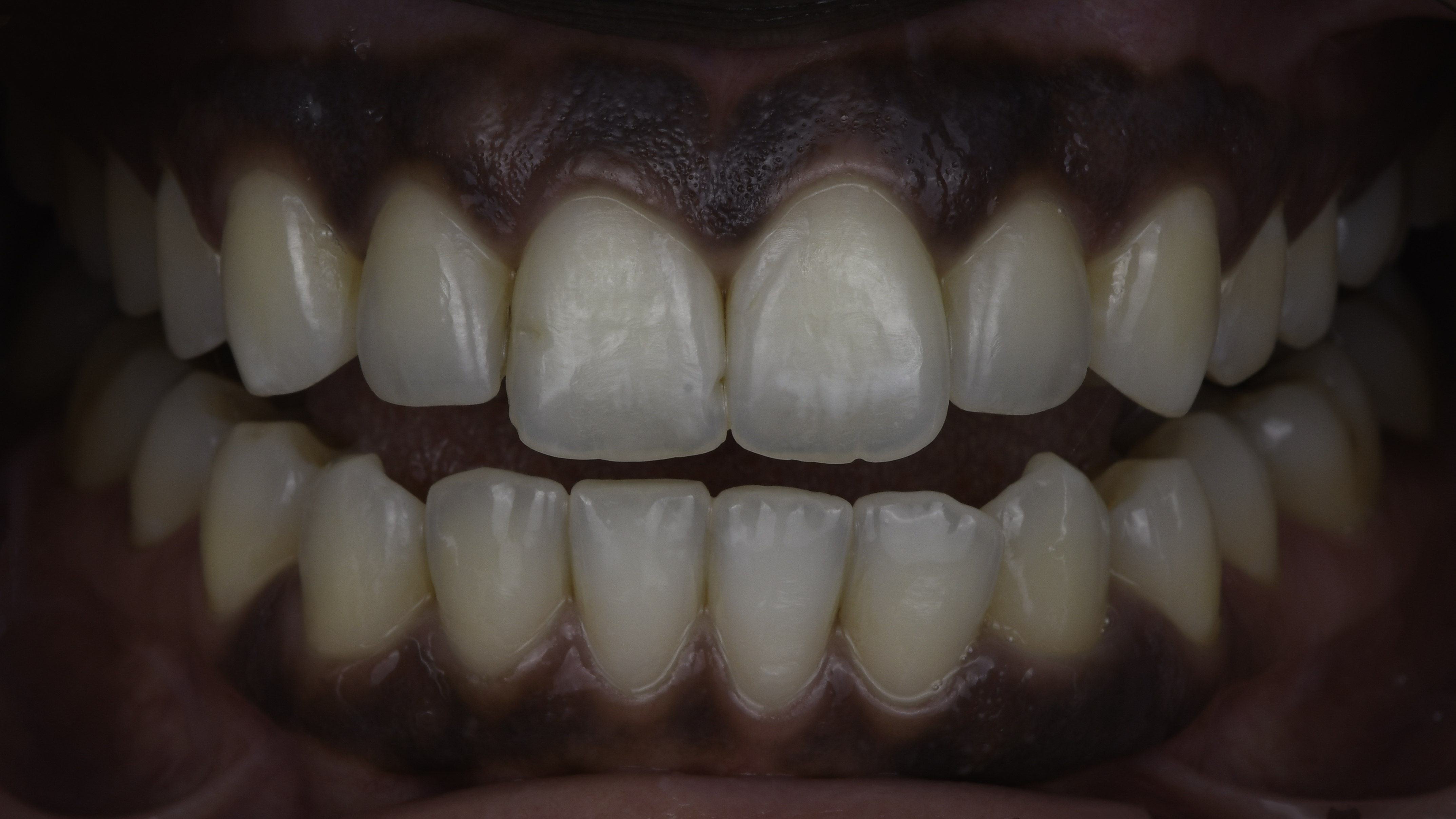
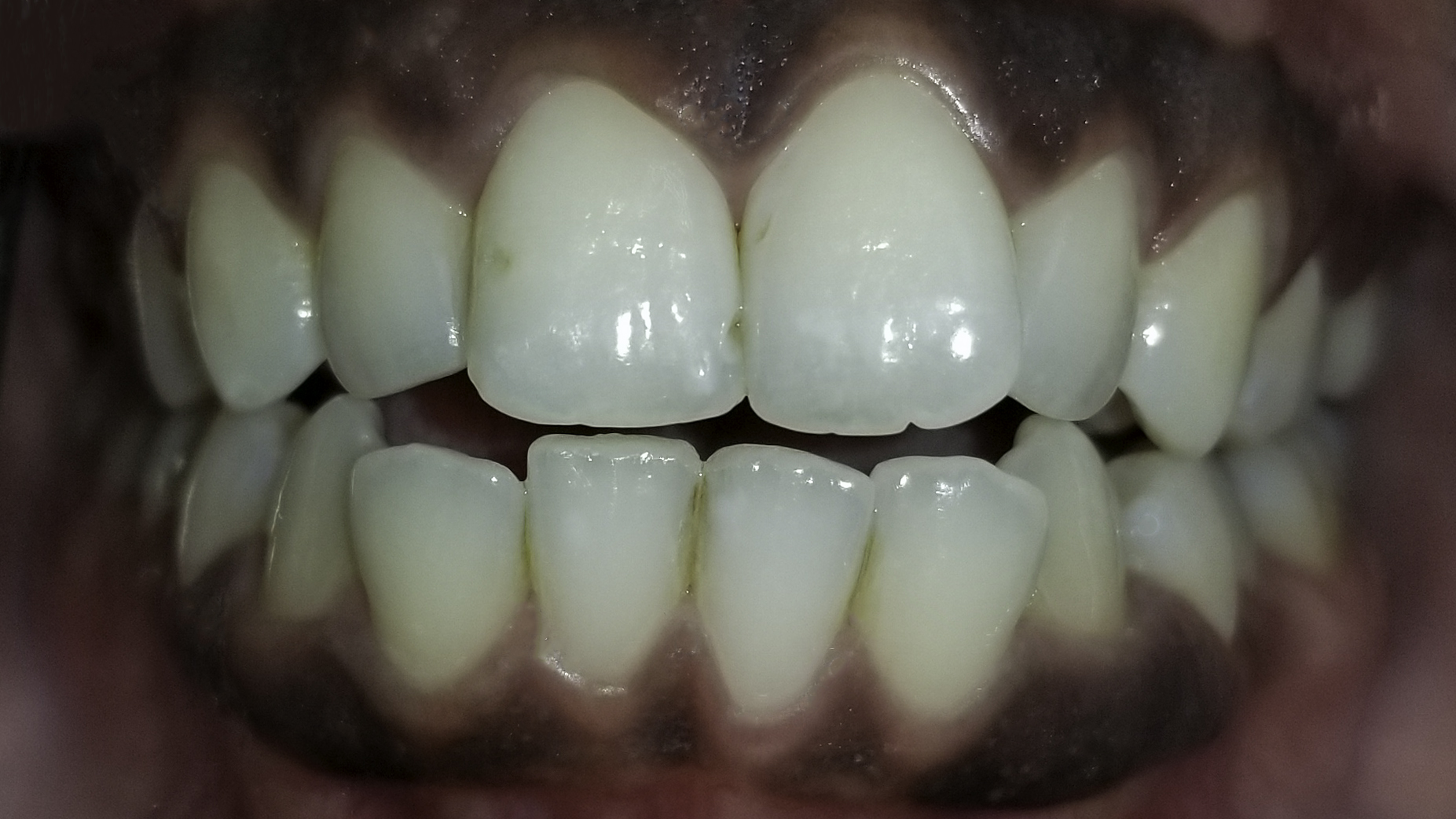
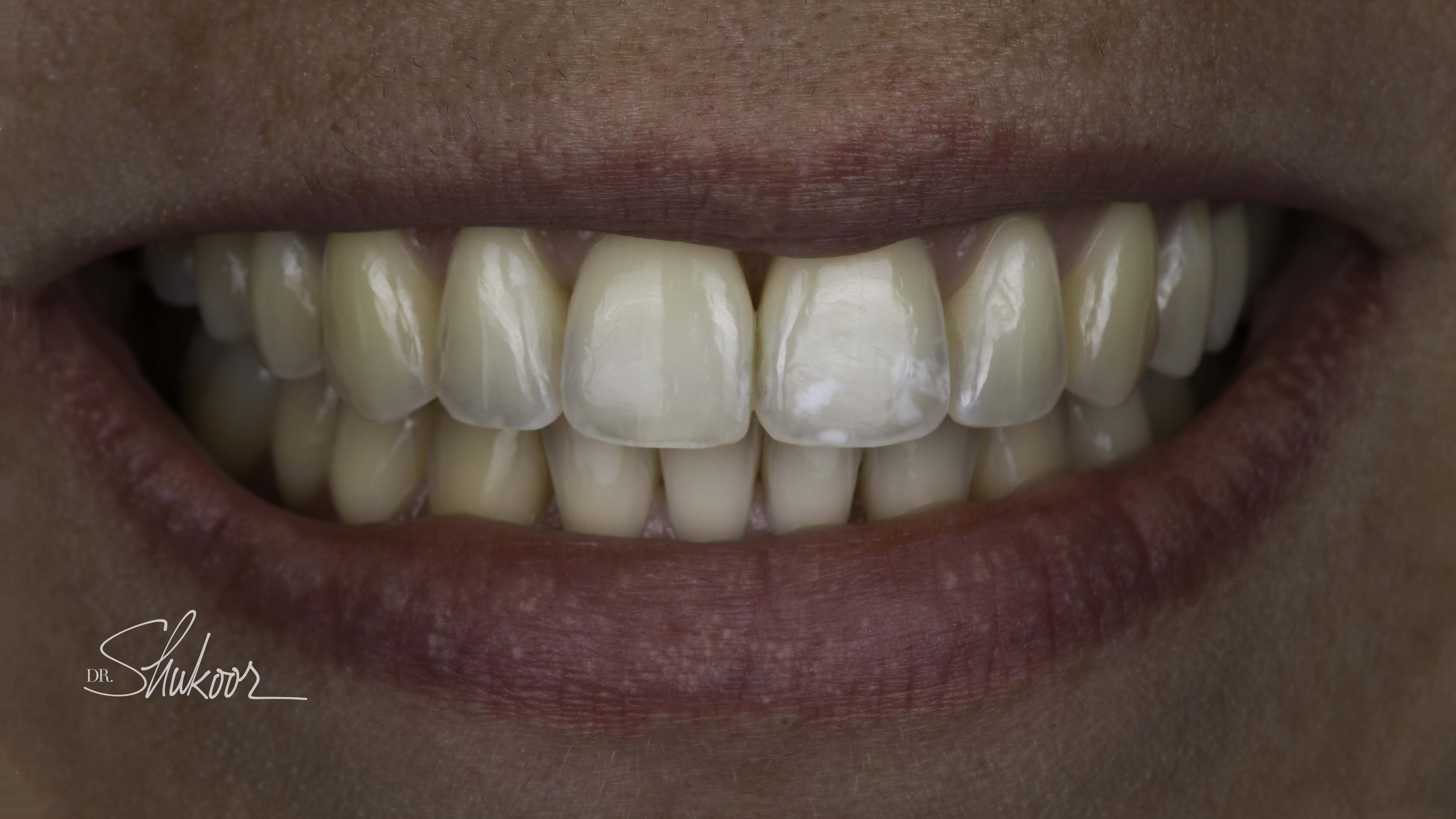
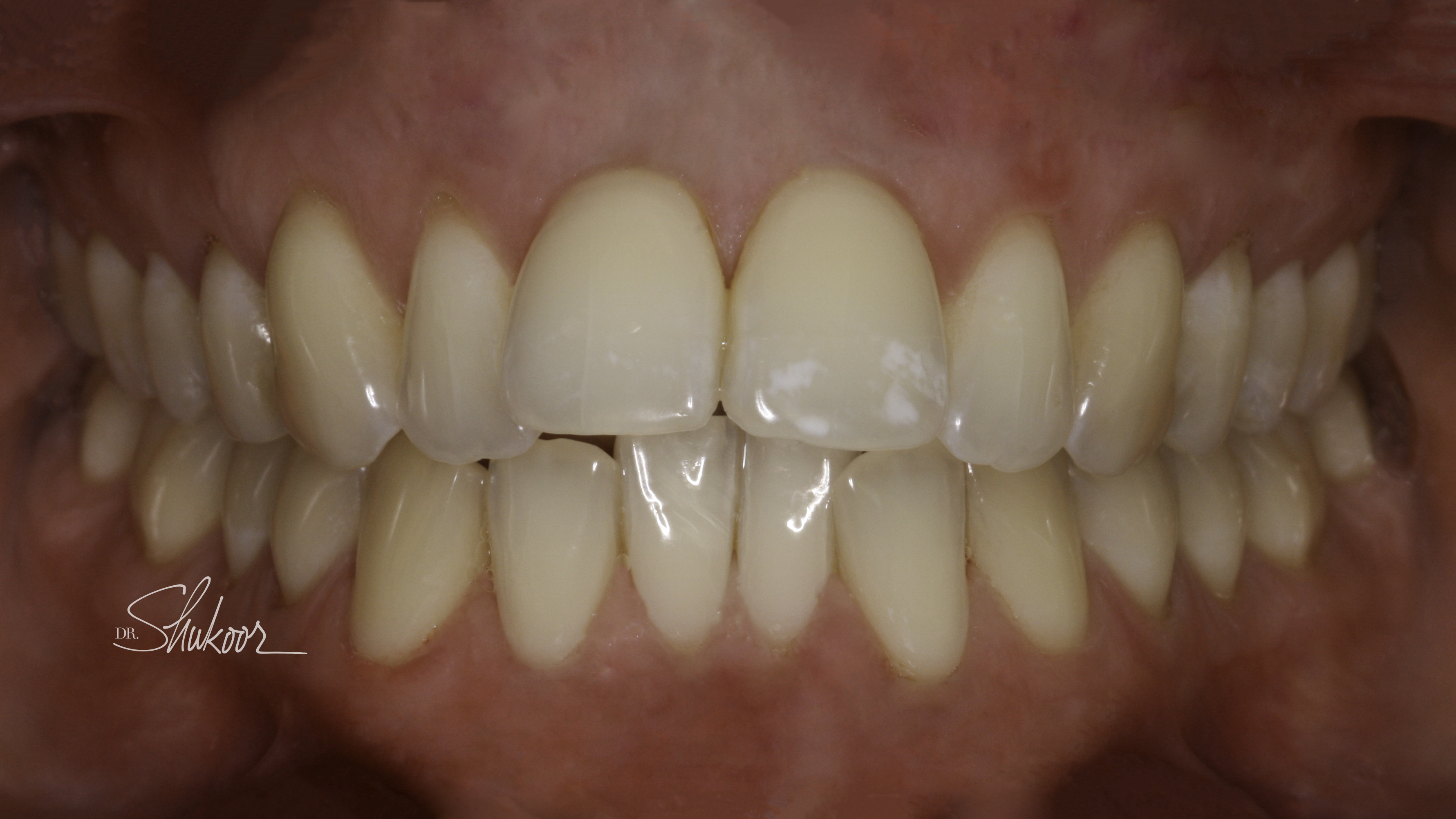
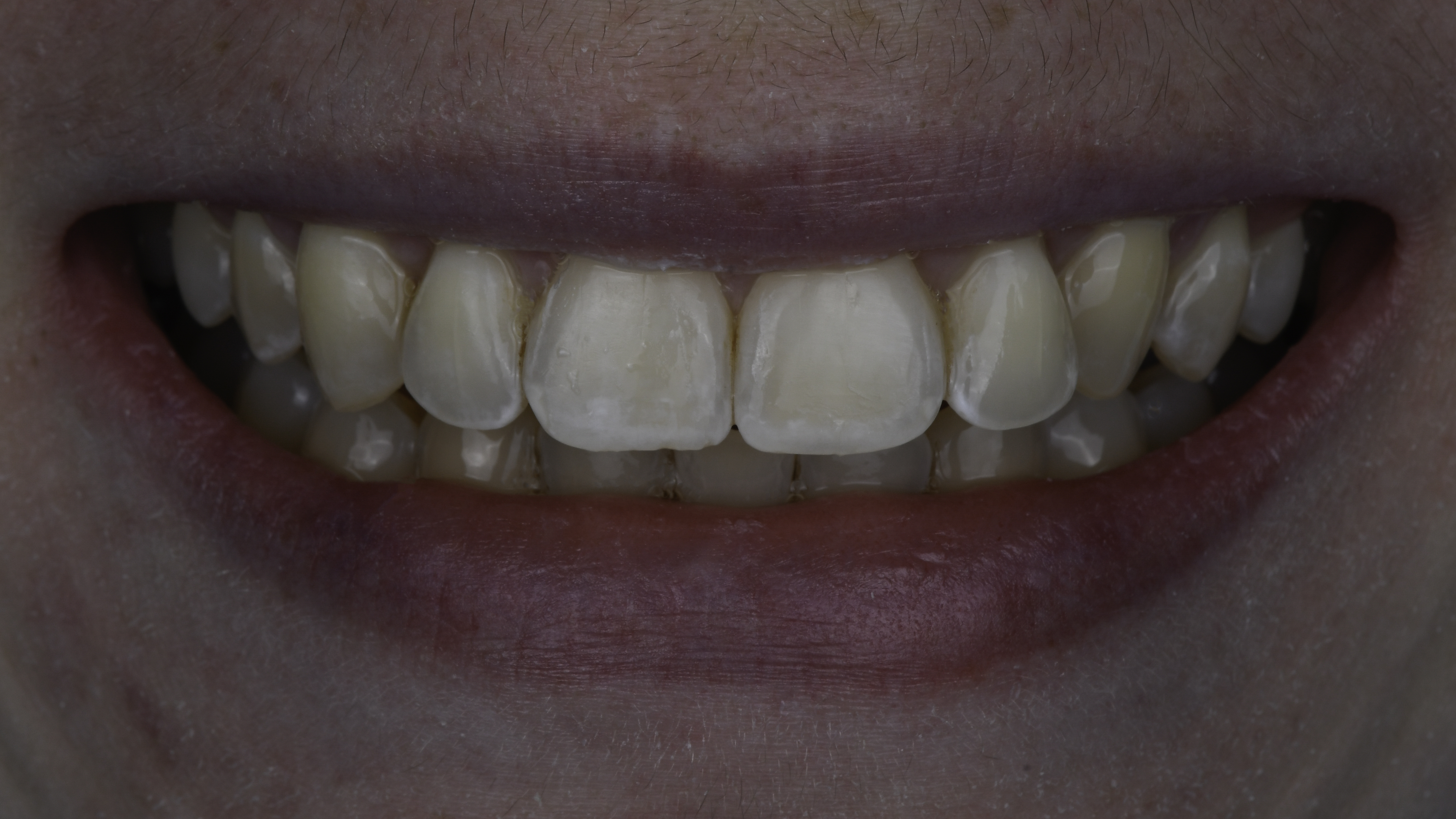
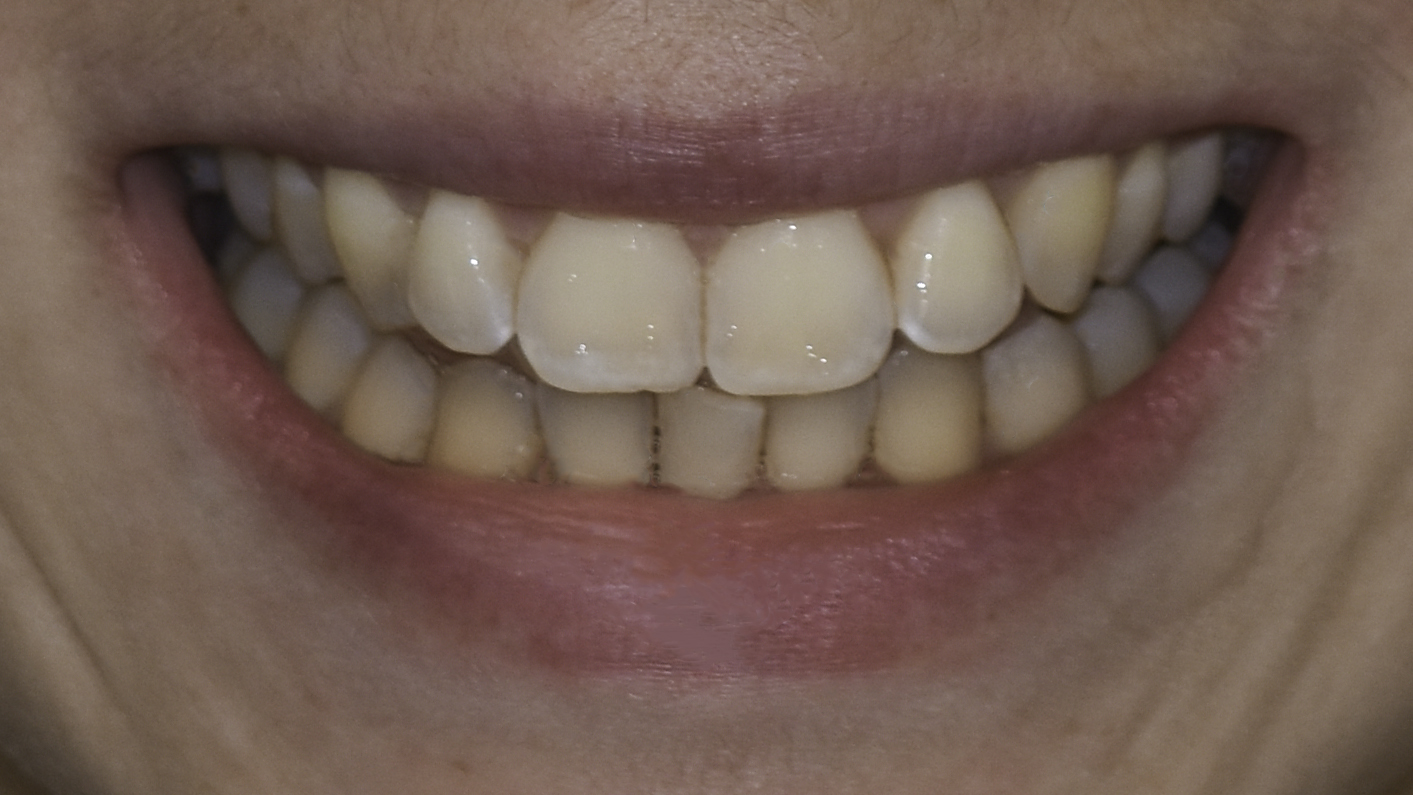
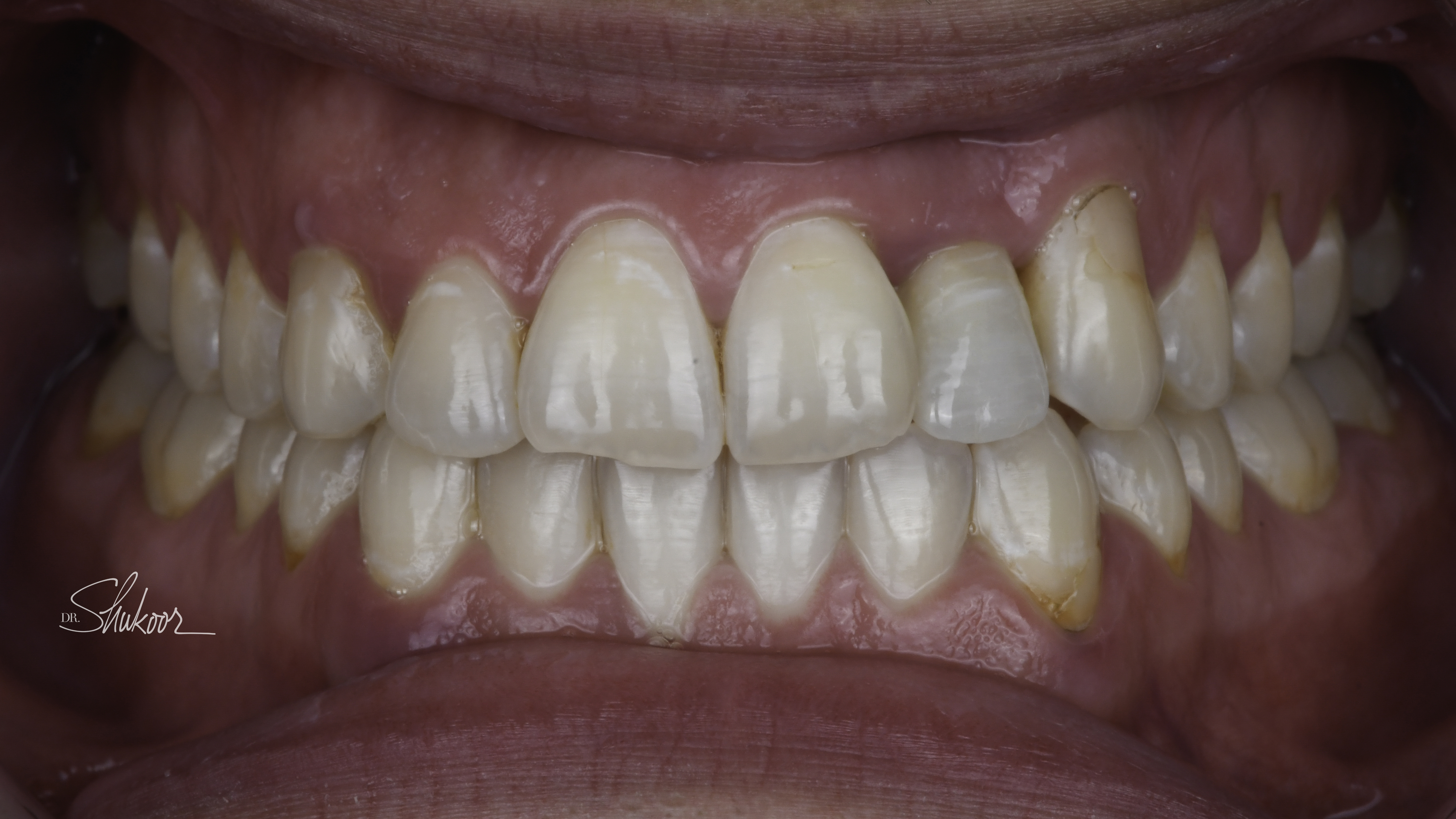
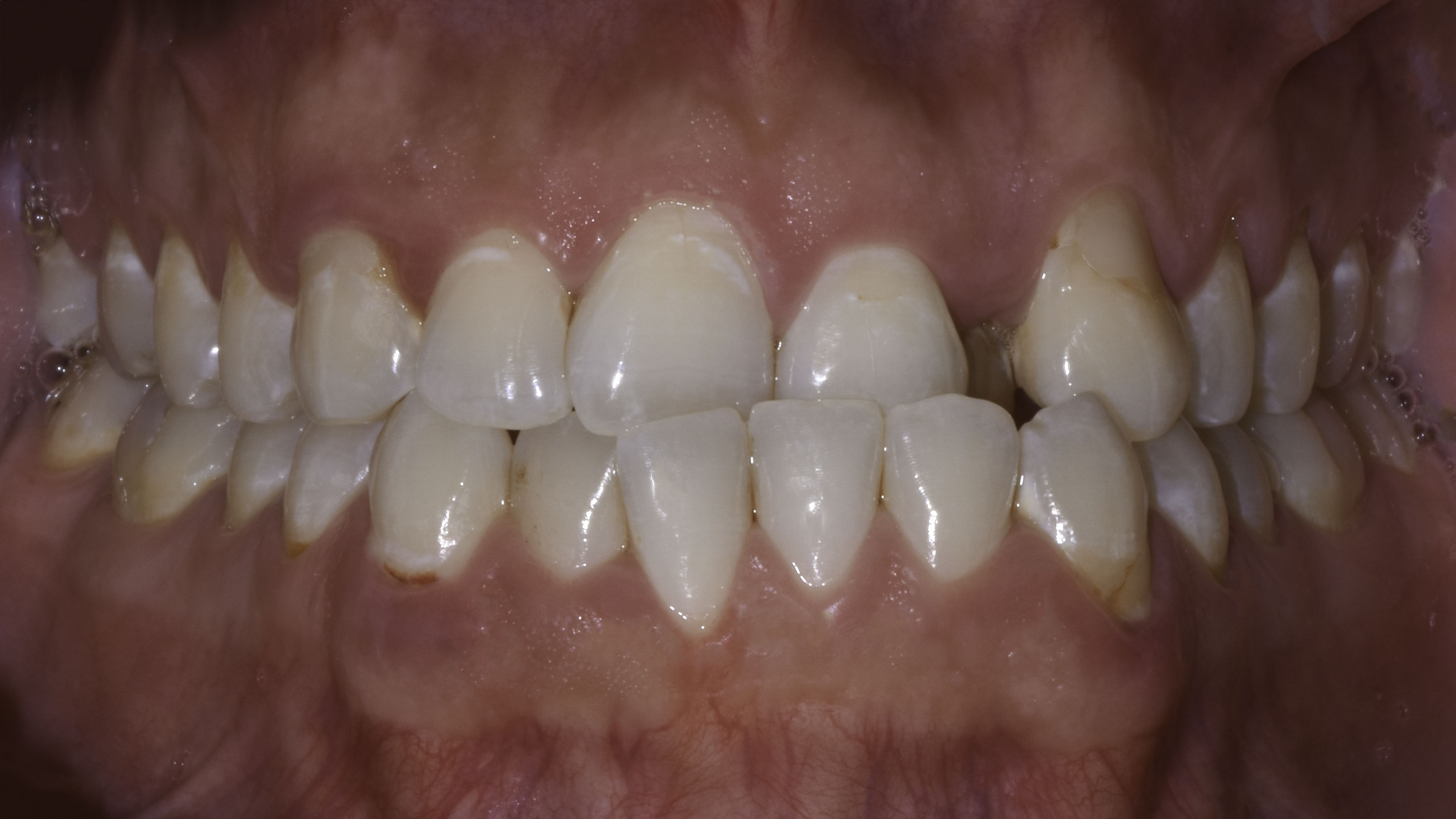
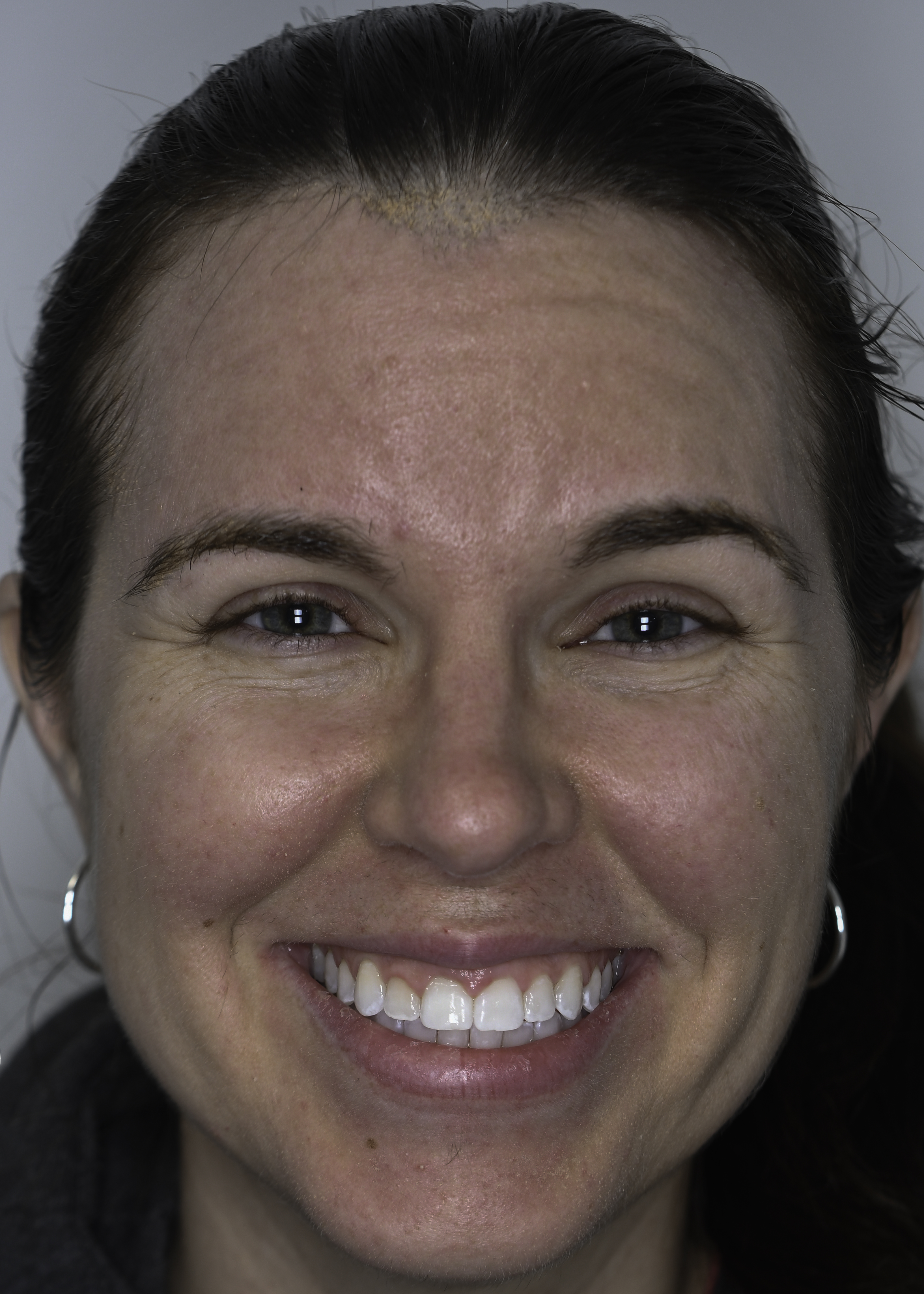
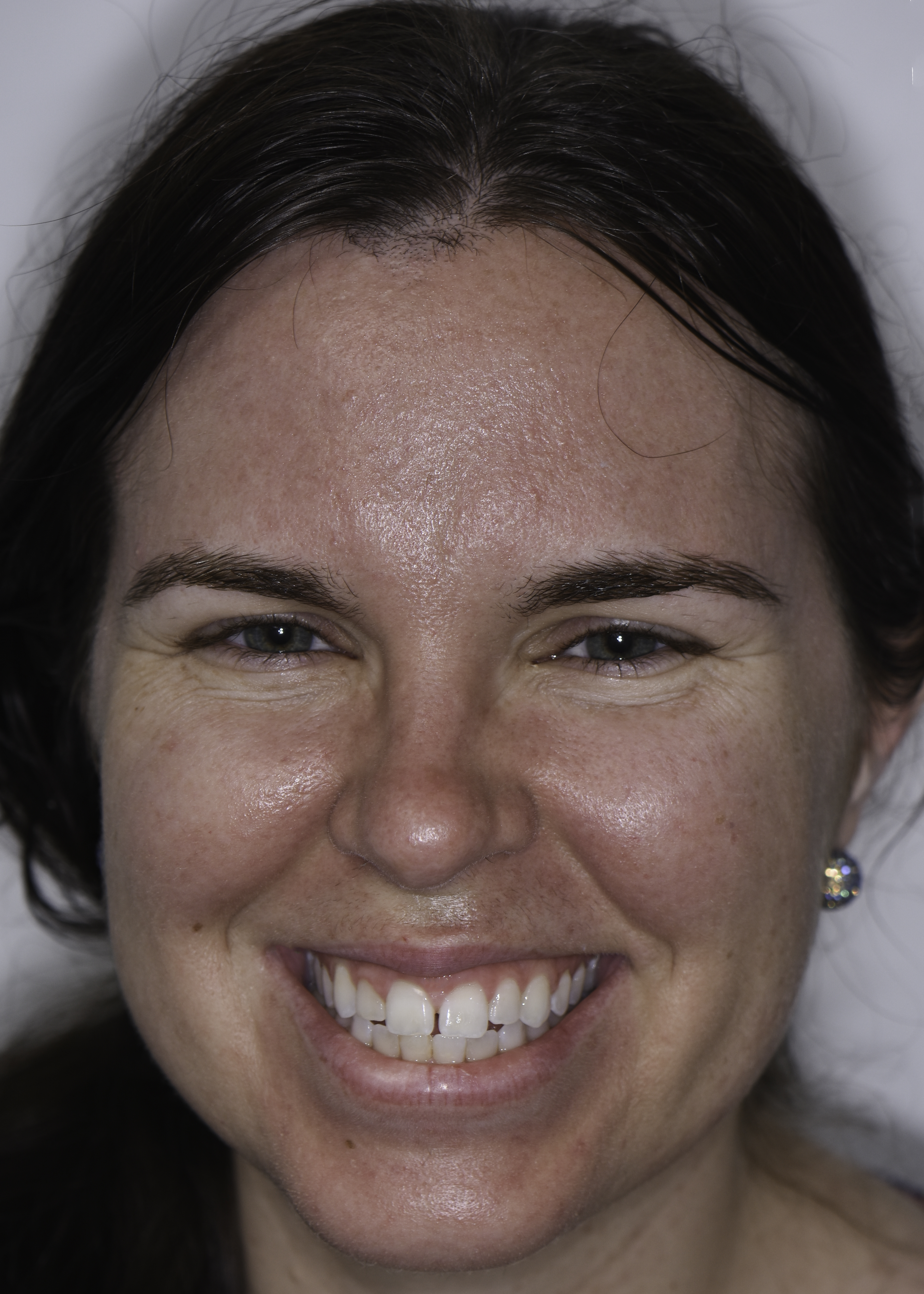
Drag the handle on each case to compare. Every photograph below is an actual patient treated in our Washington, DC office — no stock photography, no touch-ups.

Full smile view

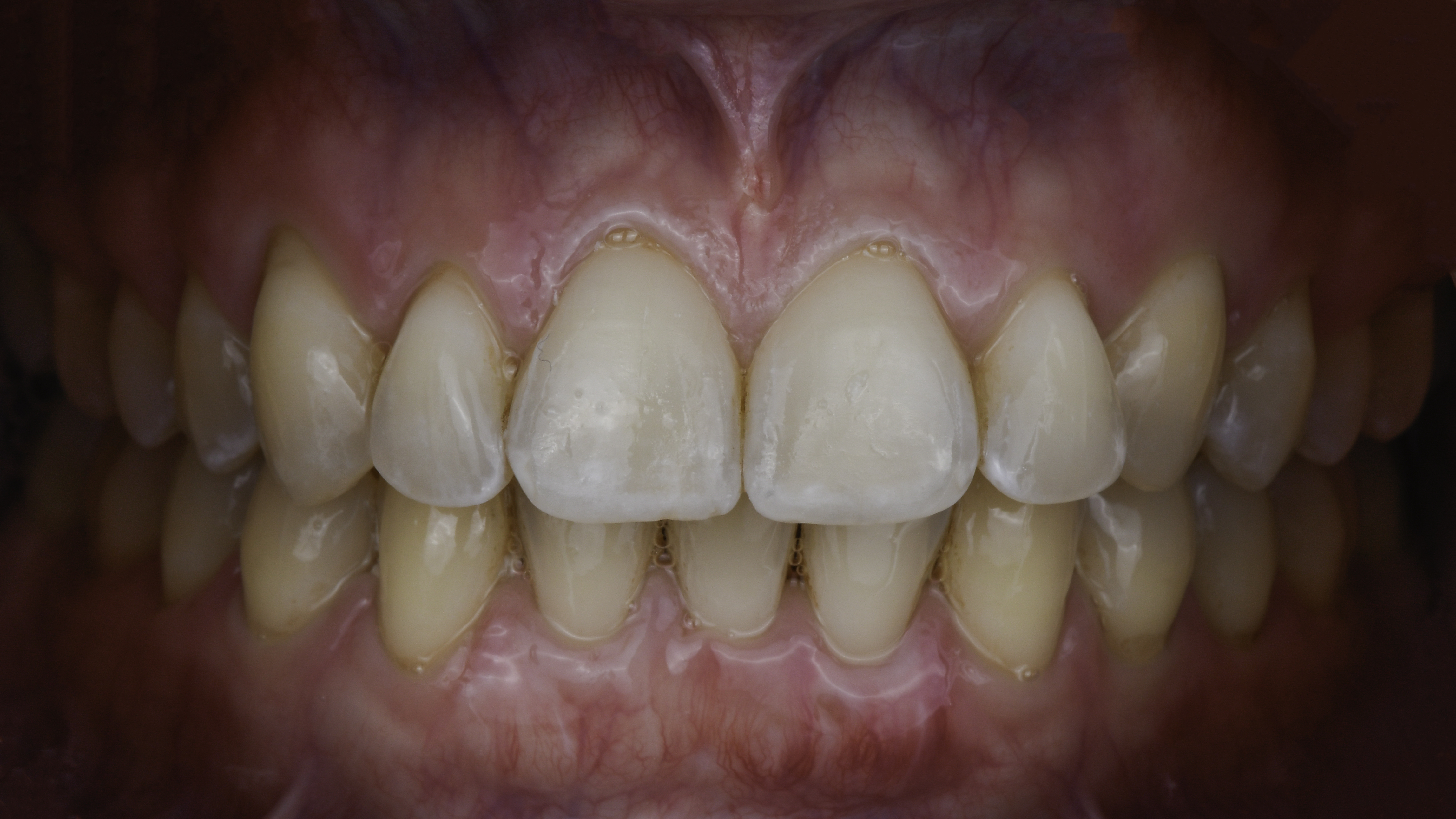
Clear aligners before and after — Uneven spacing and rotation corrected with clear aligners, treated by Dr. Kambez Shukoor in Washington, DC — after treatment
Clear aligners before and after — Uneven spacing and rotation corrected with clear aligners, treated by Dr. Kambez Shukoor in Washington, DC — before treatment
BeforeAfter

Close-up view

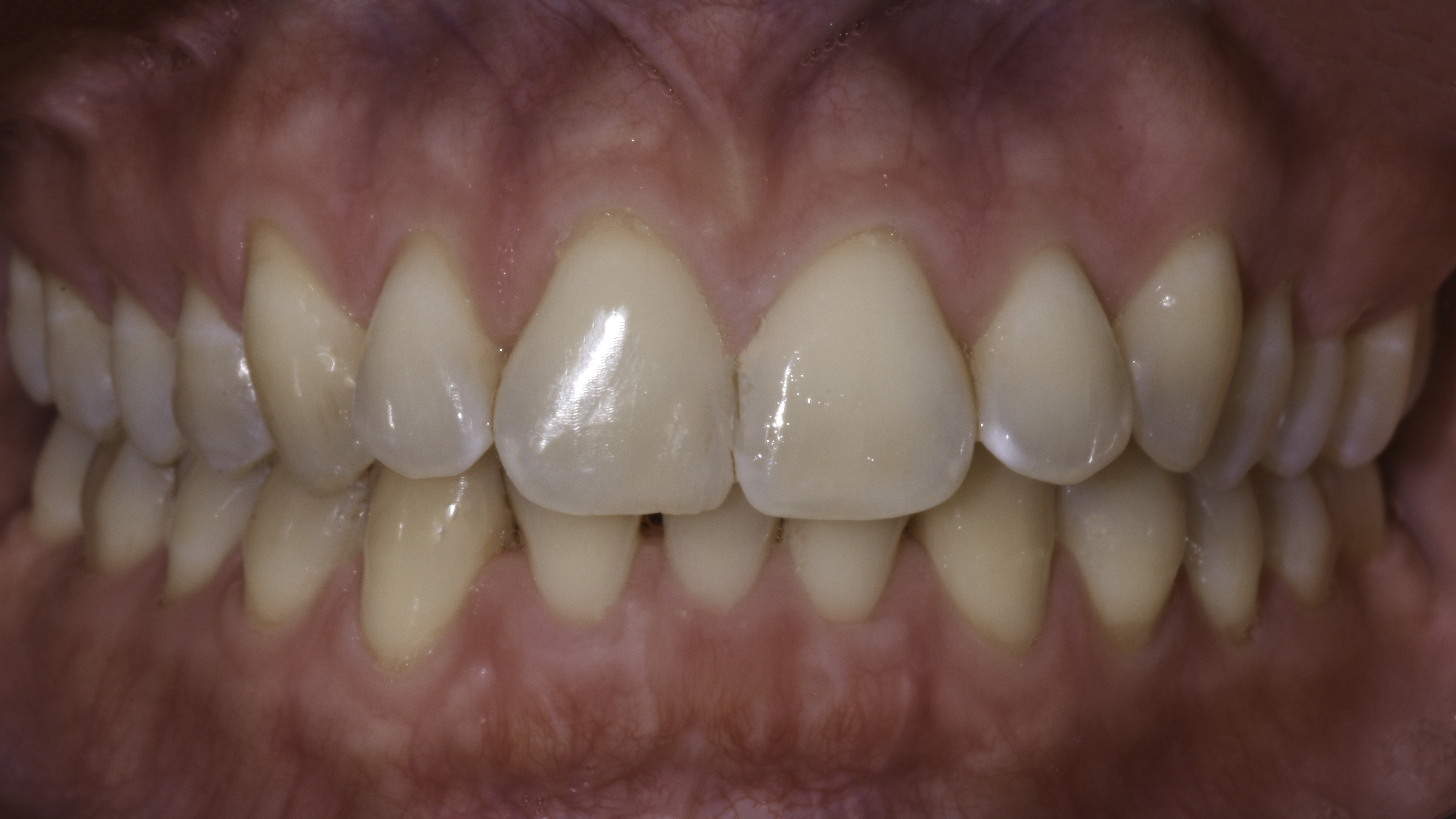
Clear aligners before and after, close-up view — Uneven spacing and rotation corrected with clear aligners, treated by Dr. Kambez Shukoor in Washington, DC — after treatment
Clear aligners before and after, close-up view — Uneven spacing and rotation corrected with clear aligners, treated by Dr. Kambez Shukoor in Washington, DC — before treatment
BeforeAfter

Uneven spacing and rotation corrected with clear aligners

Clear alignersSpacing closedRemovable trays

This case combined mild spacing with individually tipped and rotated teeth. Aligner therapy closed the irregular gaps and uprighted the rotated teeth so the upper and lower arches meet evenly, producing a smile line that reads as balanced rather than patched.
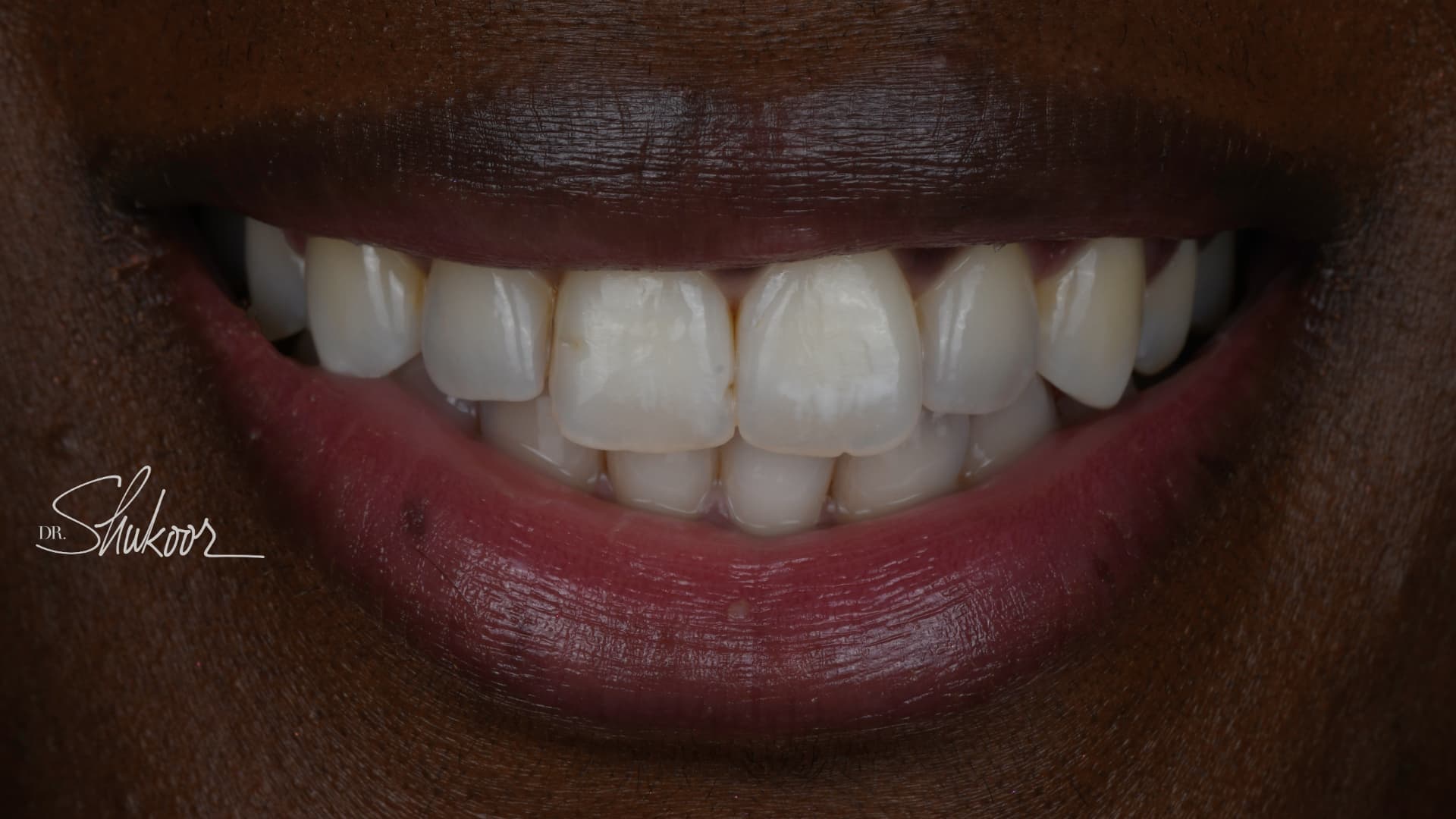
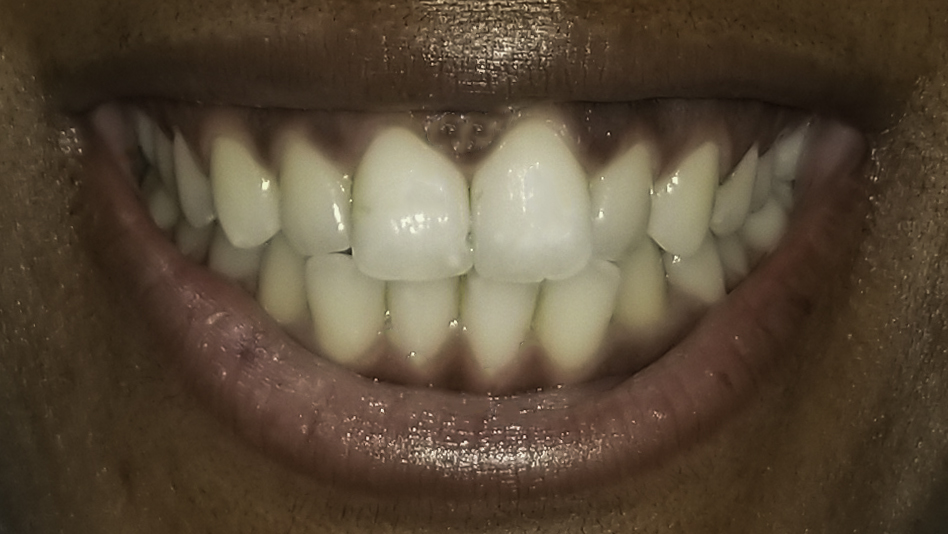
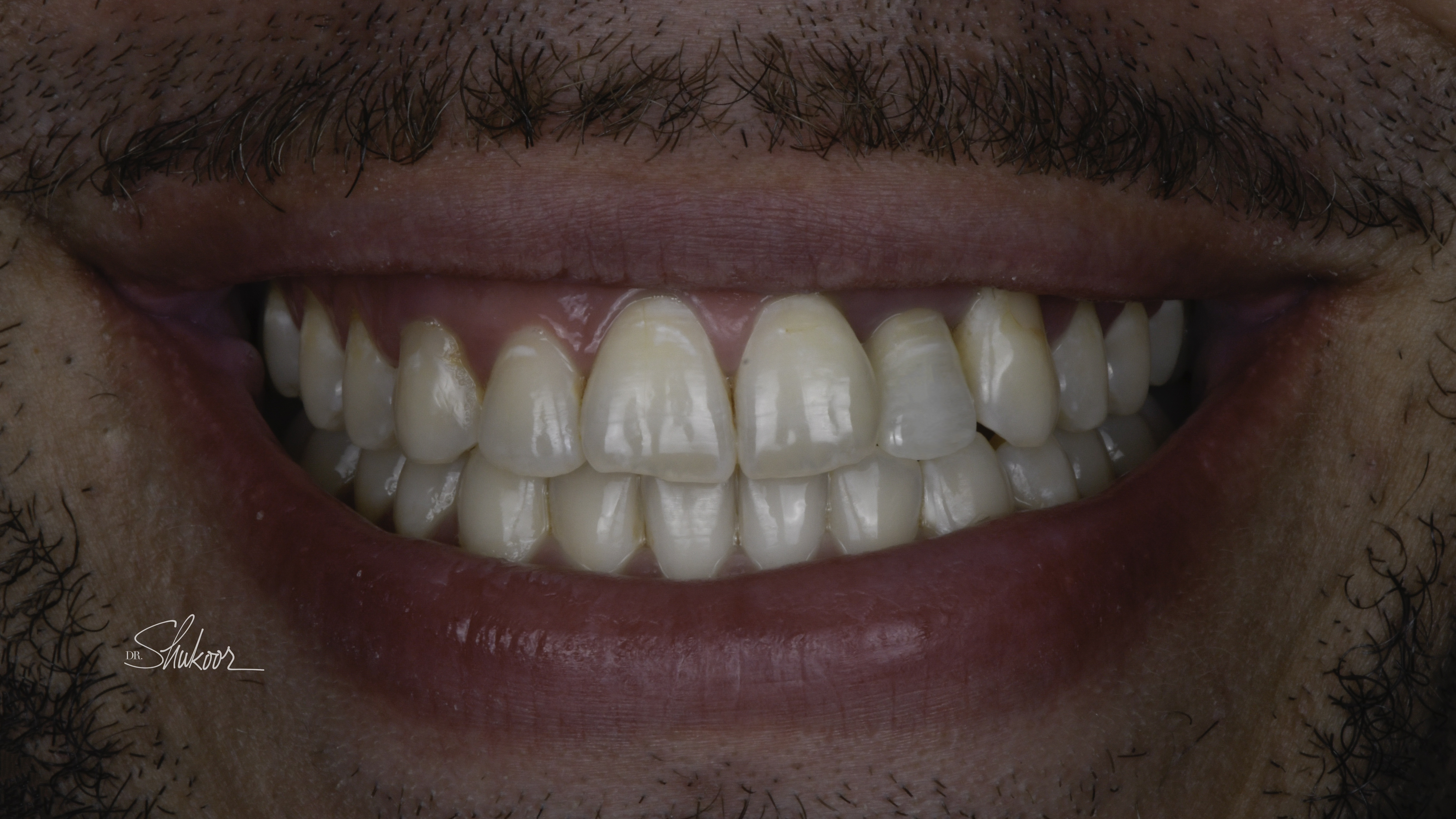
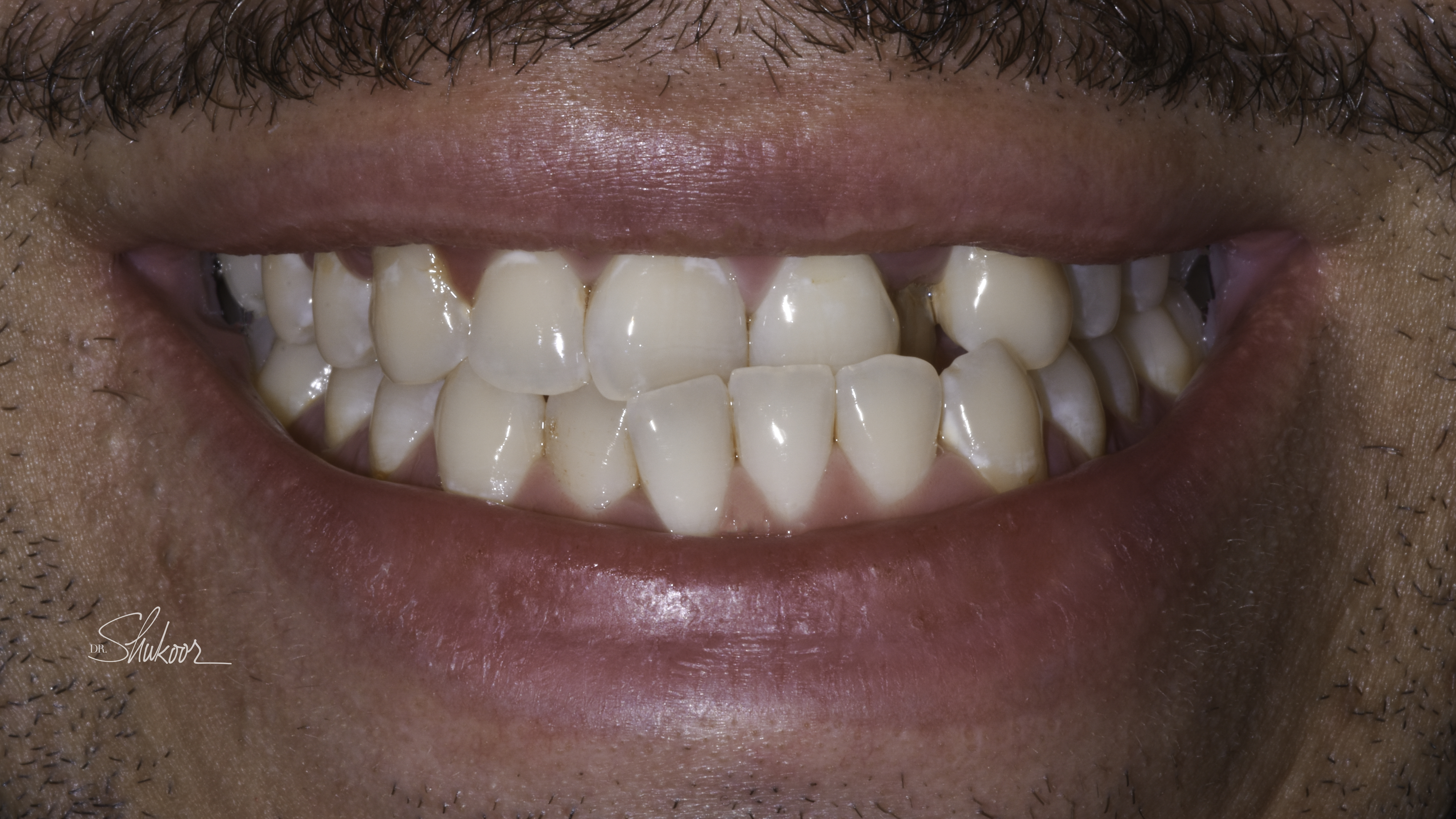
Clear aligners before and after — Crowded upper and lower front teeth aligned with clear aligners, treated by Dr. Kambez Shukoor in Washington, DC — after treatment
Clear aligners before and after — Crowded upper and lower front teeth aligned with clear aligners, treated by Dr. Kambez Shukoor in Washington, DC — before treatment
BeforeAfter

Crowded upper and lower front teeth aligned with clear aligners

Clear alignersBoth archesDigitally planned

Crowding on both arches was corrected with a digitally planned series of clear aligners. Each tray moved the teeth a fraction of a millimeter, unwinding the rotations and creating room for the front teeth to line up along a smooth arch. Straighter teeth here are not only a cosmetic gain — overlapping surfaces trap plaque and are far harder to floss, so alignment also makes daily hygiene meaningfully easier.

Clear aligners before and after — Worn, uneven incisal edges realigned with clear aligners, treated by Dr. Kambez Shukoor in Washington, DC — after treatment
Clear aligners before and after — Worn, uneven incisal edges realigned with clear aligners, treated by Dr. Kambez Shukoor in Washington, DC — before treatment
BeforeAfter

Worn, uneven incisal edges realigned with clear aligners

Clear alignersEdge wear addressedAdult treatment

Uneven front teeth had been wearing against each other at the edges. Aligner treatment repositioned them so the forces spread evenly across the arch, leveling the smile line and protecting the edges from continued chipping.

Clear aligners before and after — Overlapping front teeth straightened with clear aligner therapy, treated by Dr. Kambez Shukoor in Washington, DC — after treatment
Clear aligners before and after — Overlapping front teeth straightened with clear aligner therapy, treated by Dr. Kambez Shukoor in Washington, DC — before treatment
BeforeAfter

Overlapping front teeth straightened with clear aligner therapy

Clear alignersStaged traysRetainer maintained

Overlap across the upper front teeth was resolved in stages, each tray worn full-time and swapped on schedule. The finished alignment shows a continuous, even arch with the midline centered under the lip.

Smile view

Clear aligners before and after — Crowded arch expanded and leveled with clear aligners, treated by Dr. Kambez Shukoor in Washington, DC — after treatment
Clear aligners before and after — Crowded arch expanded and leveled with clear aligners, treated by Dr. Kambez Shukoor in Washington, DC — before treatment
BeforeAfter

Close-up view

Clear aligners before and after, close-up view — Crowded arch expanded and leveled with clear aligners, treated by Dr. Kambez Shukoor in Washington, DC — after treatment
Clear aligners before and after, close-up view — Crowded arch expanded and leveled with clear aligners, treated by Dr. Kambez Shukoor in Washington, DC — before treatment
BeforeAfter

Crowded arch expanded and leveled with clear aligners

Clear alignersArch developmentNo extractions

Rather than removing tooth structure to make room, the aligner plan used gentle arch development to create space, then rotated each crowded tooth into position. The result is a fuller smile with the front teeth aligned along a natural curve.

See all cases in the Smile Gallery →

Compare

Clear Aligners vs. Traditional Braces

Both move teeth with sustained pressure. They differ in how visible they are, whether you can take them out, and how much movement they can predictably deliver.

Recommended

Clear Aligners

Illustration of a transparent clear aligner tray seated over a full upper arch of natural teeth

A sequence of custom clear trays, each worn about one to two weeks, moving teeth in planned increments.

  • Nearly invisible in conversation and in photographs
  • Removable for eating, brushing, and flossing normally
  • No diet restrictions — the trays come out at meals
  • Results depend entirely on wearing them 20–22 hours a day
  • Not the right tool for every case — complex movement may need braces

Traditional Braces

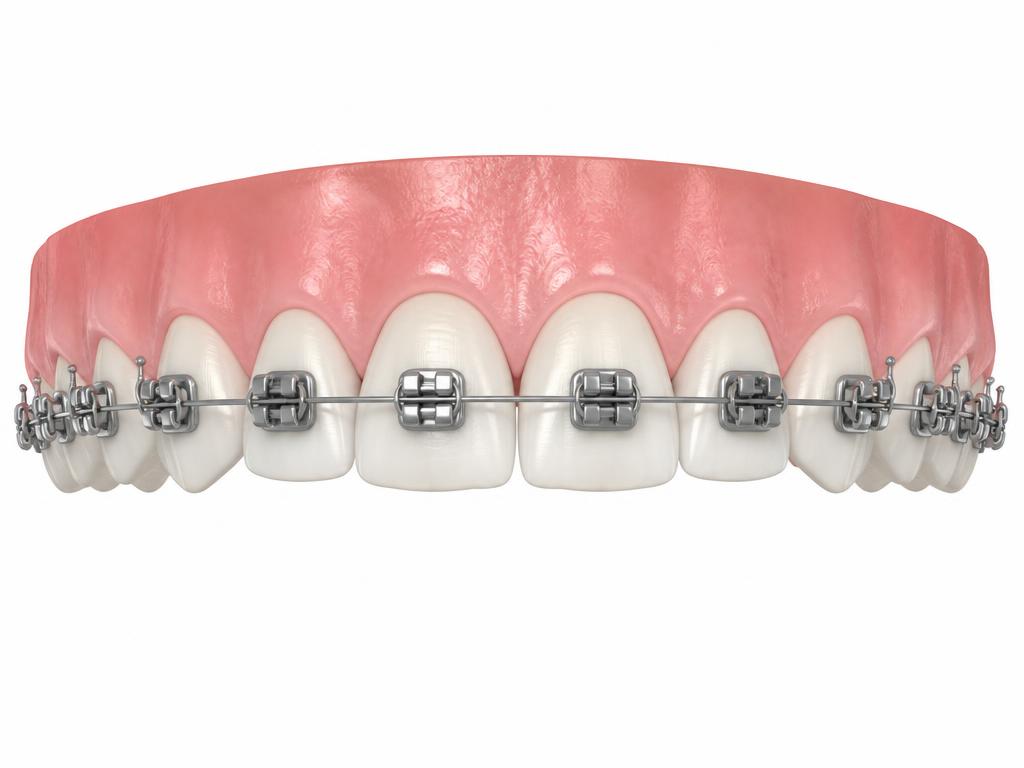
Illustration of traditional metal orthodontic braces with brackets and an archwire bonded across upper front teeth

Brackets bonded to each tooth and connected by an archwire, adjusted periodically in the chair.

  • Handles severe crowding, rotations, and complex bite correction
  • Fixed in place, so compliance is not a variable
  • Visible metal or ceramic brackets throughout treatment
  • Diet restrictions — hard, sticky, and chewy foods are off the table
  • Brushing and flossing around brackets takes more work

We do not position aligners as a universal replacement for braces. Mild to moderate cases are excellent candidates; if your bite needs the control that fixed appliances provide, we will say so at the consultation.

The Process

The Clear Aligner Process

Six stages from the first digital scan to the retainer that holds your result. Most of the work happens at home; visits are short and spaced weeks apart.

01

Consultation & 3D Scan

Visit 1

We assess your bite, gum health, and what is realistically achievable, then capture a digital 3D scan of both arches — no trays of impression material.

02

Custom Treatment Plan

1–3 weeks

Dr. Kambez Shukoor maps the full sequence of tooth movement from the scan, stage by stage, so you can see the projected end position before any trays are made.

03

Receiving Your Aligner Series

Visit 2

Your trays are fitted and checked, and any small enamel attachments needed to grip and guide specific teeth are bonded in place at this appointment.

04

Wearing & Changing Trays

Ongoing

Each tray is worn roughly one to two weeks per the plan, 20–22 hours a day, then swapped for the next one in the series. Most tray changes happen at home.

05

Progress Check-Ins

Every 6–10 weeks

Short visits confirm the teeth are tracking to plan. If a tooth is lagging, the plan is adjusted or refined rather than allowed to drift.

06

Retainer Phase

After active treatment

Teeth move back toward their old position if nothing holds them. A retainer — worn nightly long term — is what makes the result permanent.

Candidacy

Are You a Candidate for Clear Aligners?

Two questions decide it: is the movement your teeth need within what aligners can predictably deliver, and is position actually the thing that bothers you?

Aligners handle these well

  • 1Mild to moderate crowding or overlapping front teeth
  • 2Spacing and gaps you would like closed
  • 3Minor bite issues that do not need full orthodontic mechanics
  • 4Relapse after childhood braces that were never retained
  • 5Healthy gums, healthy bone, and no untreated decay
  • 6A willingness to wear the trays 20–22 hours a day

When a different approach fits better

Severe misalignment, significant rotations, and bite corrections that require controlled root movement are still more predictable with traditional orthodontics. In those cases we refer rather than stretch aligners past what they do well.

And sometimes position is not the real issue at all. If the shape, size, or color of the teeth is what bothers you, porcelain veneers or a smile makeover gets you there faster.

Dr. Kambez Shukoor tells you which of these your case actually is.

Discipline

Aligner Compliance & Care

Aligners have no material choice to make — the variable in this treatment is you. Here is what the trays ask of you, stated plainly before you start.

Wear time is the treatment

Aligners only move teeth while they are in your mouth. The standard is 20 to 22 hours a day — out for meals and brushing, in for everything else, including sleep.

  • Take them out only to eat, drink anything other than water, and brush
  • Put them straight back in — the hours add up faster than people expect
  • A tray that feels loose early usually means missed hours, not a bad fit

Keeping trays clean

Trays sit against your teeth almost all day, so anything left on them stays there. Cleaning takes under a minute and prevents both staining and odor.

  • Rinse in cool water every time they come out — never hot water, it warps them
  • Brush them gently with a soft brush and clear soap, not whitening toothpaste
  • Brush your teeth before reinserting so nothing is sealed against enamel

Why skipping wear time costs you

Each tray is engineered to deliver a specific amount of movement in a set window. Falling short of the hours means the next tray no longer fits the teeth it was designed for.

  • Treatment stretches out — weeks, not days, per skipped stretch
  • Trays start feeling tight or not seating fully at the back
  • Persistent tracking problems require refinement scans and new trays

Day to Day

Living With Clear Aligners

There is no recovery period here — nothing is cut, drilled, or removed. What there is instead is a rhythm you settle into for the length of treatment.

Each new tray in the series

  • Mild pressure or tenderness for the first day or two — that is movement starting
  • Slight lisp for a day when you begin, which almost always resolves
  • Switching to a new tray at bedtime lets you sleep through the tightest hours
  • By day three a tray usually feels like nothing at all

Meals, work, and everyday life

  • Trays come out for every meal and go back in after brushing
  • Coffee, tea, and wine stain trays — take them out, then rinse before reinserting
  • Grazing all day is the habit that quietly costs you wear hours
  • Carry the case; wrapping trays in a napkin is how most get thrown away

After active treatment ends

Teeth drift back toward their old position for the rest of your life if nothing holds them. A retainer worn nightly is not an optional add-on — it is the part that makes months of tray wear permanent. Many patients finish with professional whitening once the teeth have settled into place.

What the treatment rhythm looks like
StageWhat it feels like
First weekGetting used to trays in and out; brief lisp; noticeable pressure
Each tray changeTightness for 1–2 days, then it settles
Mid-treatmentRoutine and largely unremarkable; visible progress in photos
Check-insShort visits every 6–10 weeks to confirm tracking
Retainer phaseNightly wear, indefinitely, to hold the result

Investment

What Does Clear Aligner Treatment Cost in Washington, DC?

Aligner cases are quoted individually, because a six-month case and an eighteen-month case are not the same treatment. These are the three things that move the number.

Case complexity

  • Mild spacing needs far less planned movement than significant crowding
  • Cases needing attachments or interproximal reduction take more chair time
  • Bite correction adds planning stages beyond simple alignment

Number of trays

  • Tray count follows directly from how far the teeth must travel
  • One arch only costs less than treating both arches
  • Refinement trays, when needed, are quoted up front rather than later

Treatment length

  • Longer cases include more check-in visits and monitoring
  • Retainers after active treatment are part of the written quote
  • Monthly financing spreads the cost across the treatment period

We do not publish a flat price for aligners. After your scan you receive an itemized written quote covering the full tray series, check-ins, and retainers, and our financial information page explains CareCredit and Cherry monthly payment options.

Why Choose

DC Implant & Cosmetic Dentistry

Dr. Kambez Shukoor is a U.S. Navy veteran dentist who plans, sequences, and monitors your aligner treatment personally, in one Connecticut Avenue office.

Your Plan, Mapped In-House

Dr. Kambez Shukoor plans the sequence of movement himself and reviews every check-in, so the person who designed your case is the person tracking it.

Cosmetic & Restorative Training

FAGD and fellowship-level training, with alignment treated as one part of a whole-smile plan rather than an isolated product.

See the End Position First

Digital planning shows the projected result before your first tray is made, so you know what you are committing months to.

Comfort-First Care

No brackets, no wire adjustments, and short check-ins — pressure is limited to the first day or two of each new tray.

Honest Case Selection

If your bite needs traditional orthodontics, or if veneers would actually address what bothers you, we say so instead of selling trays.

Transparent Costs

One written quote covering the full series, refinements, and retainers, with CareCredit and Cherry financing available.

FAQ

Clear Aligner Questions

The questions Washington, DC patients ask most often before starting aligner treatment.