
General Dentistry
Inlays & Onlays in Washington, DC
Custom-fabricated restorations that repair a tooth with more damage than a filling can address, without reducing it for a full crown.

Google Rating
4.9 · 303 reviews
Availability
Same-day consults
Payments
Financing available
The Basics
What Are Inlays and Onlays?
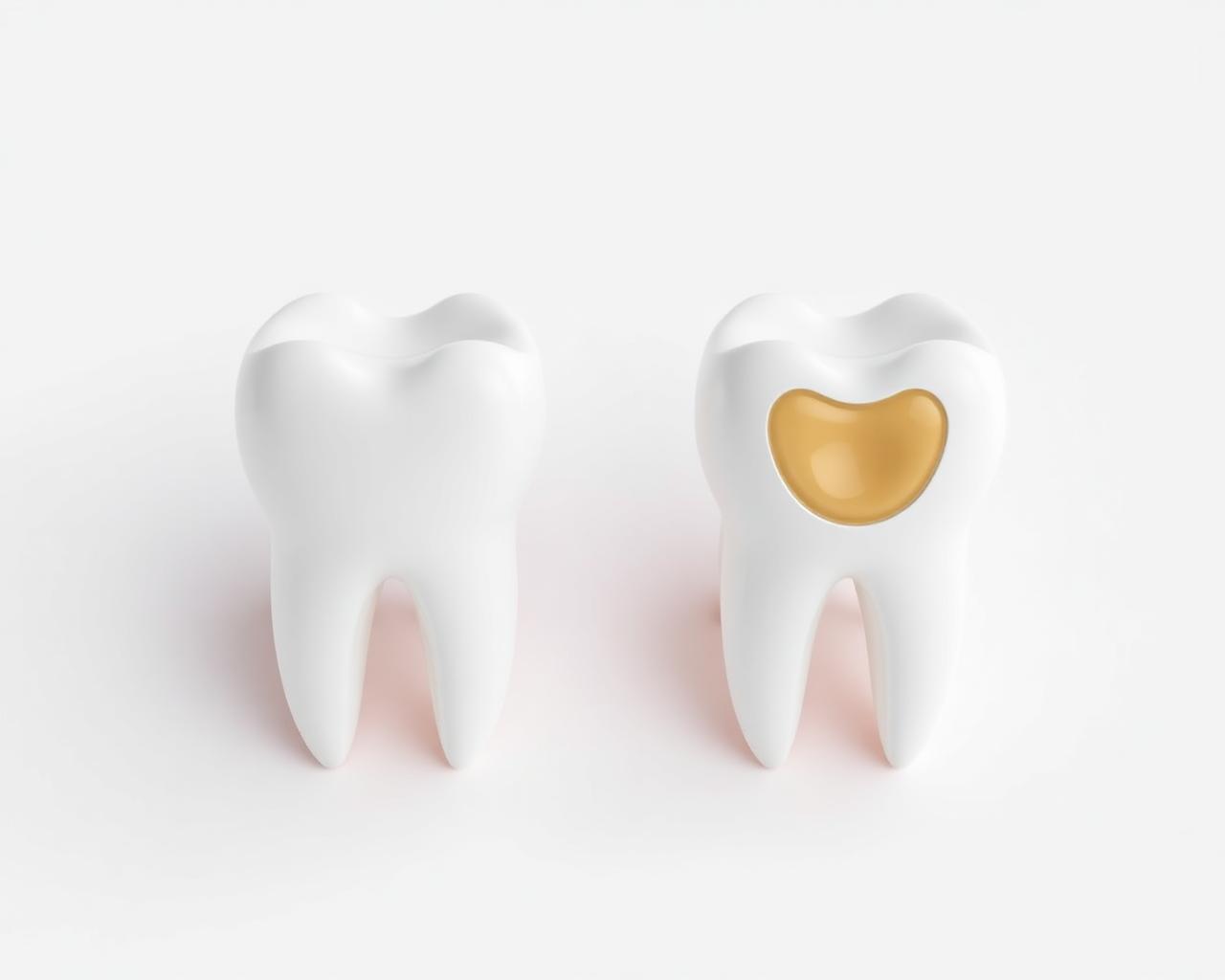
Inlays and onlays are custom-made restorations that repair a damaged back tooth. An inlay fits within the cusps of the tooth’s chewing surface; an onlay extends further, covering one or more of the cusps themselves. Unlike a filling, which is shaped directly in the tooth, both are fabricated outside the mouth — in a laboratory or by digital milling — and then bonded into place as one solid piece.
Inlay or onlay — how the two differ
- An inlay sits inside the cusps, rebuilding the hollow of the chewing surface
- An onlay extends over one or more cusps that are damaged or too weak to leave exposed
- Both are partial-coverage — the healthy walls of the tooth are left standing
- Both are bonded, which reinforces the remaining structure rather than wedging it apart
Why “indirect” matters
Because the restoration is made and fully hardened before it ever enters the mouth, it can be milled to a precise shape and a dense, stable material — something a direct filling cannot match once the span gets wide. That is the whole reason this middle step exists between a filling and a dental crown.
Keeping more of your own tooth
A crown requires reducing the tooth on every surface. An inlay or onlay replaces only what is missing. Where enough sound structure remains, choosing the smaller restoration keeps options open for the future — and natural tooth is never something you get back.
At a glance
Inlays & Onlays
- Treatment time
- About 60–90 minutes for the preparation visit
- Number of visits
- Typically two, unless same-day milling is used
- Anesthesia
- Local anesthetic
- Longevity
- Commonly well over ten years with good care
- Materials
- Porcelain/ceramic, gold, or composite resin
- Downtime
- None — mild sensitivity for a few days is normal
or call (202) 363-2810
Spectrum
Filling vs. Inlay/Onlay vs. Crown
These are not three competing products — they are three points on one spectrum, and the deciding factor is simply how much of the tooth needs to be covered.
Filling
Minor to moderate decay. The material is shaped directly in the tooth and set in place during the same visit.
- Handles small and moderate cavities with sound tooth around them
- Direct application — placed, shaped, and polished in one visit
- Conserves the most tooth structure of the three
- Flexes and can fail when the cavity gets wide or undermines a cusp
Inlay / Onlay
Larger cavities or moderate damage where a filling would be too weak, but a full crown is not necessary yet. Fabricated outside the mouth and bonded in.
- Rebuilds the chewing surface with a precisely milled, pre-hardened piece
- Stronger than a direct filling across a wide span
- Keeps far more natural tooth than a crown, which is reduced all round
- Indirect fabrication — typically two visits and a temporary in between
Crown
Significant damage, a cracked tooth, or one too weakened to support a smaller restoration. The tooth is covered completely.
- Full coverage holds a compromised tooth together under load
- The standard restoration after root canal treatment on a back tooth
- Requires reducing the tooth on every surface
- The most involved and most expensive of the three
The general rule: the more tooth structure is gone, the more coverage the restoration needs. A filling handles a contained cavity in one visit, an inlay or onlay takes over when a direct repair would be too weak, and a crown covers a tooth that can no longer support anything smaller.
Materials
Inlay/Onlay Material Options
Which material suits the tooth depends on where it sits, how hard you chew on it, and how visible it is. We confirm the exact options for your case at the consultation.
Porcelain / Ceramic
The tooth-colored default
Milled or lab-pressed ceramic shade-matched to the surrounding tooth. It resists staining, wears at a rate close to natural enamel, and bonds strongly to the prepared surface — which is why it is the usual choice for a visible back tooth.
Best for
Best for patients who do not want metal visible when they laugh or open wide.
- Shade-matched so the restoration is difficult to spot
- Bonded, which reinforces the remaining tooth structure
- Highly stain-resistant over the long term
- The material most often used for same-day milled restorations
Grinding and clenching influence this choice more than most patients expect — if you wake with a sore jaw, say so, because it changes both the material and whether a nightguard should be part of the plan.
The Process
The Inlay/Onlay Process
Five stages across two appointments — or one, when the restoration can be milled in-office while you wait.
Consultation & Diagnosis
Visit one, first step
We examine the tooth and review an X-ray to see how much structure has been lost and how close the damage sits to the nerve. That is the call between a filling, an inlay or onlay, and a crown — and we explain which one the tooth actually needs and why.
Tooth Preparation
Removing damaged material
The tooth is numbed with local anesthetic and the decay, old filling material, and unsupported tooth structure are cleared away. The prepared shape is deliberately conservative — only what will not hold up is removed.
Digital Impression or Scan
A few minutes, no putty tray
The prepared tooth, the neighbouring teeth, and your bite are captured with an intraoral scanner. That digital model is what the inlay or onlay is designed and milled from, so the fit at the margins is precise.
Temporary Restoration
Worn between visits
A temporary restoration protects the prepared tooth while the permanent piece is fabricated, so you can eat and speak normally in the meantime. This step is skipped when same-day milling technology is used.
Final Placement & Bonding
Visit two
The permanent inlay or onlay is tried in, checked for fit, contact, and shade, then bonded to the tooth with adhesive resin. We adjust the bite with articulating paper and polish the margins so floss passes cleanly.
Candidacy
Are You a Candidate for an Inlay or Onlay?
This restoration occupies a specific middle ground. Knowing what points here — and what points either side of it — is most of the decision.
What points to an inlay or onlay
- 1A cavity or area of damage too large for a standard filling to hold reliably
- 2Damage that is not severe enough to justify reducing the tooth for a full crown
- 3A large old filling that is failing, with sound walls still standing around it
- 4A single damaged or undermined cusp that needs covering, but the rest of the tooth is intact
- 5A back tooth carrying real chewing load, where a direct repair would flex
- 6Enough healthy structure left to bond a partial-coverage restoration to
When something else is the better answer
A smaller cavity with plenty of solid tooth around it does not need an indirect restoration at all — a dental filling is quicker, cheaper, and entirely sufficient.
More extensive damage, a crack running through the tooth, or walls too thin to trust call for a dental crown. And if the nerve is involved, root canal treatment comes first, whatever is placed on top afterwards.
Book AppointmentDental Fillings
The right repair for a smaller cavity that still has plenty of sound tooth around it — done directly, in one visit.
Dental FillingsDental Crowns
Full coverage for a tooth with extensive damage, a crack, or too little structure left to support a smaller restoration.
Dental CrownsRoot Canal Treatment
What comes first when the damage has reached the nerve — the tooth is then rebuilt and usually crowned.
Root Canal TreatmentRecovery
Recovery After an Inlay or Onlay
The first few days
Wait for the numbness to wear off before eating, usually one to three hours. The restoration is bonded and fully set before you leave, so there is nothing to avoid once sensation returns. Mild sensitivity to cold or to pressure is common for a few days and settles on its own as the tooth calms down.
Adjusting to the bite
A new chewing surface can feel unfamiliar for a day or two while you get used to it. What should not persist is the sense that the tooth is hitting first — that is a high spot, and a two-minute adjustment with articulating paper fixes it. Do not live around it.
When to call us
- The bite feels high, or the tooth is sore only when you tap on it
- Sensitivity is getting worse rather than better after a week or two
- Sharp pain on biting, or pain that lingers after something cold
- A rough margin, or floss suddenly catching on the new restoration
- A temporary that comes loose between appointments — call, do not wait
Adjustments after an indirect restoration are quick and expected. Brushing and flossing continue as normal from the same day.
Investment
What Do Inlays and Onlays Cost in Washington, DC?
Inlays and onlays sit between a filling and a crown in cost as well as coverage. Three things determine your actual number.
Material choice
- Porcelain and ceramic are the usual tooth-colored options
- Gold alloy is priced differently and varies with the metal market
- Indirect composite generally costs less but wears sooner
Inlay or onlay
- An onlay covers one or more cusps, so it is the larger restoration
- Greater coverage means more material and more chair time
- Onlays therefore typically cost more than inlays on the same tooth
Number of visits
- A lab-fabricated restoration means two appointments and a temporary
- Same-day milling removes the second visit where it is available
- Most PPO plans treat this as major restorative work after deductible
We do not publish a flat price. Your benefits are verified before treatment and any out-of-pocket amount is confirmed first — payment options and financing are set out on our financial information page.
Why Choose
DC Implant & Cosmetic Dentistry
Everyday restorative work and the more involved treatment behind it, handled by Dr. Kambez Shukoor in one Connecticut Avenue office.
Restorations That Disappear
Ceramic inlays and onlays are shade-matched to the tooth around them, so a rebuilt molar looks like a molar rather than like dental work.
Planned Around Your Schedule
Preparation and placement are two focused appointments with a comfortable temporary in between — and we tell you the timeline before you commit to it.
Everything Handled In-House
If the tooth turns out to need more than a partial-coverage restoration, Dr. Kambez Shukoor can move to a dental crown or root canal treatment here — no referral out.
Conservative, Credentialed Care
FAGD, FICOI, and MICOI credentials across restorative dentistry — which is exactly the judgement behind choosing the smallest restoration that will actually hold.
Comfortable for Anxious Patients
Topical gel before the injection, unhurried anesthetic delivery, and sedation options for patients whose anxiety is the real obstacle to getting a tooth repaired.
Insurance Handled For You
Inlays and onlays are usually classed as major restorative treatment. We verify your benefits in advance and set out payment and financing on our financial information page.
FAQ
Inlay & Onlay Questions
The questions Washington, DC patients ask most often about indirect restorations.
Related
Either Side of an Inlay or Onlay
The restorations one step smaller and one step larger, and the treatment that comes first when the nerve is involved.
Dental Fillings
The direct restoration one step down the spectrum, for cavities that have not undermined the tooth.
Dental FillingsDental Crowns
Full-coverage restorations made and fitted in this office when a partial-coverage piece is not enough.
Dental CrownsRoot Canal Treatment
Treatment for a tooth whose nerve is involved, before the biting surface is rebuilt.
Root Canal TreatmentExams & X-Rays
How damage under an old filling is usually found — while the repair is still a small one.
Exams & X-RaysNot sure if your tooth needs a filling, an inlay, or a crown?
Bring us the tooth and we will show you what is left of it. The right restoration is the smallest one that will hold — and we will tell you which that is.
4444 Connecticut Ave NW #106, Washington, DC 20008