
General Dentistry
Dental Bridges in Washington, DC
A dental bridge is a fixed restoration that replaces one or more missing teeth by anchoring to the healthy teeth on either side of the gap — designed, shade-matched, and cemented in-house by Dr. Kambez Shukoor.

Google Rating
4.9 · 303 reviews
Availability
Same-day consults
Payments
Financing available
Definition
What Is a Dental Bridge?
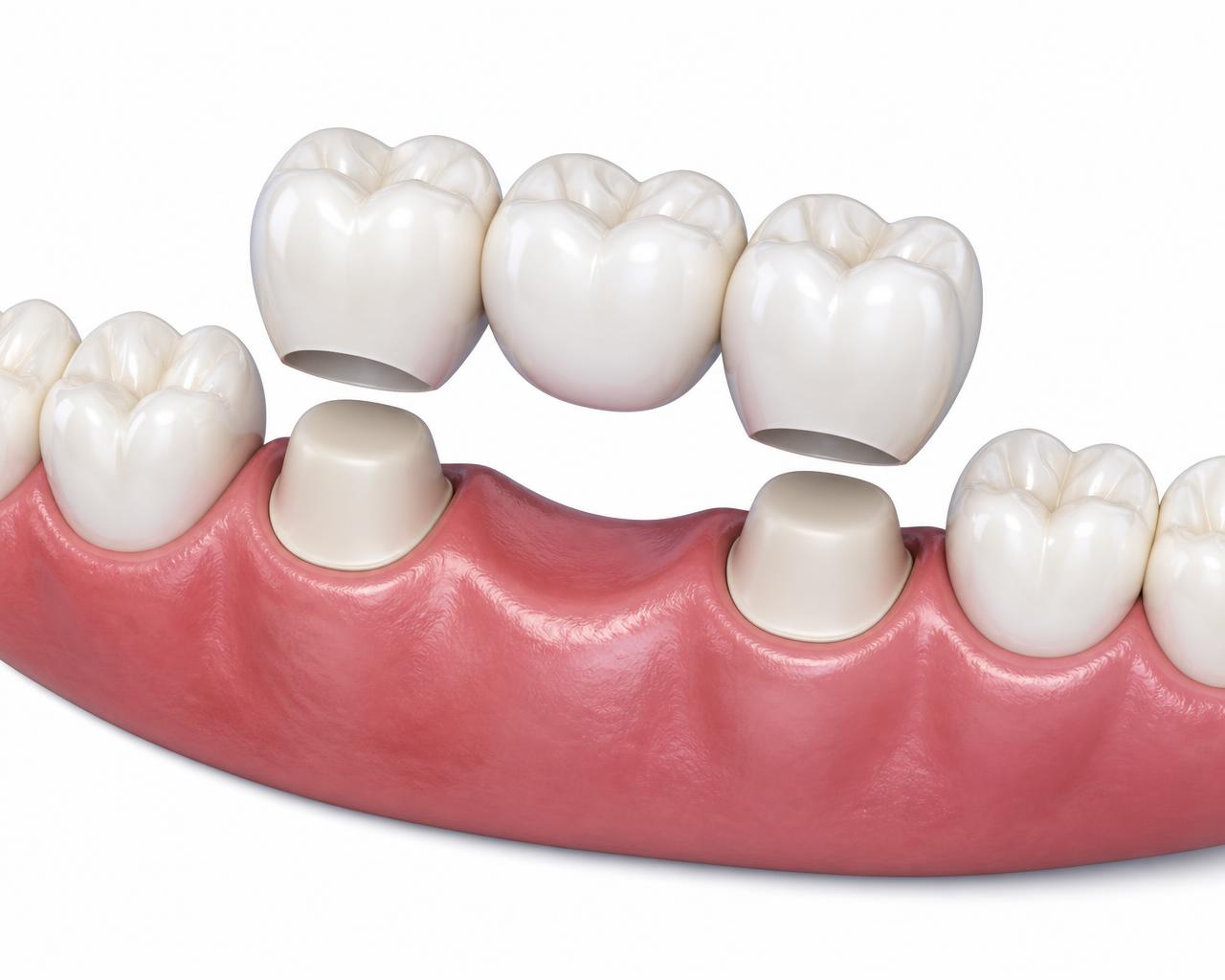
A dental bridge is a fixed restoration that spans the gap left by one or more missing teeth. The replacement tooth — called a pontic — is held in place by crowns cemented onto the natural teeth on either side of the space, so the whole unit stays put and is not taken out at night.
Those neighboring teeth are what make a bridge work, and they are also the trade-off: each one is shaped down so a crown can seat over it. That is the central difference between a bridge and a dental implant, which replaces the root itself and leaves the teeth on either side alone. Both are legitimate ways to close a gap, and the ADA's patient guide to bridges treats them the same way.
When a bridge is the right answer
- One or a few teeth in a row are missing, with sound teeth on both sides of the gap
- Those neighboring teeth already need crowns for decay, cracks, or large fillings
- A medical condition, medication, or bone deficiency rules out implant surgery
- You want the gap closed in weeks rather than waiting months for integration
- An existing bridge has worn out and needs replacing
This page covers bridges anchored to your own natural teeth. When the neighboring teeth are missing too, or you would rather not crown them, the same span can be carried by implants instead — see implant bridges.
At a glance
Dental Bridge
- Treatment time
- About 2–3 weeks start to finish
- Number of visits
- Typically 2–3 (prep, placement)
- Anesthesia
- Local, for preparing the anchor teeth
- Longevity
- 10–15+ years with good care
- Adjacent teeth
- Require crown preparation on both sides
or call (202) 363-2810
Compare
Dental Bridge vs. Dental Implant
Both close the same gap with a fixed, natural-looking tooth. They differ in what they use for support — your neighboring teeth, or the bone where the root used to be — and that decides almost everything else.
Dental Bridge
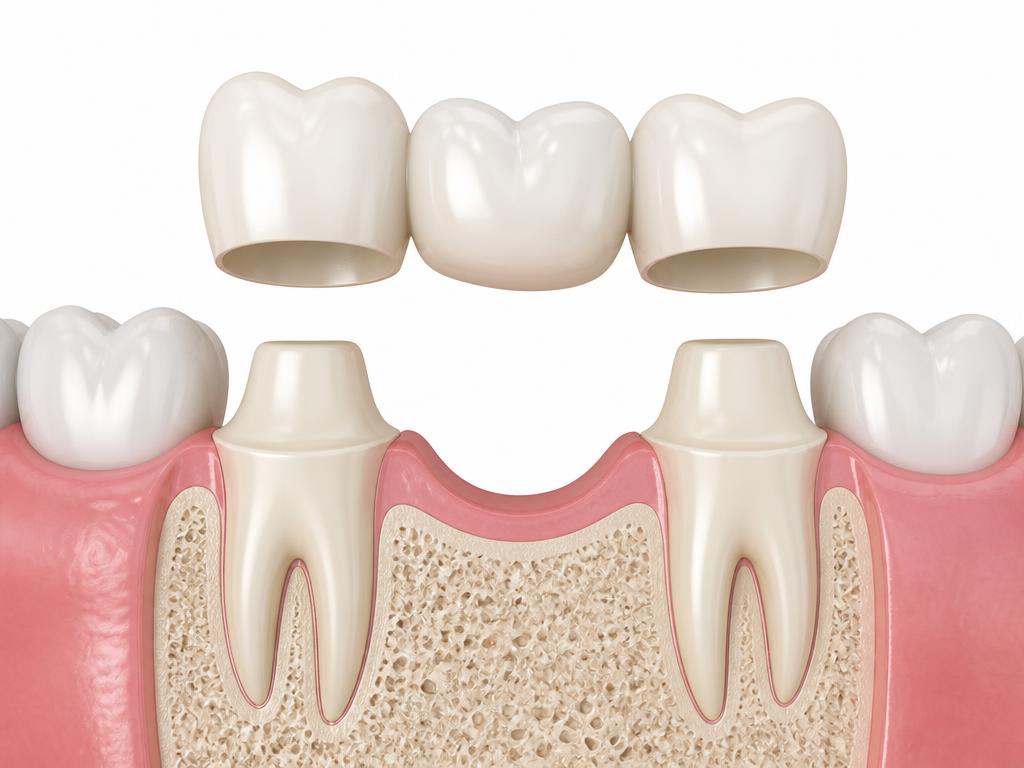
A fixed restoration that spans the gap, anchored by crowns on the natural teeth on either side.
- Typically finished in about two to three weeks, with no healing period
- No surgery — an option when implant surgery isn't advisable
- Efficient when the anchor teeth already need crowns for other reasons
- The adjacent teeth must be shaped down to receive crowns
- Does not stop the bone under the gap from gradually resorbing
- Commonly lasts 10–15 years before it needs replacing
Dental Implant
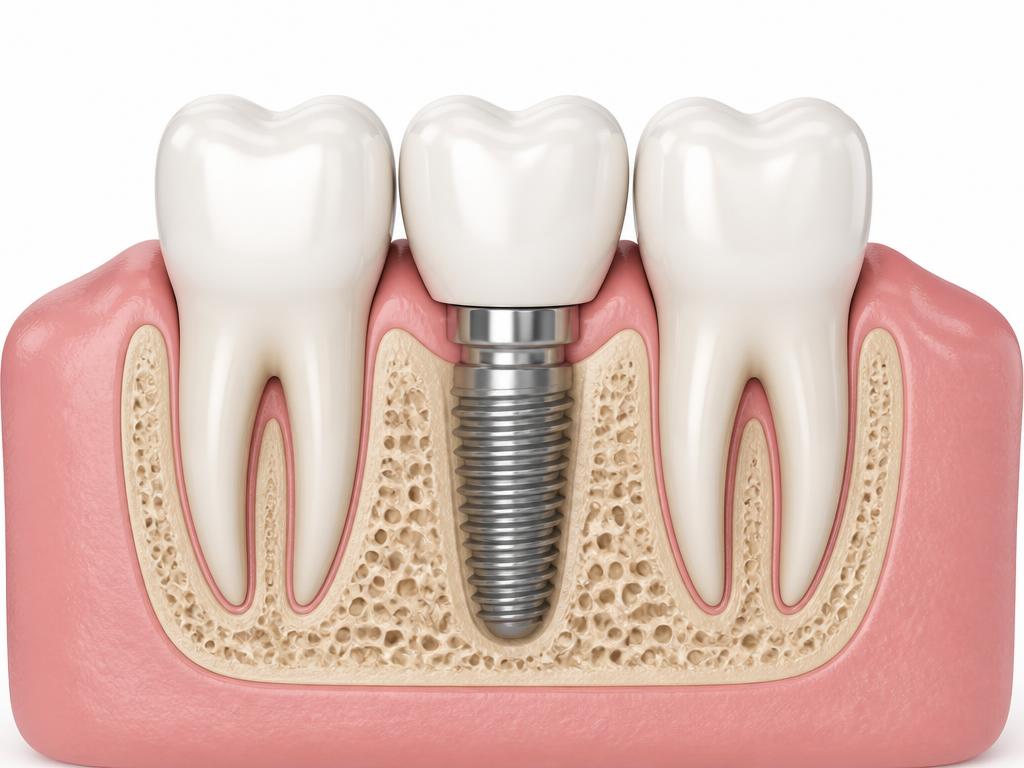
A titanium post replacing the tooth root itself — see our dental implant page.
- Neighboring teeth are left completely untouched
- Stimulates the jawbone, preserving volume at the site
- Cleaned like a normal tooth — floss straight between
- Decades of service life is realistic with good maintenance
- Requires minor surgery and a multi-month integration period
- May need grafting first if bone volume is insufficient
The short version: if the teeth beside the gap are pristine and you want to keep them that way, an implant usually wins. If they already need crowns, surgery isn't advisable, or you need the gap closed sooner, a bridge is a sound, well-proven choice.
The Process
The Dental Bridge Process
Two to three visits over roughly two to three weeks, with a temporary bridge in between so you are never left with a visible gap.
Consultation & Imaging
Visit 1
We examine the gap and the teeth on either side, take X-rays, and confirm those anchor teeth are healthy enough to carry a bridge. This is also where we compare the bridge honestly against an implant for your specific case.
Preparing the Anchor Teeth
Visit 2
Under local anesthetic, the natural teeth on each side of the gap are shaped down so crowns can seat over them. Any decay or old filling material is removed first, and a build-up is placed if a tooth needs rebuilding.
Digital Impression or Scan
Same visit
A digital scan captures the prepared teeth, the gap, and your opposing bite, and goes to the lab with your shade so the bridge matches the teeth around it.
Temporary Bridge
About 2–3 weeks
A temporary bridge protects the prepared teeth and keeps your appearance and bite normal while the permanent bridge is fabricated. You eat and speak normally, avoiding sticky foods on that side.
Final Bridge Placement & Bonding
Final visit
The bridge is tried in and checked for fit, contacts, shade, and bite, then permanently cemented. We finish by showing you how to clean underneath it with a floss threader or water flosser.
Candidacy
Are You a Candidate for a Dental Bridge?
A bridge stands on the teeth beside the gap, so candidacy comes down to two questions: are those teeth strong enough to carry it, and is crowning them a trade you should be making?
What makes a good bridge candidate
- 1Healthy teeth with sound roots on both sides of the gap
- 2Anchor teeth that already need crowns for decay, cracks, or large fillings
- 3Stable gums, with any periodontal disease treated first
- 4A patient who cannot or would rather not have implant surgery
- 5A short span — one or a few teeth missing in a row
When an implant fits better
If the teeth on either side of the gap are intact and cavity-free, cutting them down to hold a bridge is a real cost. A single tooth implant leaves them exactly as they are, and it also maintains the bone under the gap, which a bridge cannot do.
Thin or resorbed bone does not rule an implant out either — bone grafting rebuilds the site first. And when several teeth in a row are gone, the span may be better carried on implants than on natural teeth.
Every option below is planned and performed in-house by Dr. Kambez Shukoor.
Single Tooth Implants
Replaces the root itself and leaves the neighboring teeth alone — the better fit when those teeth are healthy and untouched.
Single Tooth ImplantsBone Grafting
If a site lacks the bone volume for an implant today, grafting can rebuild it and reopen the implant option.
Bone GraftingMultiple Teeth Implants
A bridge anchored on implants rather than natural teeth — for larger gaps where crowning the neighbors isn't the answer.
Multiple Teeth ImplantsMaterials
Bridge Material Options
A bridge is made from the same restorative ceramics as a crown, but the selection logic changes: the span between the anchors carries load without a root beneath it, so strength weighs more heavily.
Zirconia
Maximum strength
Monolithic zirconia is milled from a single high-strength ceramic block, which matters more on a bridge than on a single crown because the span between the anchors carries load with no root beneath it. Modern layered zirconia is translucent enough for visible teeth as well.
Best for
Back-tooth spans, heavier bites, grinders, and longer bridges.
- Highest fracture resistance of the tooth-colored materials
- Metal-free, with no dark line at the gum
- Milled as one piece, so there is no weak joint between units
The anchor units of a bridge are crowns in their own right — our dental crowns page covers how each material behaves on a single tooth, and we confirm the exact material for your case at the consultation.
Recovery
Recovery After a Dental Bridge
The first few days
There is no surgery and no healing period. Most patients eat normally the same day, once the anesthetic has fully worn off.
- Mild hot and cold sensitivity on the prepared anchor teeth for a few days is normal
- Gum tissue around the anchor teeth may be tender for 24–48 hours
- Speech and chewing feel slightly different for a few days while you adjust
- Call us if the bite feels high after a day or two — it is a quick adjustment
- With the temporary bridge, avoid sticky and very hard foods on that side
Cleaning under the bridge — the part that decides its lifespan
A bridge is joined together, so ordinary flossing cannot pass between the units. The underside of the span has to be cleaned sideways, every day. Bridges rarely fail because the ceramic breaks; they fail because decay or gum disease develops at an anchor tooth that was never cleaned properly underneath.
- Use a floss threader or superfloss daily to clean beneath the pontic
- A water flosser flushes the space under the span in seconds
- Keep six-month professional cleanings so the anchor margins stay healthy
- Wear a nightguard if you grind — a span takes grinding force harder than a single tooth
| Timeframe | What to expect |
|---|---|
| Day 1 | Normal eating once numbness wears off; mild sensitivity possible |
| Days 2–7 | Sensitivity settles; temporary bridge protected from sticky foods |
| Weeks 2–3 | Final bridge cemented, bite checked and adjusted |
| Ongoing | Daily cleaning under the span, six-month cleanings, nightguard if you grind |
Investment
What Does a Dental Bridge Cost in Washington, DC?
We do not publish a single price, because a bridge is quoted by the number of units it contains and by what the anchor teeth need first. Here is exactly what moves the number.
Number of teeth replaced
- A bridge is quoted per unit — anchors and replacement teeth both count
- A longer span needs stronger material and more lab work
- Very long spans may be better carried on implants instead
Material choice
- Zirconia, e.max, and porcelain-fused-to-metal sit at different price points
- Front spans often justify the more esthetic ceramic
- Lab characterization for visible teeth adds to the fee
Work needed on the anchor teeth
- Root canal treatment first if the nerve of an anchor tooth is involved
- A core build-up when too little sound tooth remains to hold a crown
- Gum treatment before anything is prepared, if periodontal disease is present
Insurance often contributes toward a bridge, since it is a restorative procedure. We verify your benefits in advance and offer CareCredit and Cherry financing — see our financial information page.
Why Choose
DC Implant & Cosmetic Dentistry
Dr. Kambez Shukoor plans, prepares, and delivers restorative work himself, in one Connecticut Avenue office.
Planned & Placed In One Office
Dr. Kambez Shukoor prepares the anchor teeth, selects the shade, and cements the final bridge himself in our Washington, DC office — no referral out, no handoff mid-treatment.
Restorative & Implant Training
FAGD, FICOI, and MICOI credentials, with continuing education across both conventional restorative dentistry and implant reconstruction.
Digital Scanning & Imaging
X-rays confirm the anchor teeth are sound before anything is prepared, and digital scans give the lab an accurate span, bite, and margin to work from.
Comfort-First Care
Preparation is done under local anesthetic, and sedation options are available for patients who find dental treatment stressful.
Honest Case Planning
A bridge is the right answer in plenty of cases, and an implant is the right answer in plenty of others. You get both sides of that comparison for your own mouth, not a default recommendation.
Transparent Costs
Itemized written treatment plans, insurance coordination, and CareCredit and Cherry financing explained on our financial information page.
FAQ
Dental Bridge Questions
The questions Washington, DC patients ask most often when weighing a bridge against the alternatives.
Related
Restorative & Implant Services
A bridge is one of several ways to handle a missing tooth. These are the pages most often read alongside it.
Single Tooth Implants
The surgical alternative that replaces the root and leaves the neighboring teeth untouched.
Single Tooth ImplantsDental Crowns
The anchor units of a bridge are crowns — this page covers how a single crown is made and placed.
Dental CrownsRoot Canal Treatment
Sometimes needed on an anchor tooth before a bridge can be built over it.
Root Canal TreatmentDentures
When too many teeth are missing for a bridge to have healthy anchors on both sides.
DenturesBridge or implant — let's settle which one your case calls for.
One consultation with imaging answers it: whether the teeth beside the gap can carry a bridge, whether an implant is realistic, what each option costs, and how long each takes. Book online or call the office.
4444 Connecticut Ave NW #106, Washington, DC 20008