

Porcelain veneers are thin, custom-shaded shells bonded to the front of your teeth to correct shape, color, and spacing — designed and placed in-house by Dr. Kambez Shukoor.
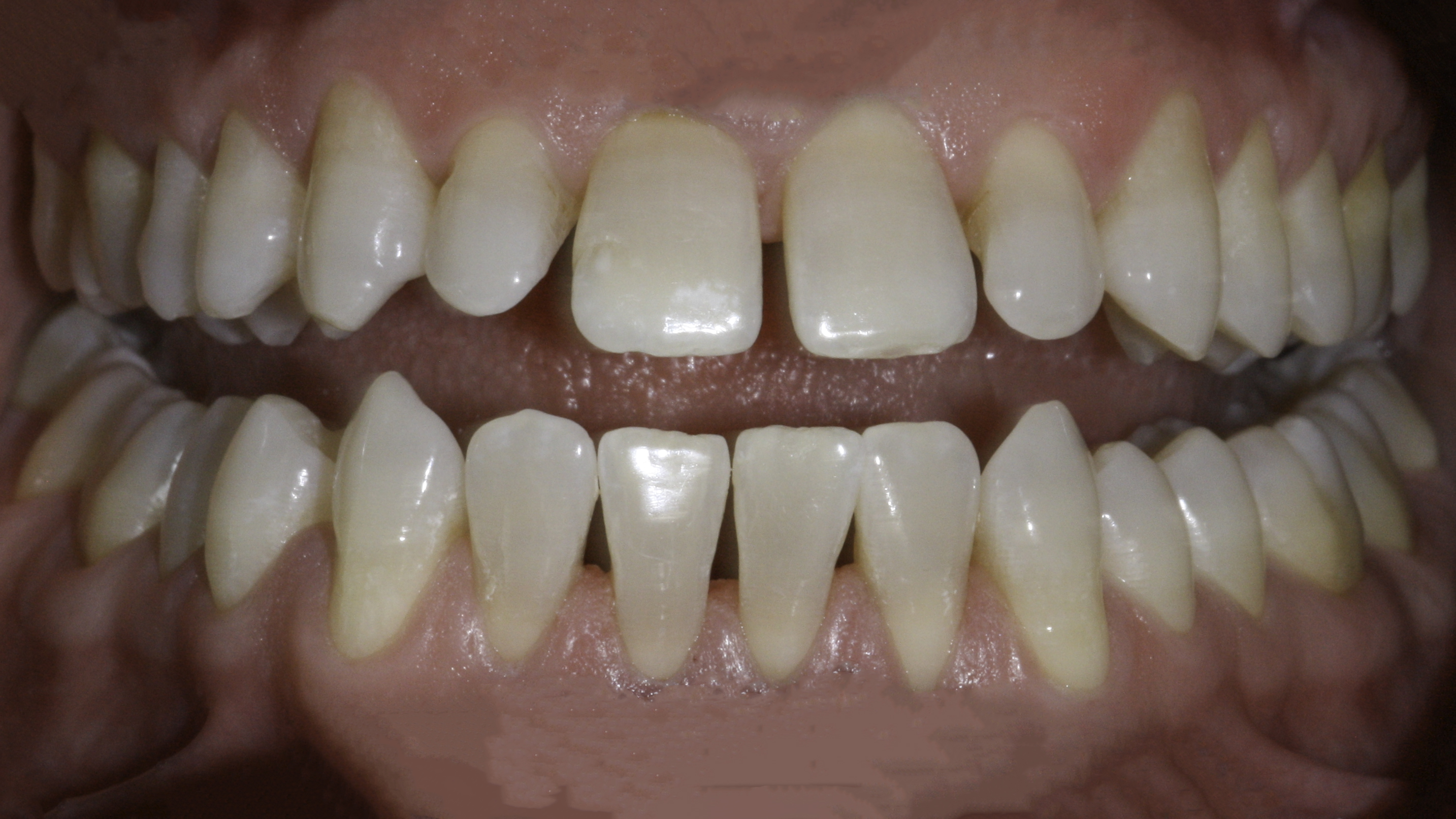
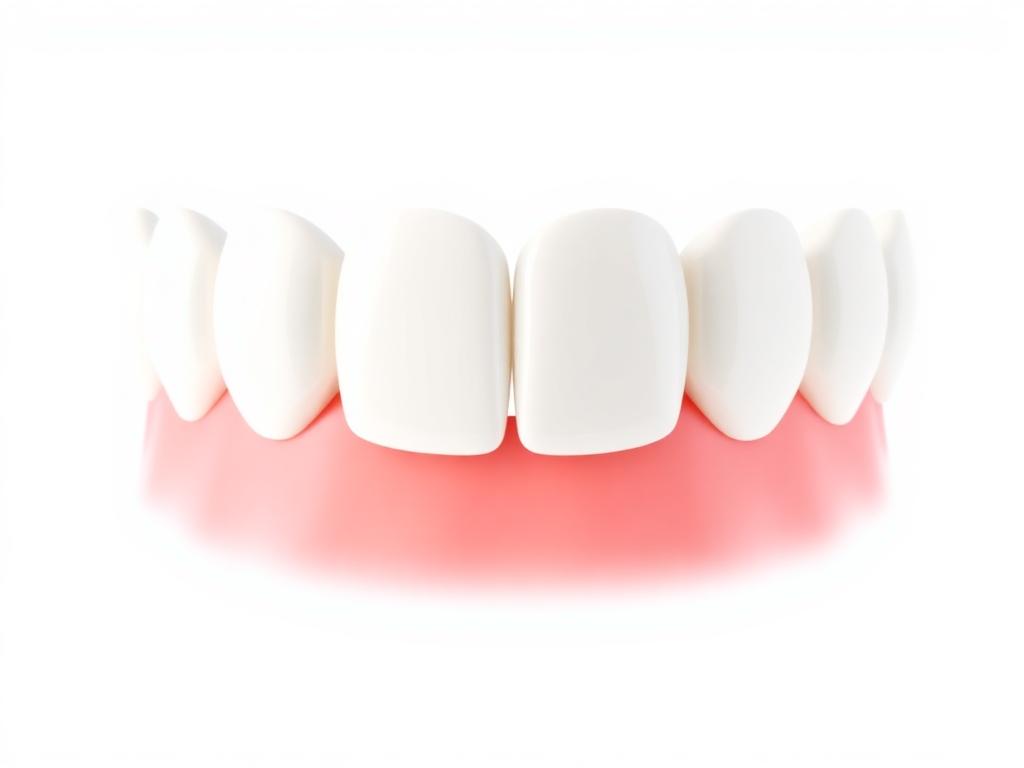
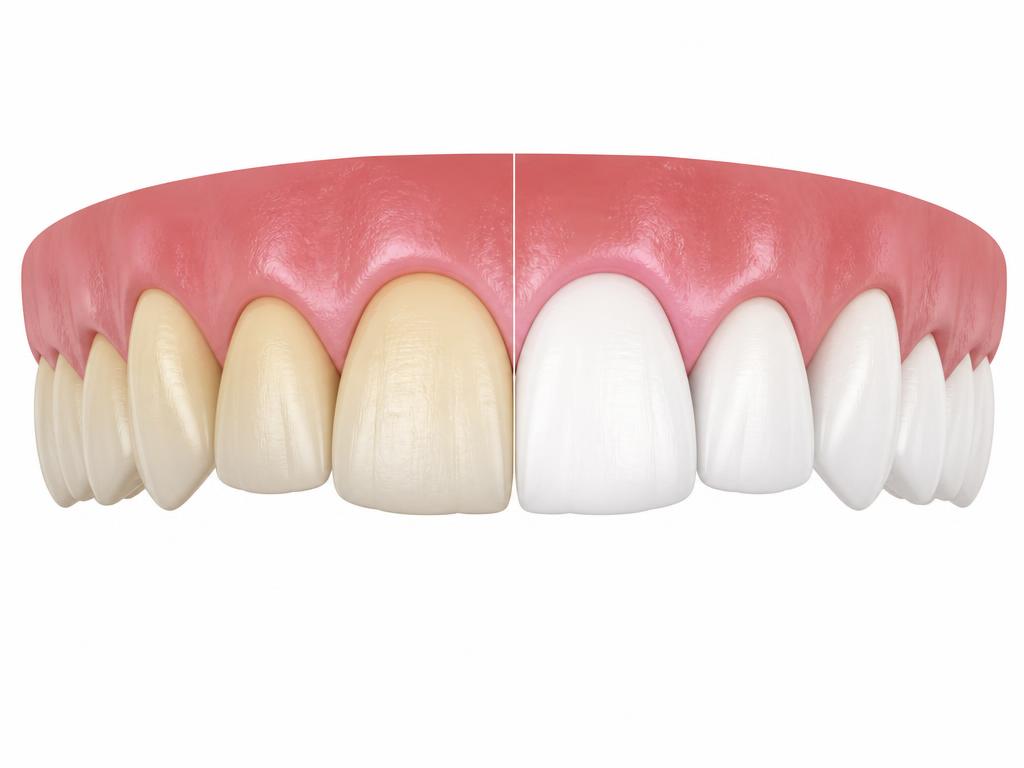
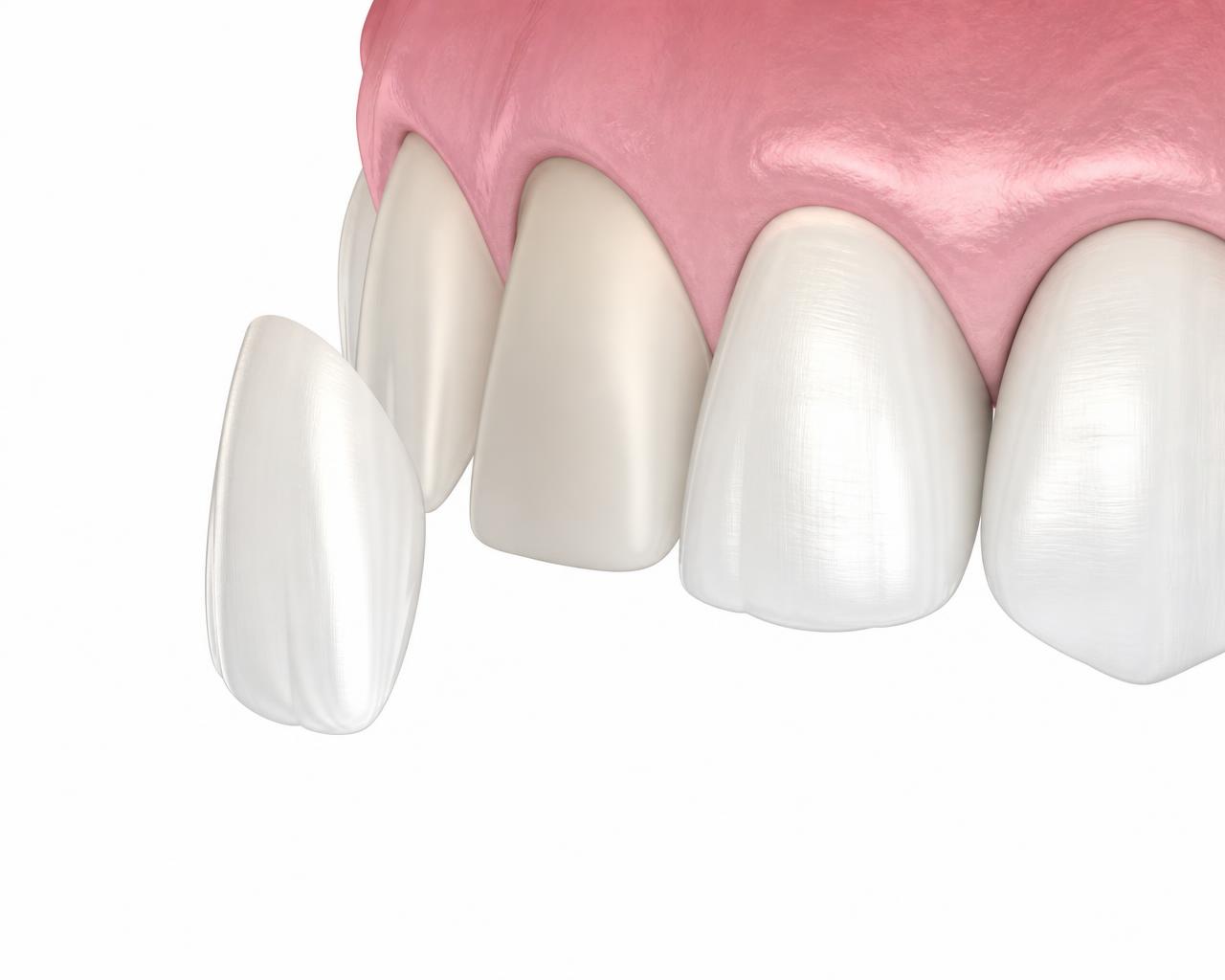
Porcelain veneers are thin, custom-made ceramic shells — typically about half a millimeter thick — bonded to the front surface of the teeth. They correct discoloration, chips, gaps, and minor misalignment in a single plan, without replacing the whole tooth.
Each veneer is made for one specific tooth by a dental ceramist, using the shape, length, and shade agreed at your design consultation. Because the porcelain is glazed and bonded to enamel, it reflects light much the way a natural tooth does — which is why veneers read as teeth rather than as dental work.
What veneers correct
Deep or uneven discoloration that whitening cannot lift
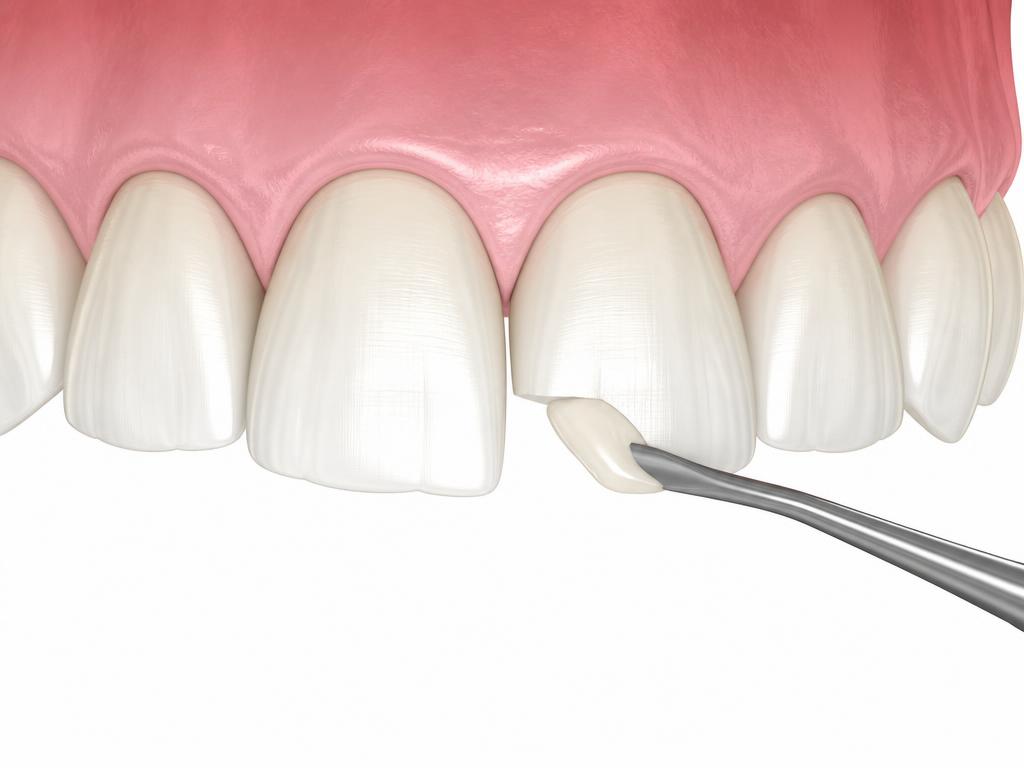
Chipped, worn, or uneven incisal edges
Gaps and spacing between the front teeth
Minor crowding or rotation where the teeth are otherwise well positioned
Teeth that are small, short, or narrow relative to the smile line
One disclosure matters more than any other: veneers are not reversible. Preparing a tooth removes a thin layer of enamel, and enamel does not grow back. That is why we rule out whitening and bonding first whenever they can get you the same result.
A veneer covers only the front surface of the tooth — the rest of the natural tooth structure stays in place.
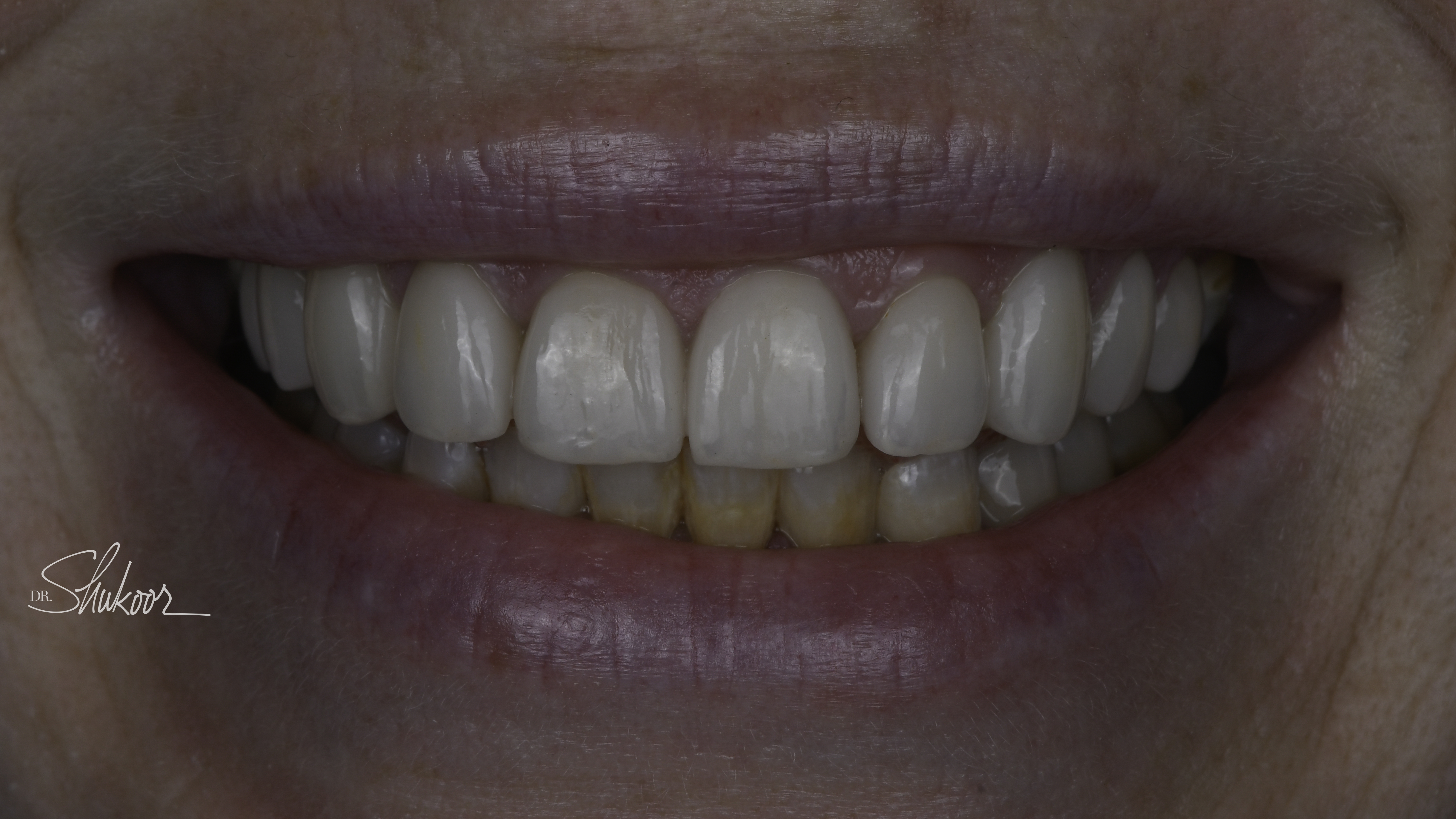
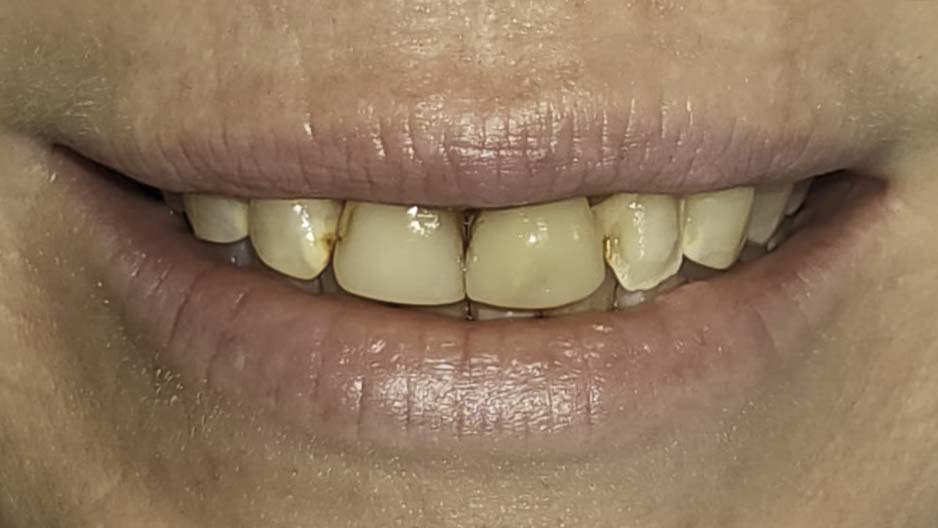
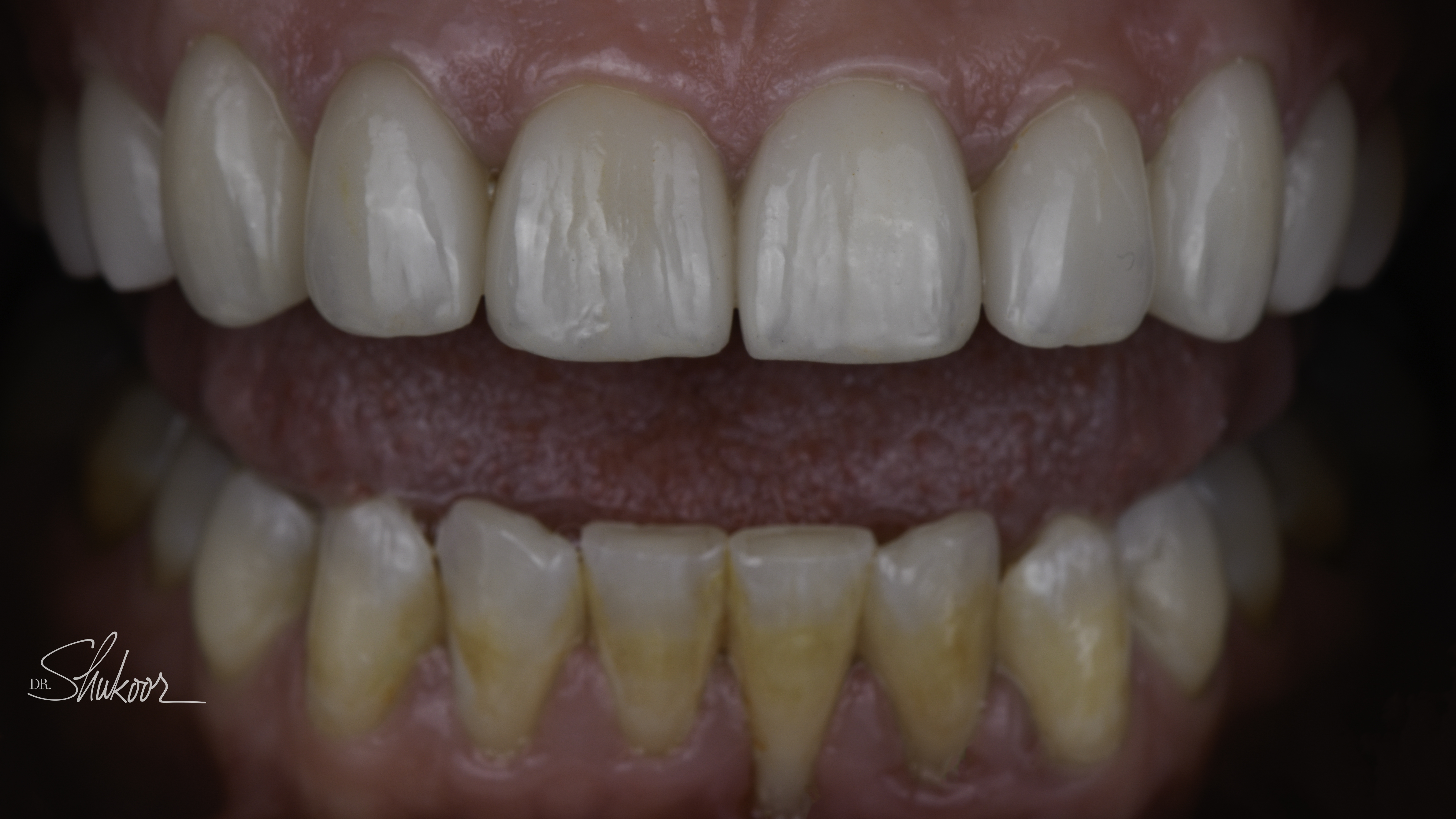
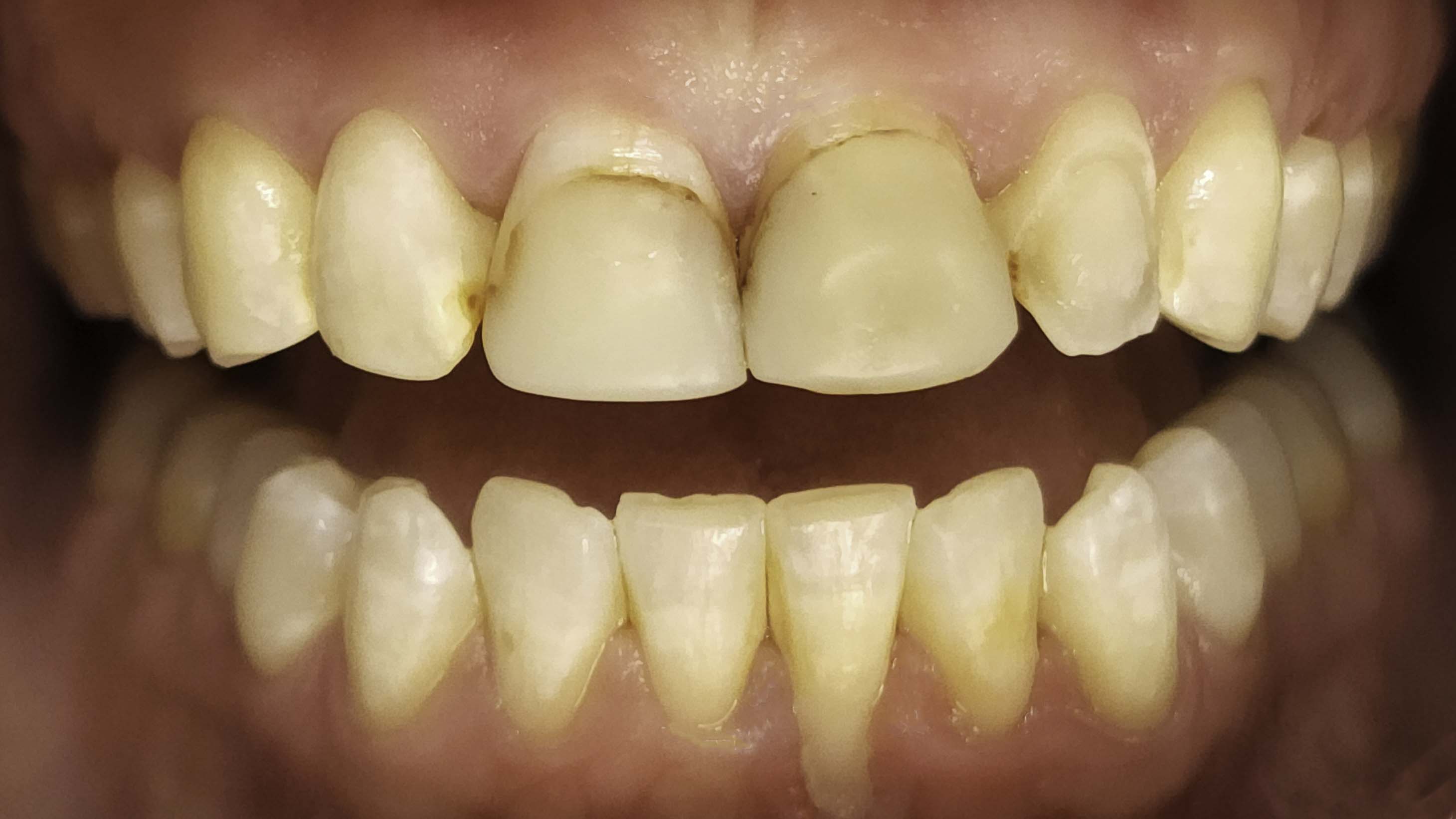
Drag the handle on each case to compare. Every photograph below is an actual patient treated in our Washington, DC office — no stock photography, no touch-ups.
Full smile view
BeforeAfter
‹ ›
Close-up view
BeforeAfter
‹ ›
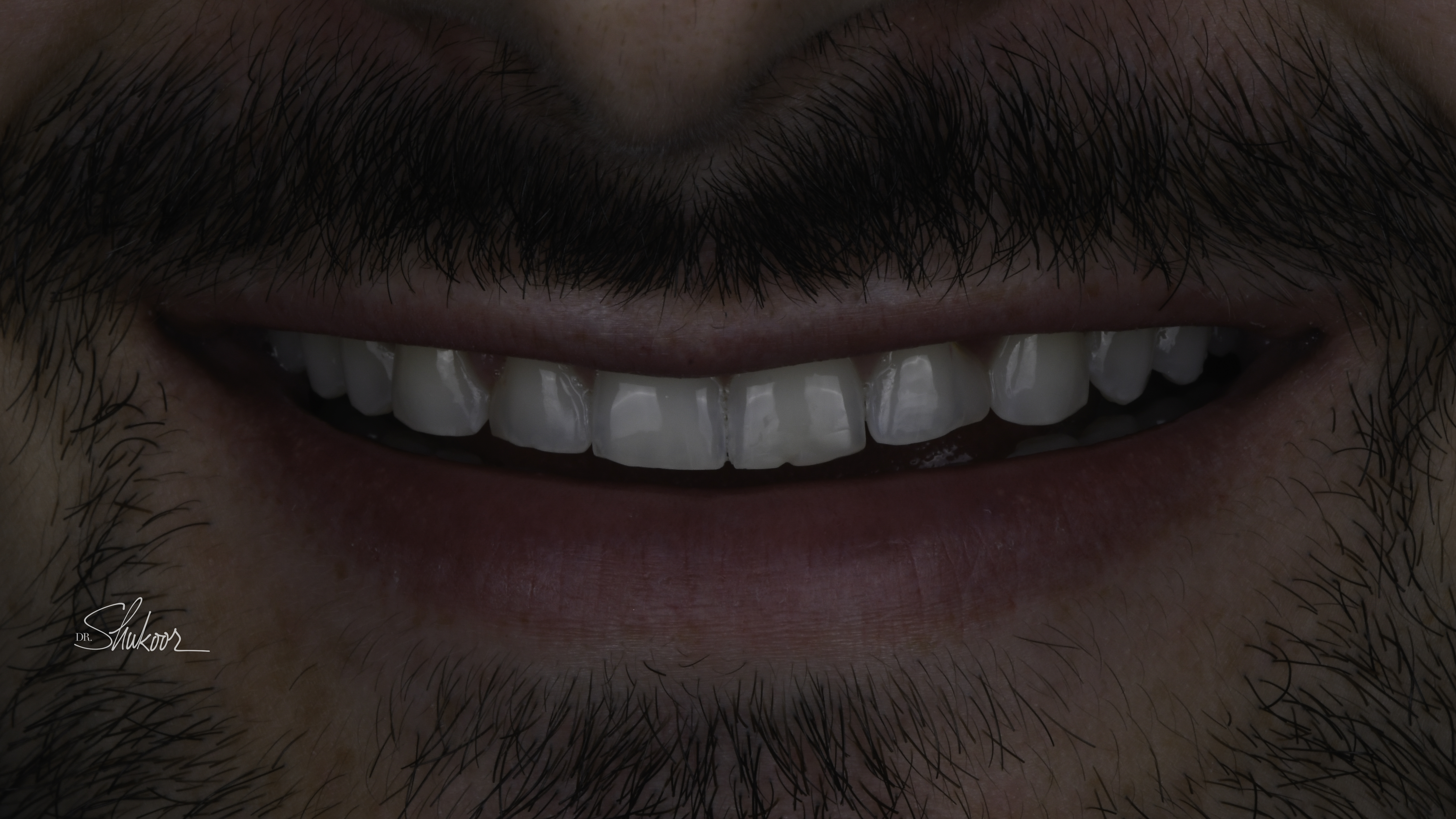
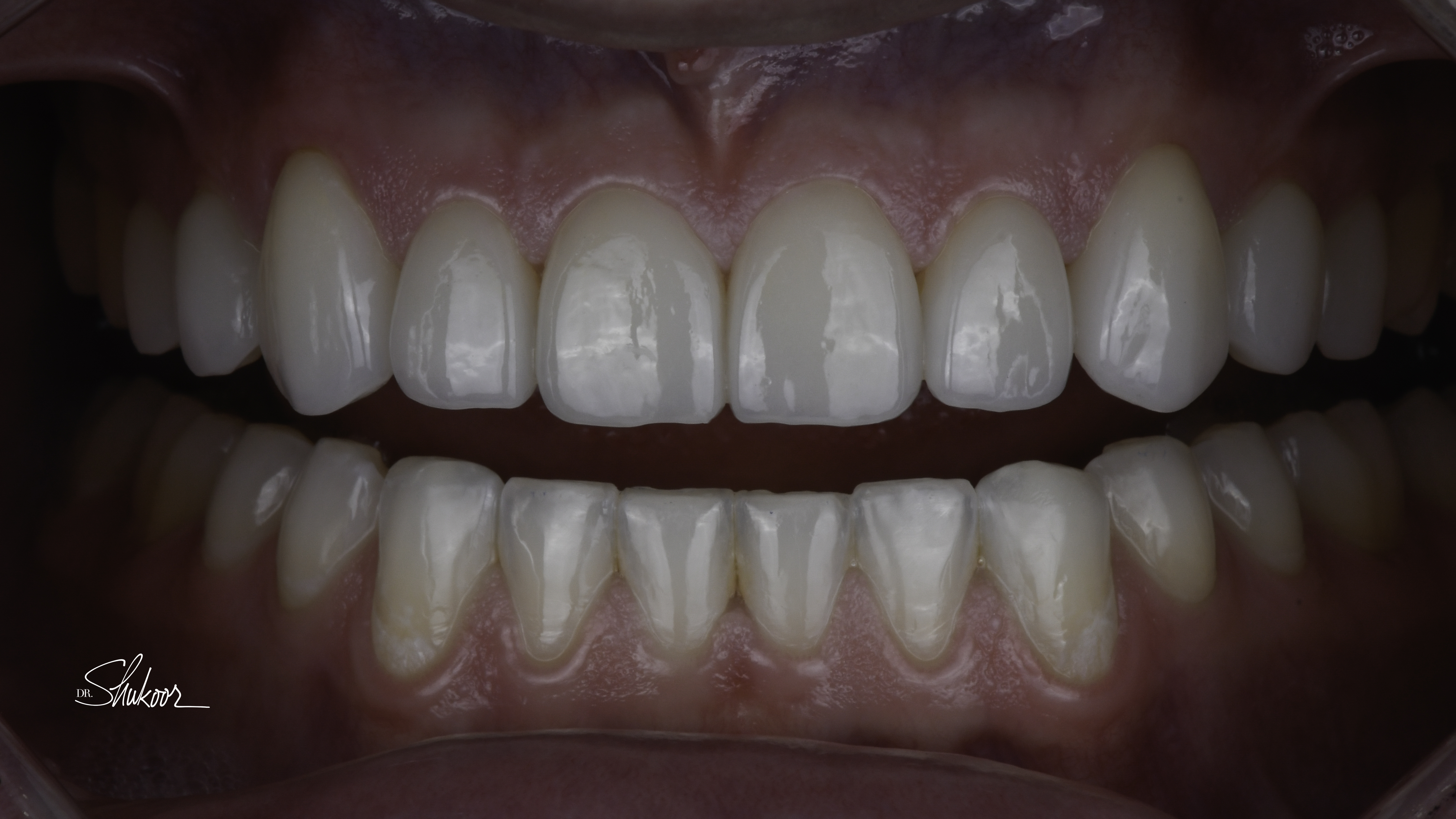
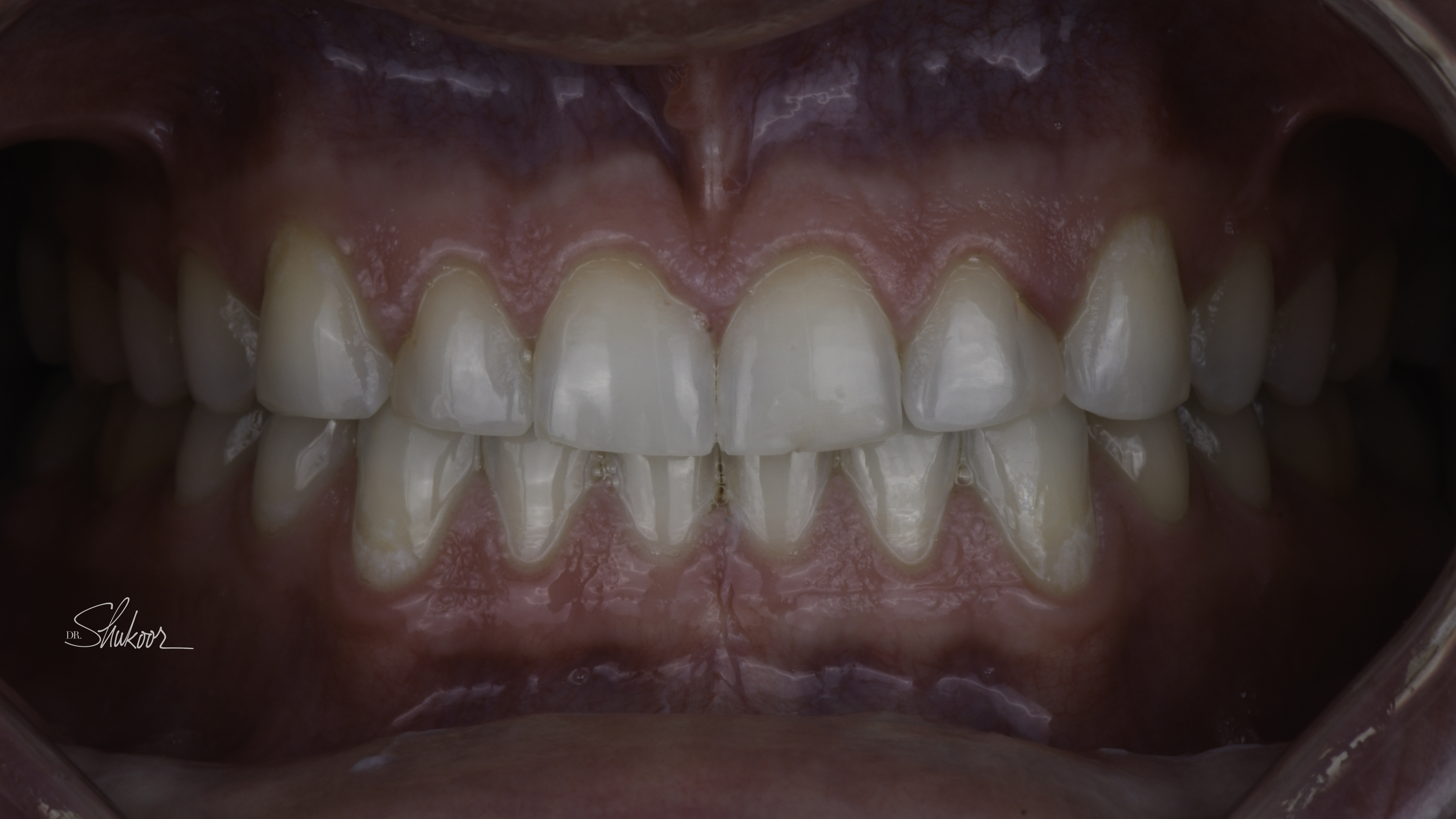
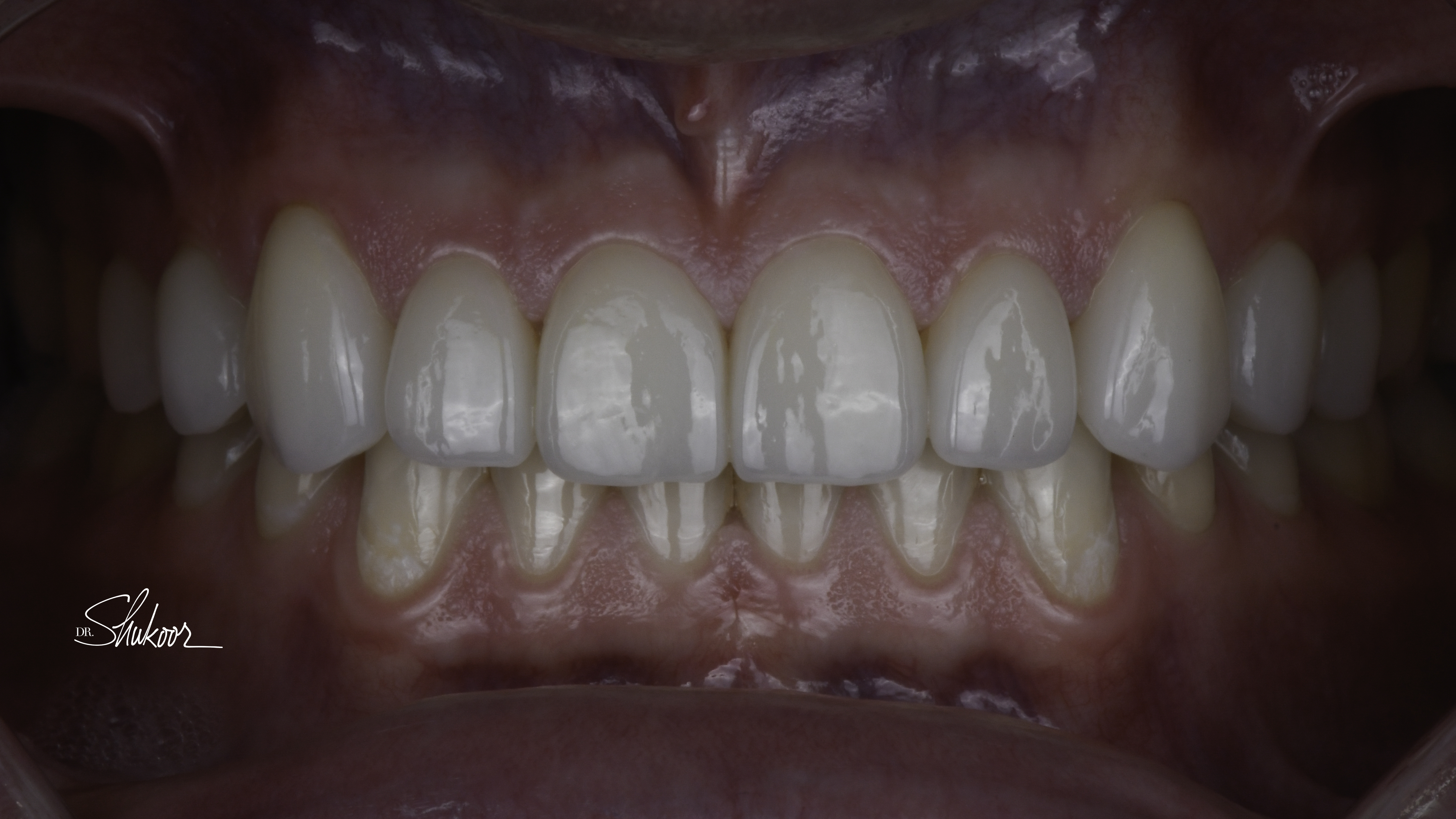
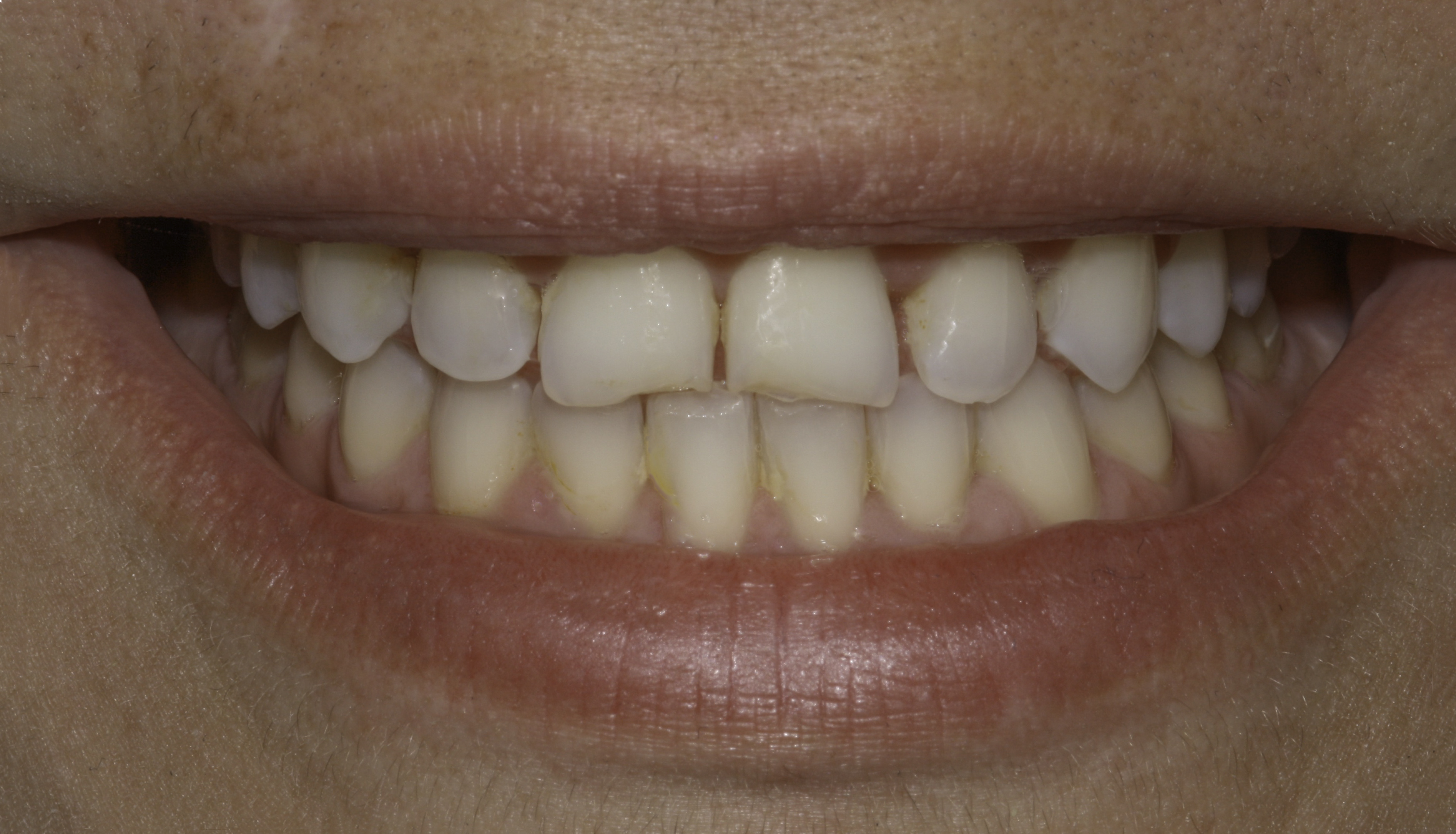
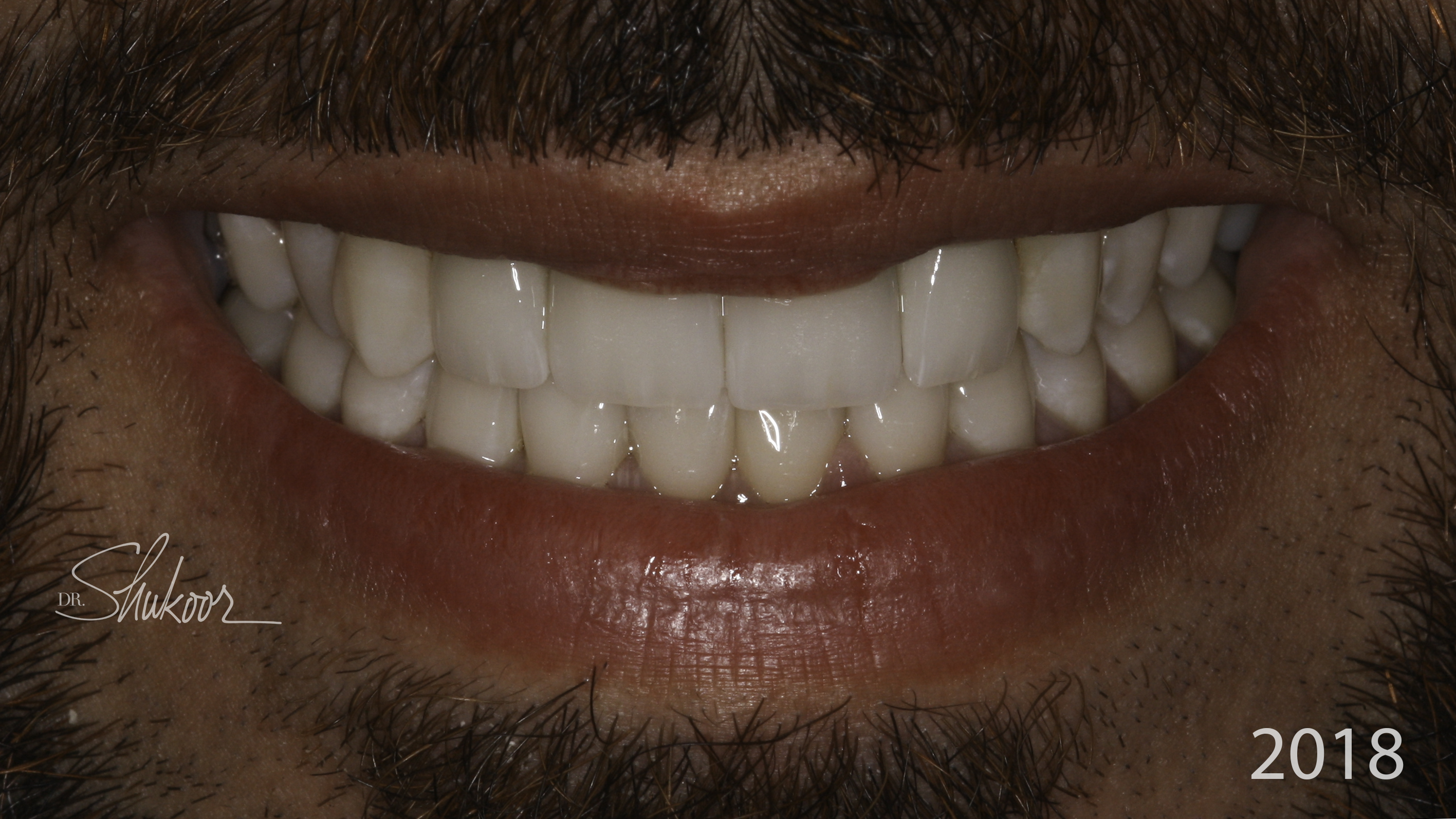
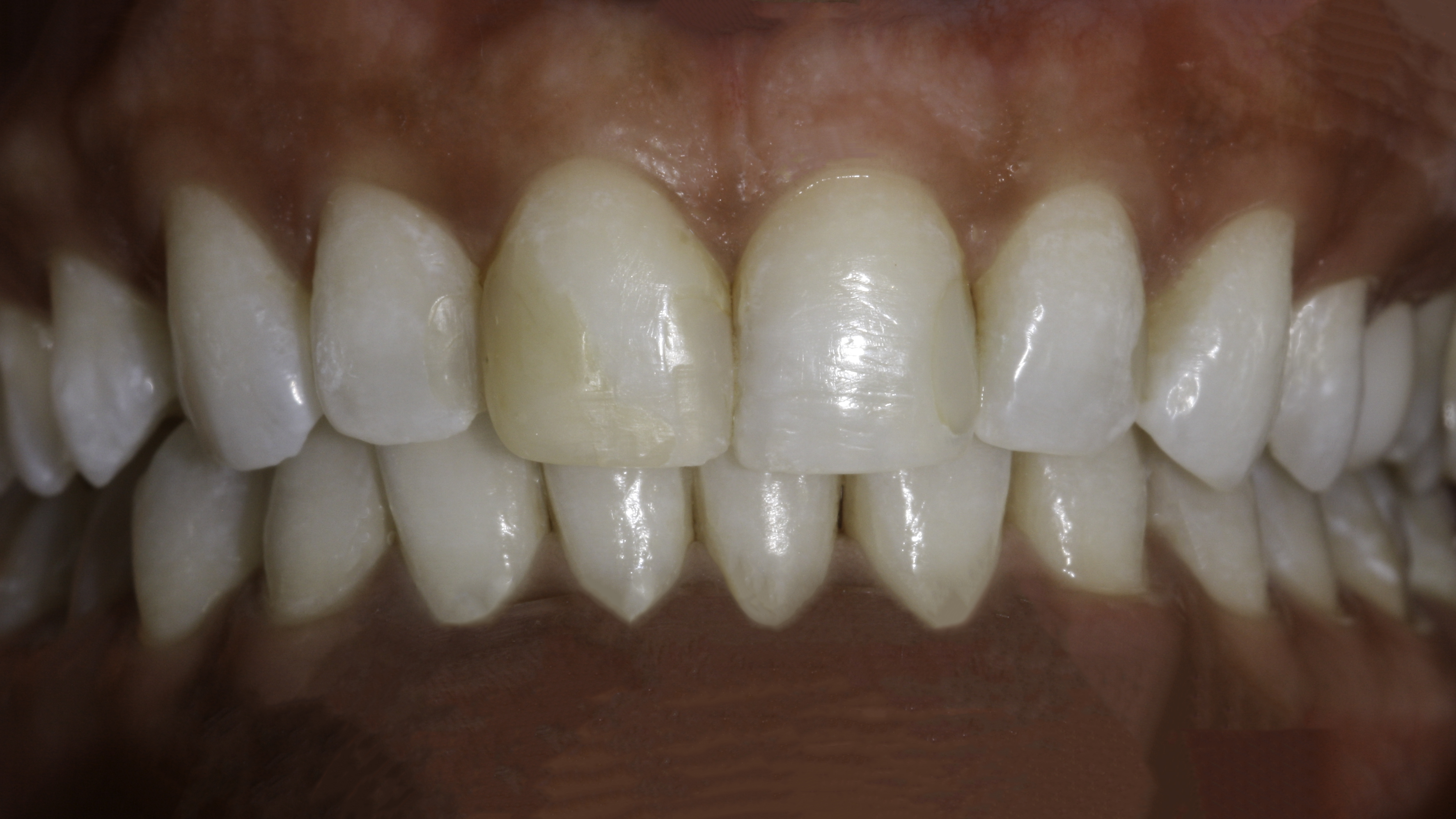
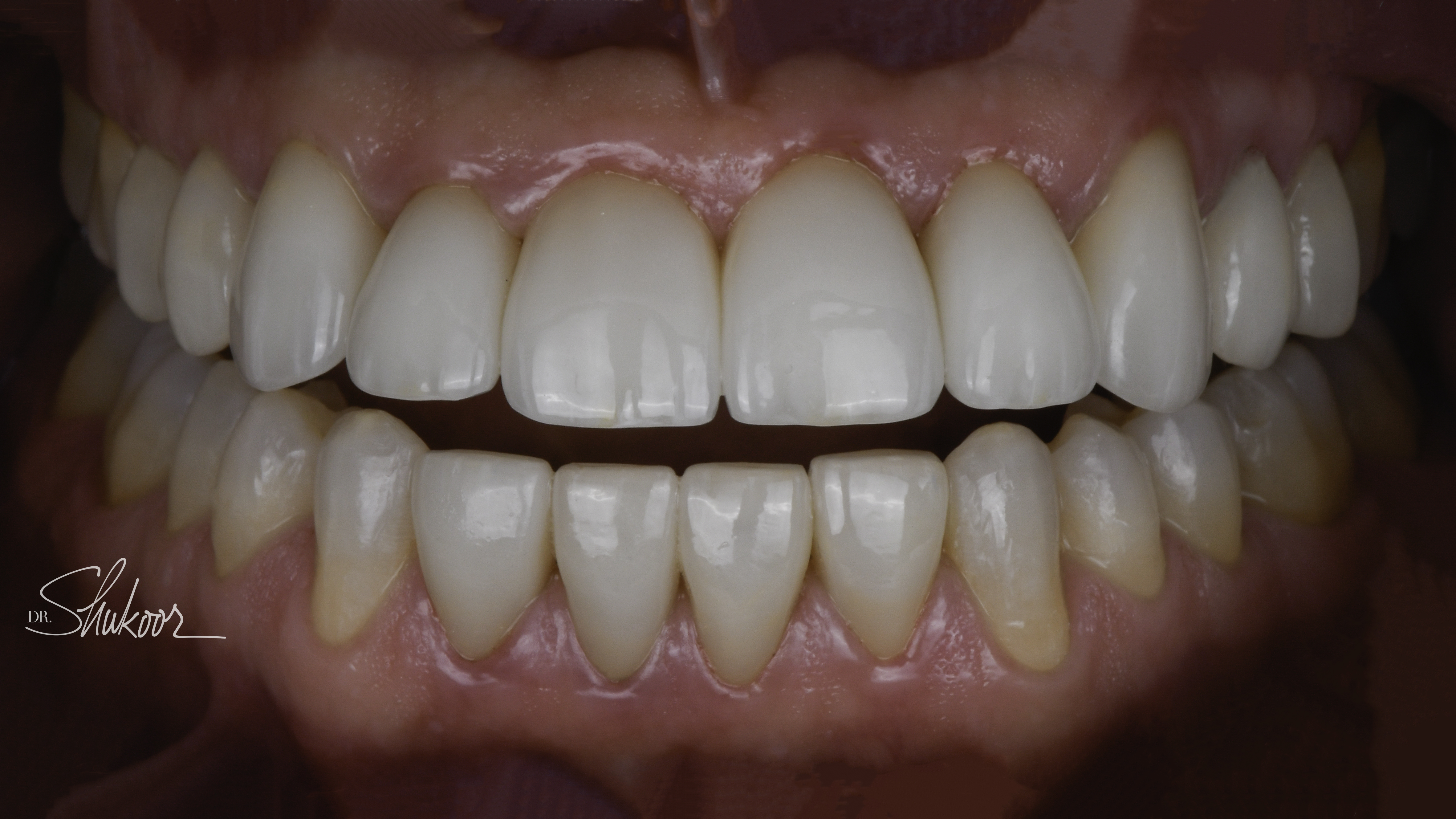
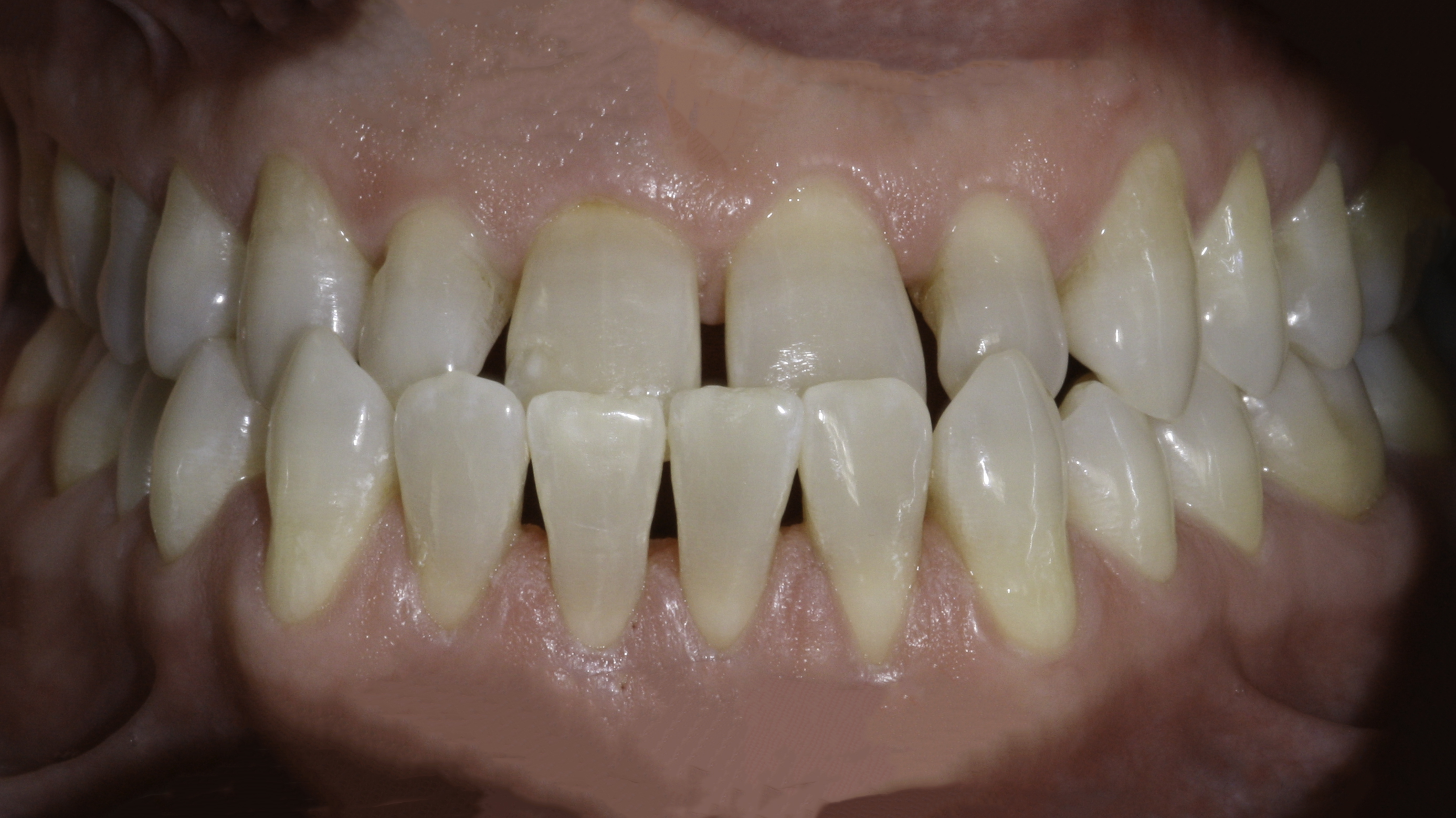
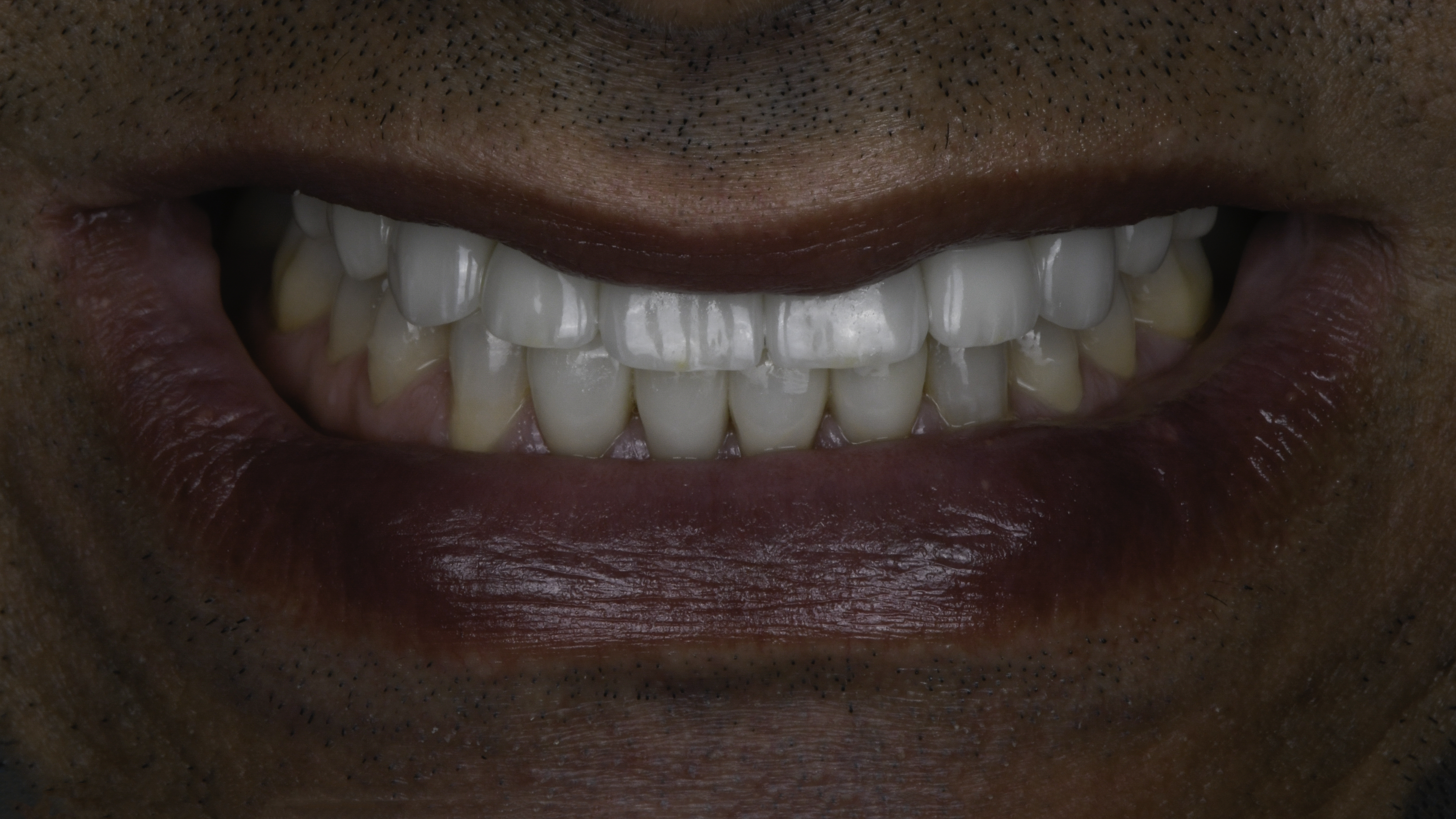
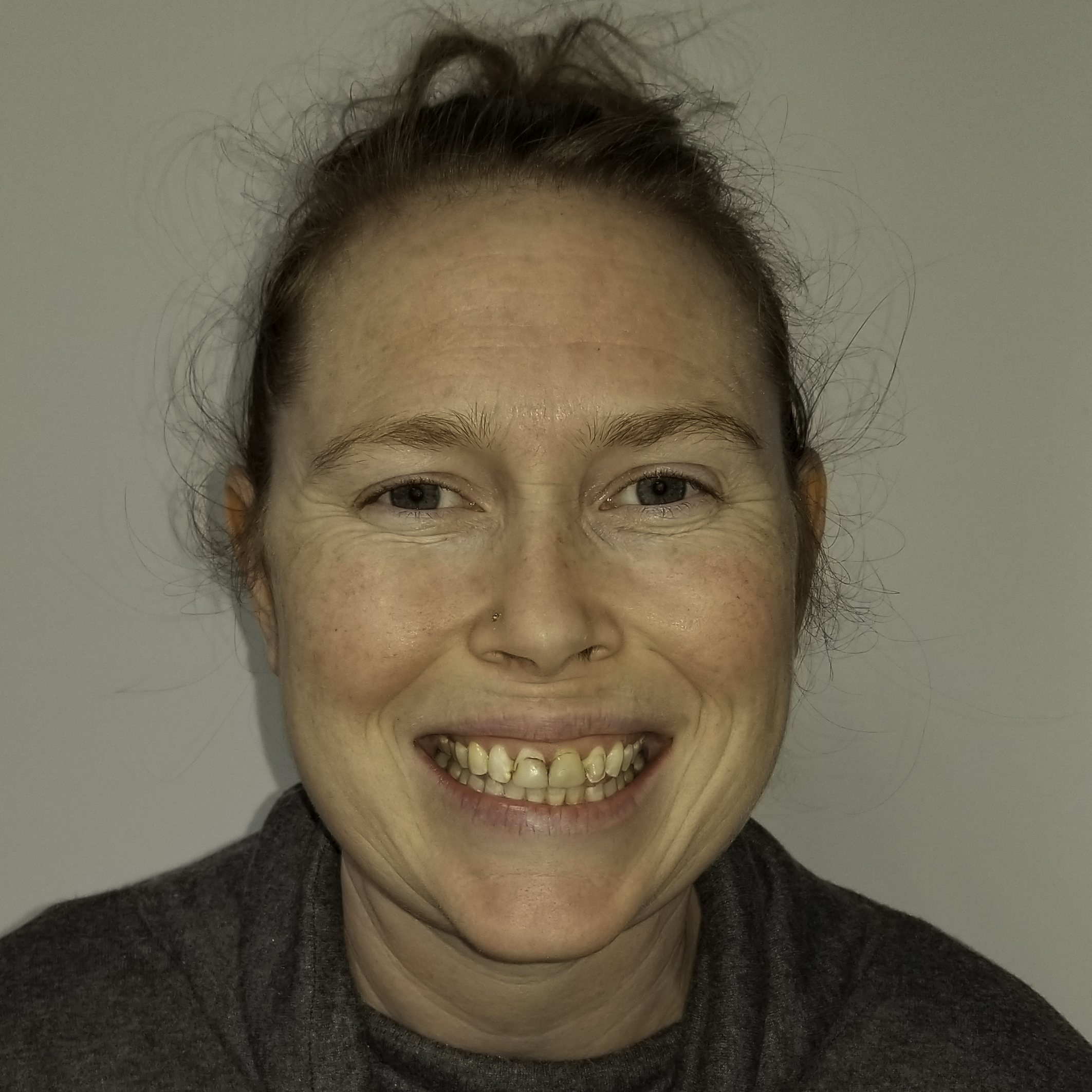
Stained, Chipped Teeth Transformed With Porcelain Veneers
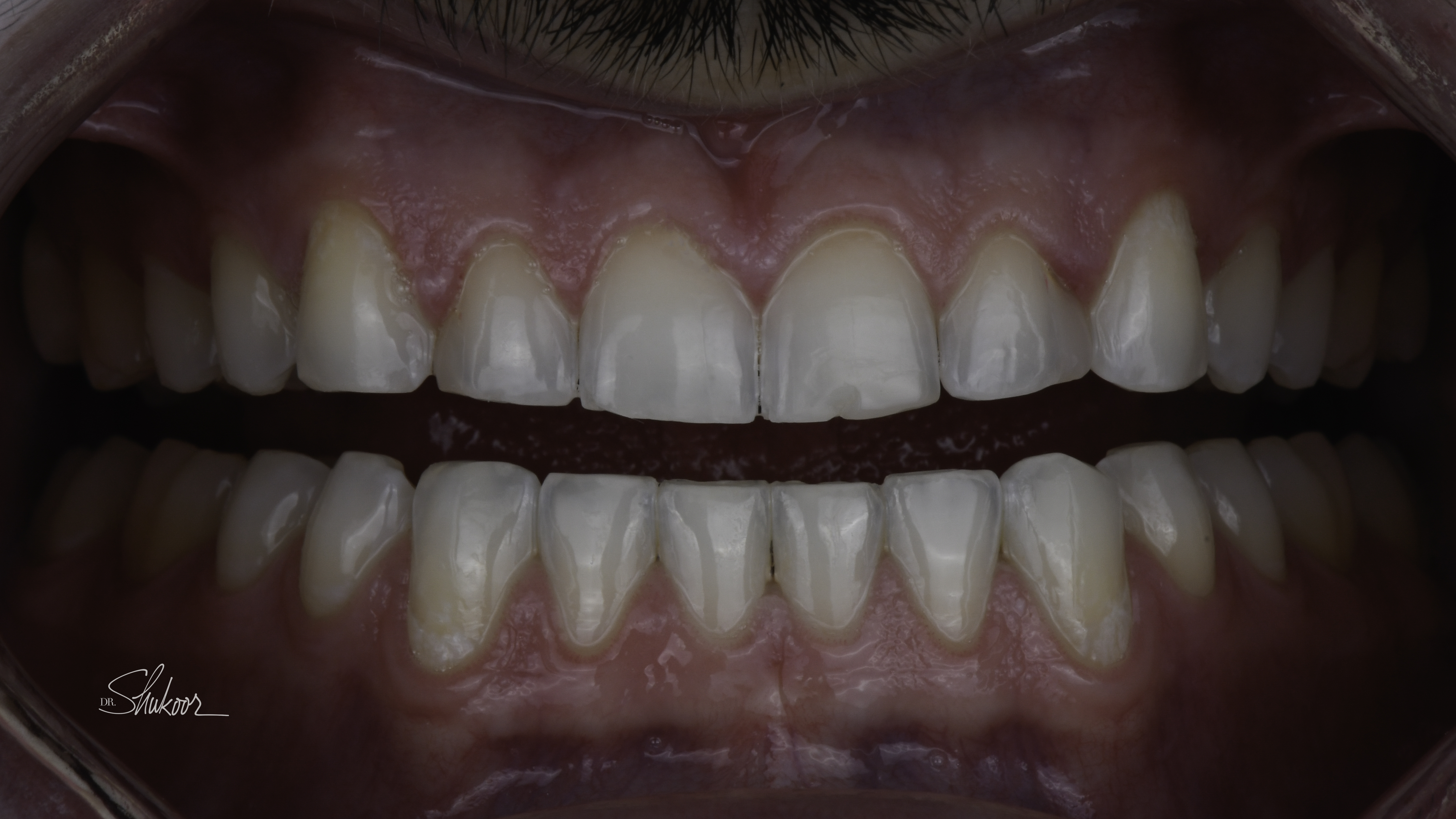
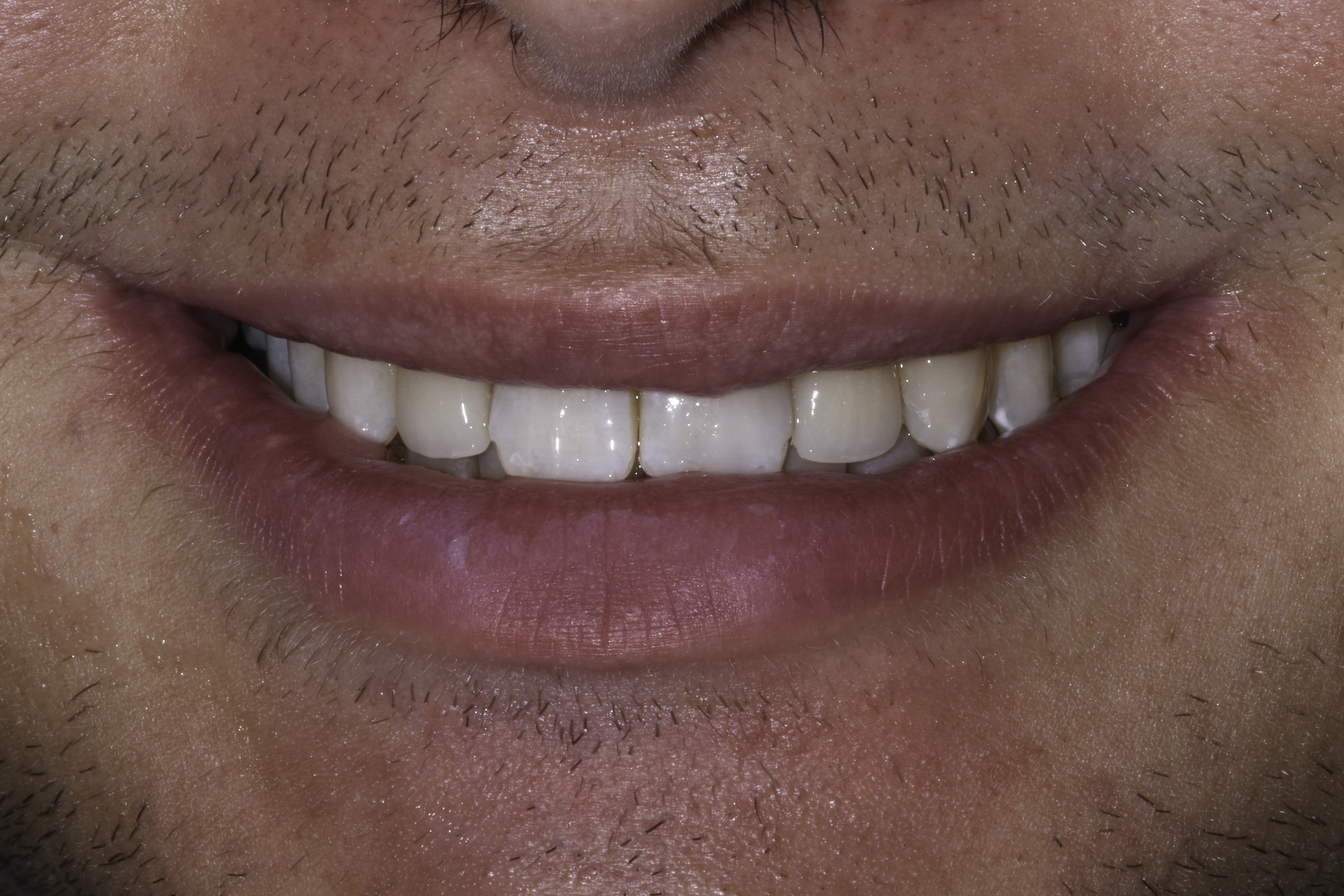
Years of staining, chips along the biting edges, and an older restoration that no longer matched had left this patient's smile looking tired. Whitening alone couldn't address the shape and edge damage, so Dr. Shukoor rebuilt the smile with porcelain veneers — correcting the shade, restoring the chipped edges, and replacing the mismatched restoration in the process. The close-up view shows the detail work on the front teeth; the portrait shows the confidence that came with it.
Full smile view
BeforeAfter
‹ ›
Close-up view
BeforeAfter
‹ ›
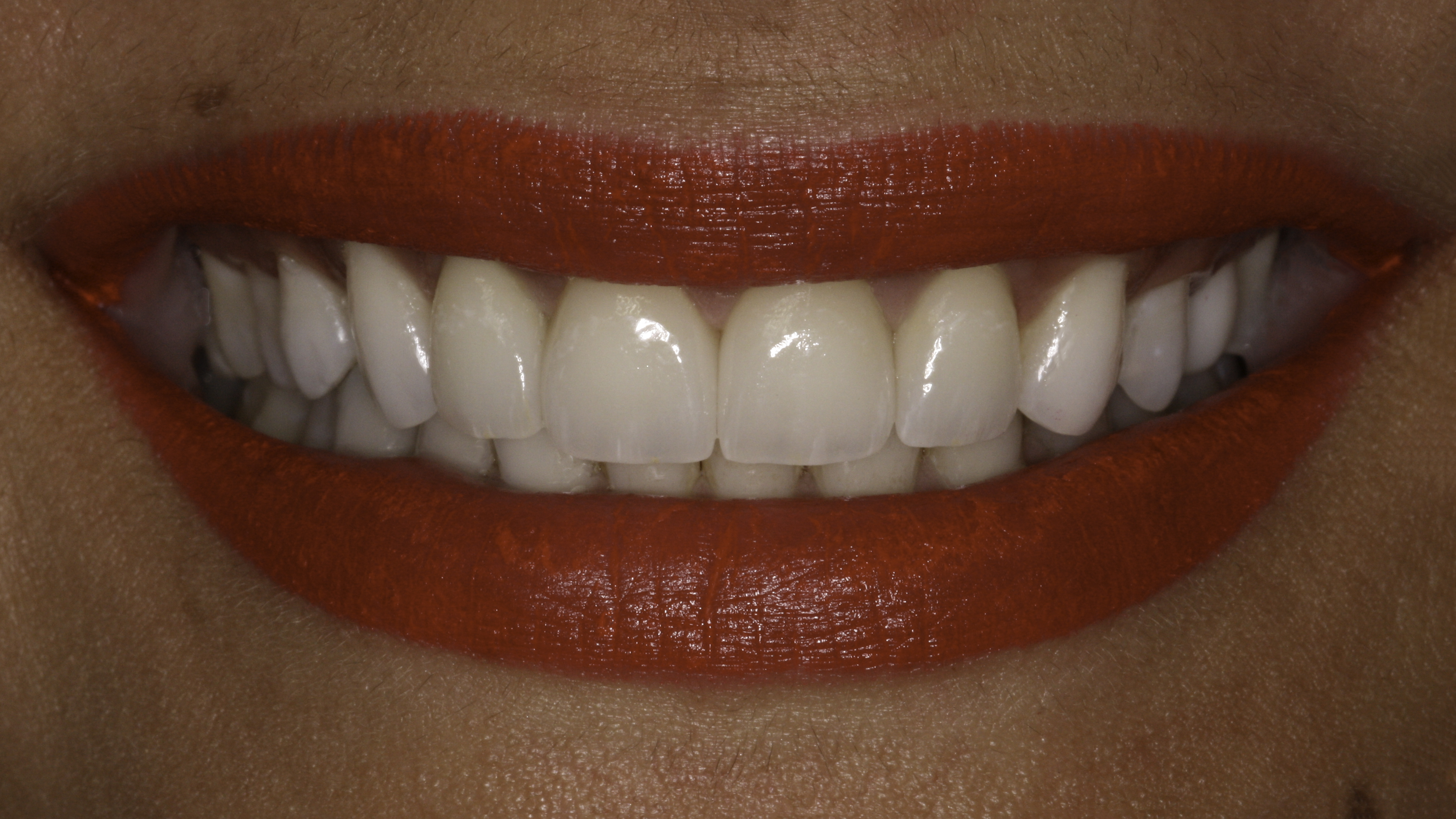
Worn & Uneven Front Teeth Rebuilt With Porcelain Veneers
This patient came to us with front teeth that were worn, chipped, and visibly uneven — the edges had shortened over time and the surface texture made the smile look aged beyond her years. Dr. Shukoor designed a set of porcelain veneers that restored natural length, closed the worn edges, and brought the shade up to a bright but believable tone. The close-up view shows the level of surface detail modern porcelain can replicate; the full smile view shows how naturally the result sits in her face. She's shown smiling confidently in her after portrait — glasses, lipstick, and all.
BeforeAfter
‹ ›
Small, uneven front teeth rebuilt with porcelain veneers
Porcelain veneersPeg laterals correctedEven smile line
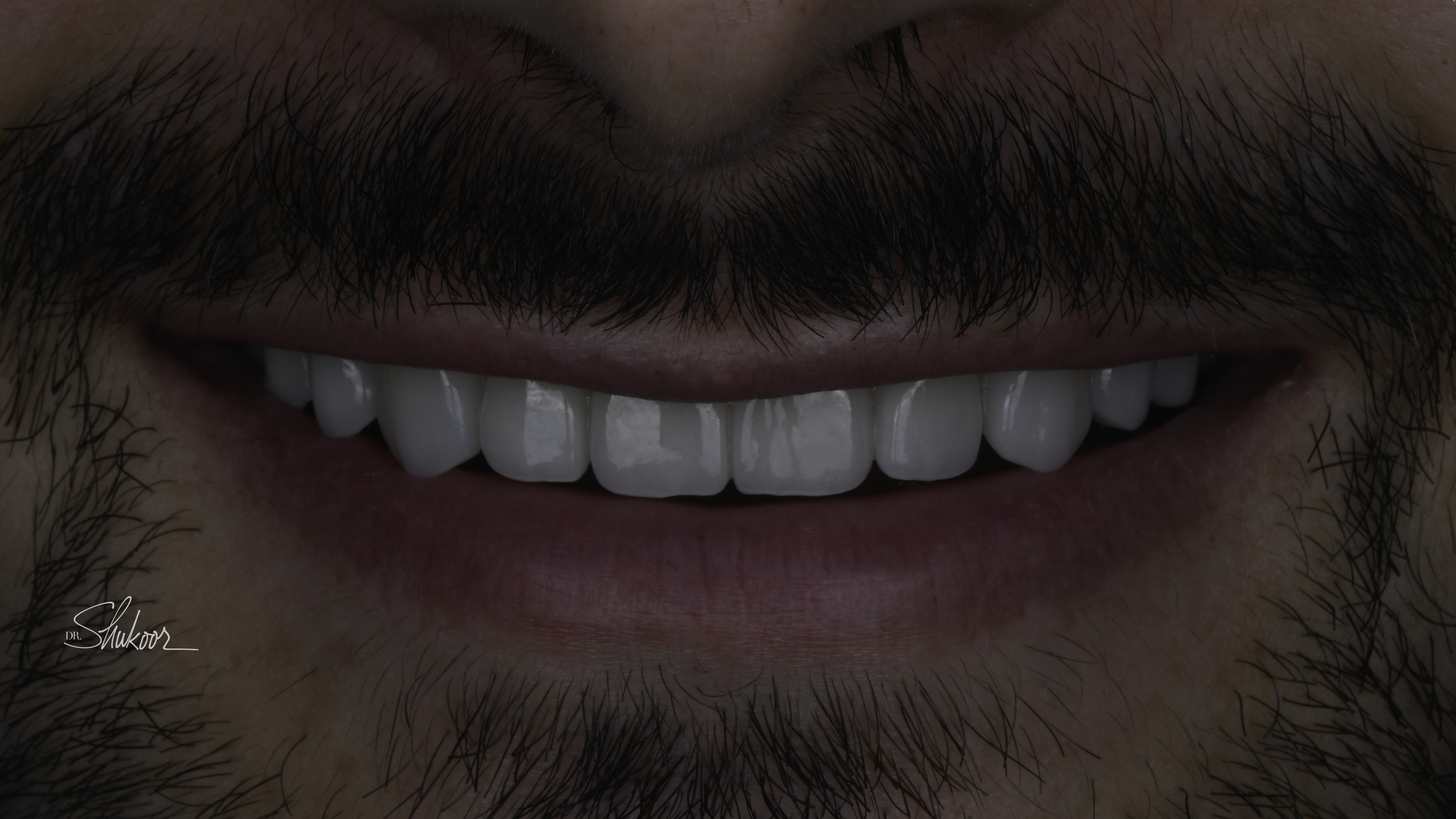
This patient's upper front teeth had never quite matched: the lateral incisors were small and peg-shaped, the edges sat at different heights, and the overall smile looked narrow and uneven. Porcelain veneers gave us control over all of it at once. Each veneer was designed to bring the undersized teeth up to natural proportion, level the biting edges into one smooth curve, and widen the smile so it fills the frame of the lips. The porcelain was shaded to a natural, believable white with the subtle translucency of real enamel — bright, but unmistakably his.
BeforeAfter
‹ ›
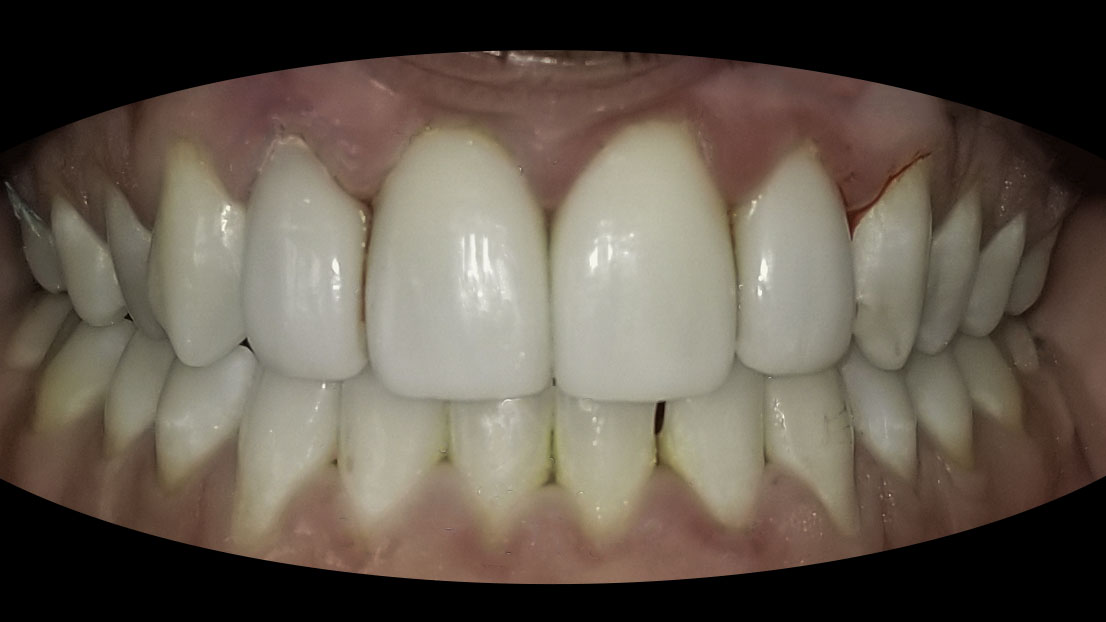
Chipped, worn, and discolored front teeth renewed with porcelain veneers
Porcelain veneersWear & chipsUnified shade
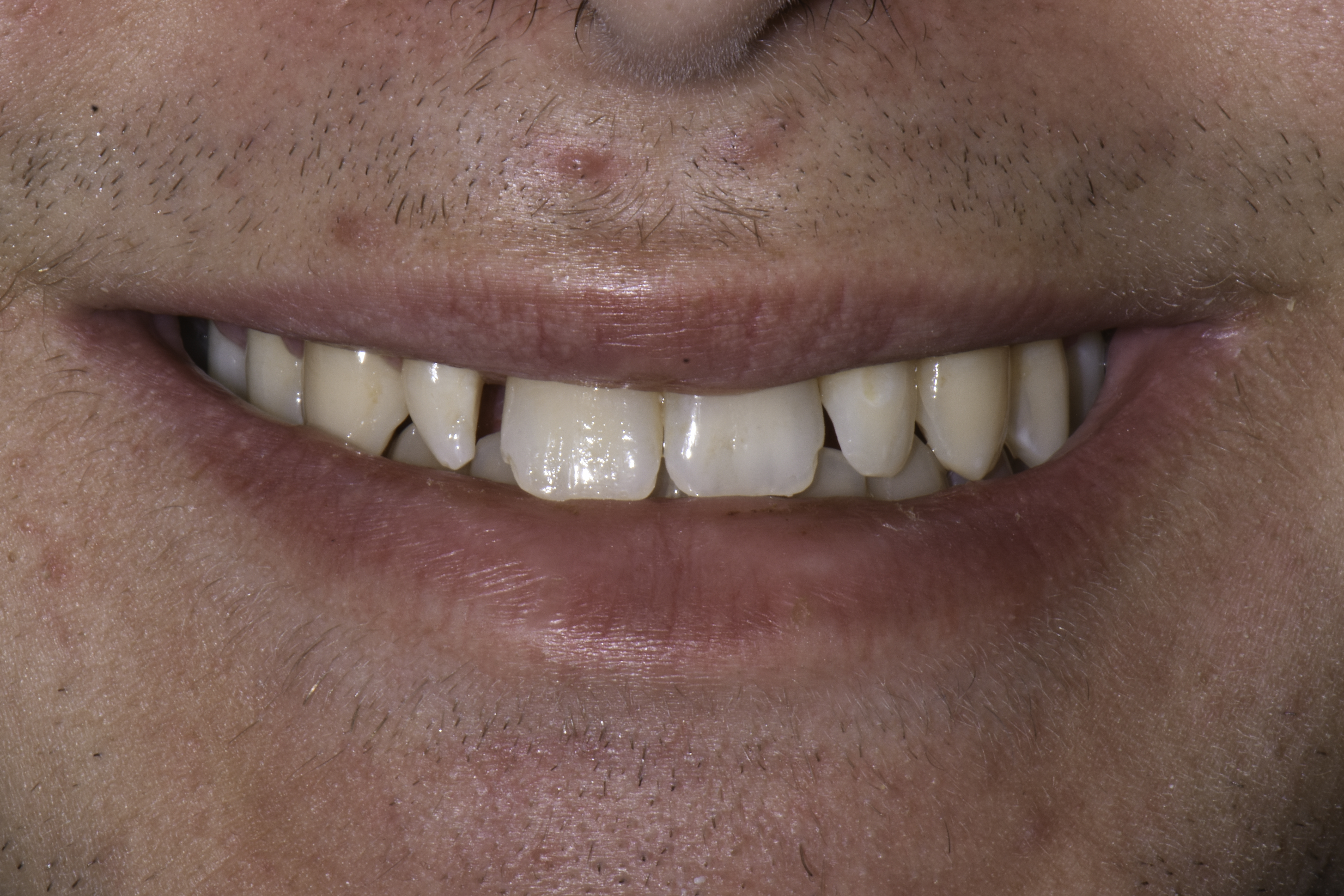
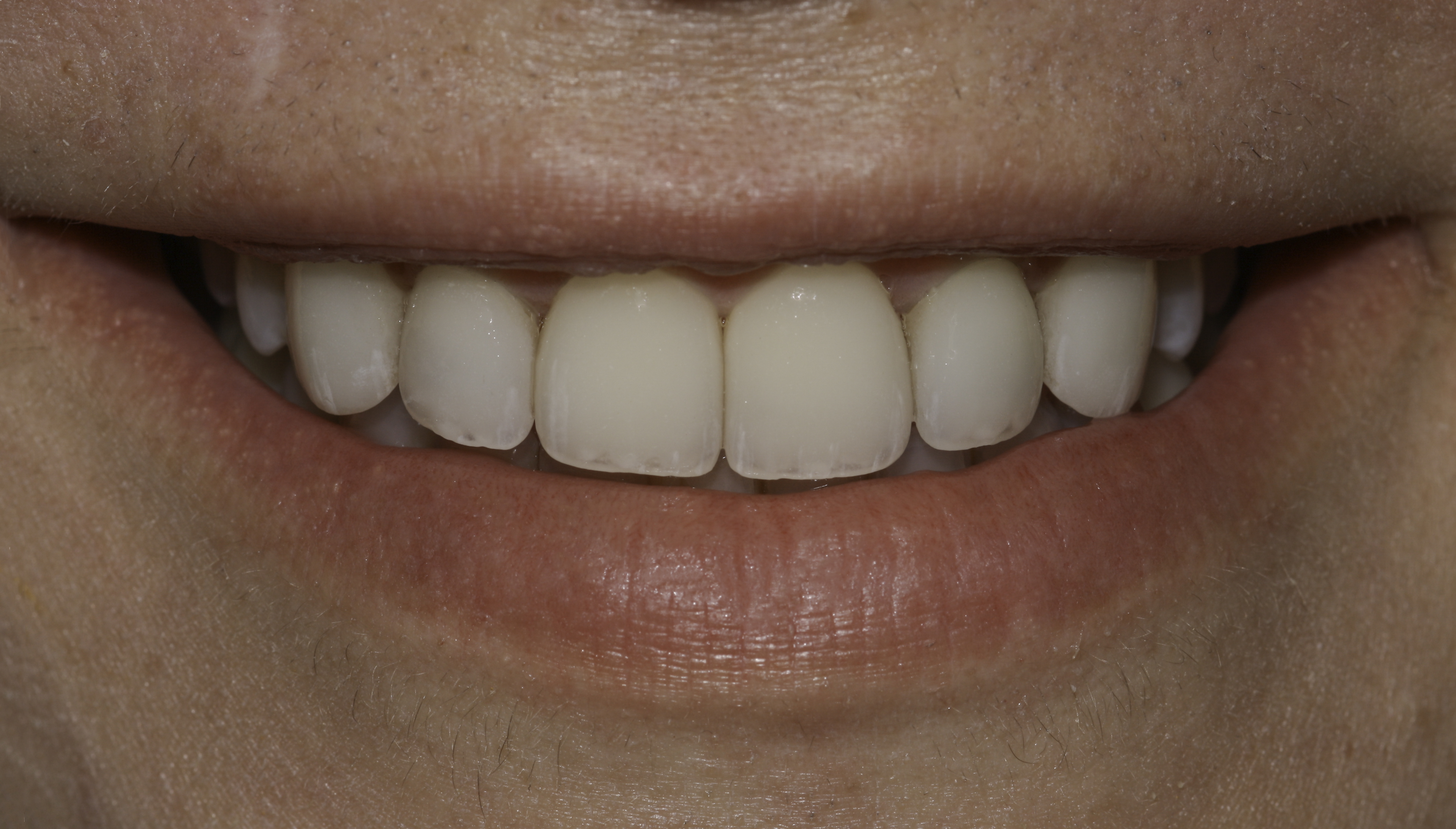
Years of wear had left this patient's front teeth chipped at the edges, flattened at the biting surface, and patchy in color — the kind of accumulated damage that whitening or bonding alone can't fully correct. Porcelain veneers restored what time had taken: the lost length was rebuilt, the chips and irregular edges disappeared under new porcelain surfaces, and the shade was unified into a clean, natural white. Because the veneers were planned as a set, the finished teeth share one design — matching shapes, matching proportions, and a smooth, continuous smile line.
The upper front teeth told a story of patchwork fixes — different shapes, sizes, and shades from one tooth to the next, with one lateral standing out darker than its neighbors. Rather than continue repairing teeth one at a time, Dr. Shukoor restored the visible smile zone with porcelain veneers planned as a single design, so every tooth finally matched in proportion and color. The result is the kind of smile that looks like it was always his.
BeforeAfter
‹ ›
Gap Between Front Teeth Closed With Porcelain Veneers
Porcelain VeneersGap ClosureCosmetic Dentistry
A gap between the two front teeth — a diastema — was this patient's longtime frustration. Porcelain veneers let Dr. Shukoor close the space while keeping the proportions of the front teeth looking natural, widening each tooth just enough so the result doesn't read as oversized. The after photo shows a bright, even smile with no trace of the original spacing.
BeforeAfter
‹ ›
Narrow, Spaced Teeth Reshaped With a Full Veneer Smile
This patient's teeth were naturally narrow with spacing across the front of the smile, making the arch look small relative to her face. A broader set of porcelain veneers filled out the smile's width, closed the spacing, and gave each tooth a fuller, more proportionate shape. The finished smile is noticeably brighter and wider — and still unmistakably hers.
These are the three most common ways to change how a tooth looks. They differ in what they can correct, whether the change is permanent, what they cost, and how long they last.
Recommended
Porcelain Veneers
Thin custom shells bonded to the front of the teeth, changing shape, shade, and spacing in one plan.
Corrects color, shape, chips, gaps, and minor crowding together
Stain-resistant porcelain holds its shade for years
Longest-lasting of the three — commonly 10–15+ years
Highest cost tier of the three options
Permanent: a thin layer of enamel is removed first
Tooth-colored resin sculpted directly onto the tooth in a single visit — see our dental bonding page.
Usually finished in one appointment
Middle cost tier — less than veneers
Often needs little or no enamel removal
Composite stains over time and can chip
Shortest lifespan — commonly 5–8 years before refresh
Whitening is the only one of the three that leaves the tooth untouched, so it is always considered first. Veneers earn their cost when shape, spacing, and color all need to change at once.
The Process
The Porcelain Veneers Process
Every stage happens in our Washington, DC office, and you wear temporary veneers in the agreed shape before the final porcelain is ever bonded.
01
Consultation & Smile Design
Visit 1
We photograph and examine your smile, then plan shape, length, and shade together so you know what the finished result should look like before anything starts.
02
Tooth Preparation
Visit 2
A thin layer of enamel — often under a millimeter — is removed so the veneer sits flush instead of bulking the tooth forward. Local anesthetic is used if you want it.
03
Digital Impression
Same visit
A digital scan captures the prepared teeth, the bite, and the surrounding gum line, and goes to the lab with your shade and design notes.
04
Temporary Veneers
1–2 weeks
Temporaries protect the prepared teeth and let you test-drive the new shape and length. Anything you want adjusted is fed back to the lab.
05
Placement & Bonding
Final visit
Each veneer is tried in, checked for fit and shade, then bonded permanently and polished. The bite is refined and you leave with the final smile.
Candidacy
Are You a Candidate for Porcelain Veneers?
Veneers are a cosmetic solution built on a healthy foundation. The deciding factors are gum and tooth health, how much sound enamel is present, and whether the concern is truly cosmetic.
What makes a good candidate
1Healthy teeth and gums, with no active decay or gum disease
2Enough sound enamel for the veneer to bond to
3Cosmetic concerns: discoloration, chips, gaps, minor crowding
4A stable bite, or a grinding habit that can be managed with a nightguard
5Comfortable with a permanent change in exchange for the result
When something else fits better
Veneers cover the front of a tooth. They do not move teeth, and they do not add strength to a tooth that is structurally compromised. When either of those is the real problem, veneers are the wrong tool and we say so at the consultation.
Significant misalignment is better treated by moving the teeth first. Heavily damaged or root-canal treated teeth need full coverage. Complex cases involving bite and gum contour are planned as a full makeover.
All three alternatives below are handled in-house by Dr. Kambez Shukoor.
Every option here is a bonded ceramic. The choice comes down to how much tooth reduction the case allows and how much strength the bite demands.
Feldspathic Porcelain
Layered by hand for maximum realism
Traditional layered porcelain is built up by a ceramist in thin increments, which lets them mimic the subtle translucency, halo, and internal characterization of natural enamel. It is the most artistic option and the most conservative in thickness.
Best for
Front teeth where blending with your remaining natural teeth matters most.
Thinnest option, so less enamel reduction is needed
Best control over shade layering and translucency
Slightly less fracture-resistant than pressed ceramic
Not sure whether a veneer or a full-coverage restoration is right for a particular tooth? Compare it against our dental crowns page, or see how veneers fit into a full smile makeover.
Recovery
Recovery After Porcelain Veneers
The first few days
There is no surgical recovery. Most patients go straight back to work and normal eating the same day.
Mild sensitivity to hot and cold for a few days is normal and fades
Gums near the veneer margins may be tender for 24–48 hours
Your speech and bite feel slightly different while you adapt to the new shape
Call us if the bite feels high after a day or two — it is a quick adjustment
Long-term care
Brush twice daily and floss around every veneer margin
At your consultation you receive an itemized written quote covering every tooth and every stage — no surprise line items later. We explain monthly payment options on our financial information page, including CareCredit and Cherry financing.
Why Choose
DC Implant & Cosmetic Dentistry
Dr. Kambez Shukoor is a U.S. Navy veteran dentist who plans the smile design and bonds the final veneers himself, in one Connecticut Avenue office.
Design & Placement in One Office
Dr. Kambez Shukoor plans the smile design and bonds the final veneers himself, so nothing is lost between the person designing and the person placing.
Cosmetic & Restorative Training
FAGD and fellowship-level training across cosmetic and restorative dentistry, with continuing education focused on esthetic case planning.
Preview Before You Commit
Photos, shade selection, and temporary veneers let you see and wear the proposed shape before the final porcelain is bonded.
Comfort-First Care
Veneer preparation is a low-intervention visit, and anesthetic or sedation is available for patients who are anxious in the chair.
Honest Case Planning
If whitening or bonding gets you the result you want without removing enamel, that is what gets recommended.
Transparent Costs
Written treatment plans with per-tooth fees, insurance coordination where it applies, and financing through CareCredit and Cherry.