

Oral & Implant Surgery
Crown Lengthening in Washington, DC
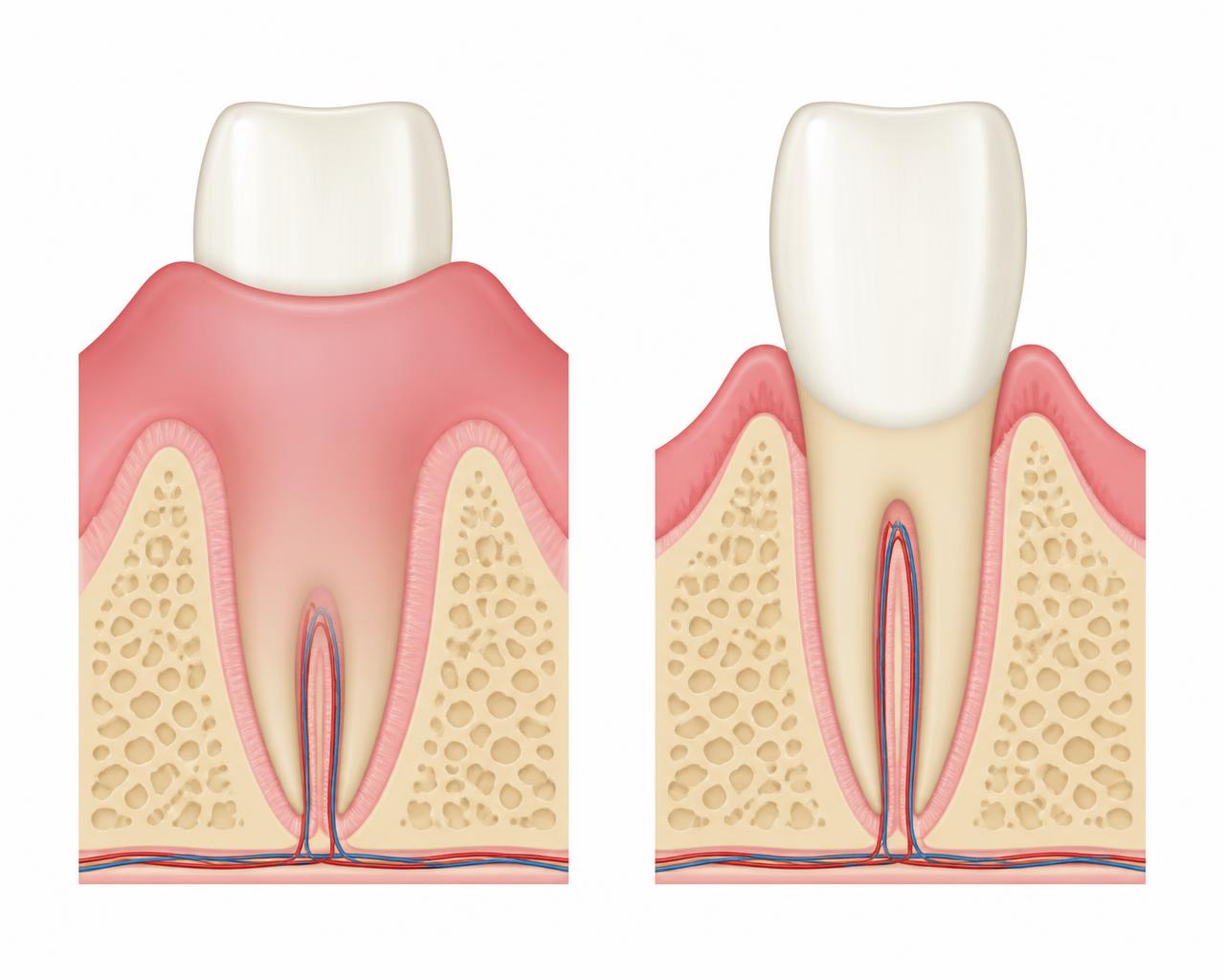
Crown lengthening reshapes gum tissue — and sometimes a small amount of bone — to expose more of a tooth, whether that is to give a crown or filling enough healthy structure to seal against or to correct a gummy smile, performed in-house by Dr. Kambez Shukoor.

Google Rating
4.9 · 303 reviews
Availability
Same-day consults
Payments
Financing available
Definition
What Is Crown Lengthening?
Crown lengthening is a minor surgical procedure that removes excess gum tissue — and, where needed, a small amount of the bone underneath — to expose more of a tooth's surface. It is done for two reasons: restoratively, so a crown or filling has enough healthy tooth structure to seal against, and cosmetically, to reshape a gumline that covers too much of otherwise healthy teeth.
The name refers to the visible crown of the tooth, not to a dental crown restoration — nothing is added to the tooth during this procedure. It simply makes more of the existing tooth visible above the gum, which is either what a restoration needs or what a smile makeover plan calls for.
Why more tooth exposure is needed
- A fracture or deep decay has left the tooth margin at or below the gumline
- A restoration needs sound structure above the gum to bond and seal against
- Healthy gum requires a set distance between the restoration margin and the bone
- Excess gum tissue can make healthy teeth look short and the smile line uneven
- An uneven gumline draws the eye more than the shape of the teeth themselves
What the procedure achieves
- Enough exposed tooth structure for a crown or filling to be placed and sealed properly
- A gum and bone relationship that stays healthy around the finished restoration
- A gumline contoured to follow the natural scallop of the teeth
At a glance
Crown Lengthening
- Procedure length
- About 45–90 minutes, by extent
- Anesthesia
- Local, with sedation available
- Healing time
- Soft tissue settles in 1–2 weeks
- Before restorative work
- Weeks for a filling, longer for a crown
- Purpose
- Restorative and/or cosmetic
or call (202) 363-2810
Two Purposes
Restorative vs. Cosmetic Crown Lengthening
The surgery is much the same either way — what differs is why it is being done, how many teeth are involved, and what happens next.
Restorative Crown Lengthening
A tooth has fractured or decayed below the gumline, leaving too little healthy structure above the gum for a restoration to grip and seal. Reshaping the gum — and often a small amount of bone — exposes enough tooth to restore it properly.
- Exposes sound tooth structure a crown or filling can seal against
- Often saves a tooth that would otherwise be extracted
- Protects the biologic width so the gum stays healthy around the restoration
- The restoration waits until the gum has fully healed
Cosmetic Crown Lengthening
Excess gum tissue covers too much of otherwise healthy teeth, producing a "gummy smile" where the teeth look short and the smile line sits low. Reshaping the gumline reveals more of the natural tooth and evens the contour.
- Teeth look longer and better proportioned without touching the enamel
- Evens out an uneven gumline across several front teeth
- Frequently planned alongside veneers or crowns in a wider smile plan
- Elective, so insurance rarely contributes
Restorative cases end with a dental crown or a dental filling on the treated tooth. Cosmetic cases are usually one part of a broader smile makeover, designed so the new gumline and the final tooth shapes work together.
The Process
The Crown Lengthening Process
Crown lengthening is a single short surgical visit followed by a healing period. The wait afterward exists so the gum settles at its final level before anything is restored on top of it.
Consultation & Imaging
Visit 1
An exam and x-rays show where the gum and bone sit relative to the tooth, how much healthy structure remains below the margin, and exactly how much tissue needs to be reshaped.
Anesthesia
Surgery day
The area is fully numbed with local anesthetic, with sedation available for patients who would rather not be alert for the procedure.
Reshaping Gum and Bone Tissue
Surgery day
Excess gum tissue is trimmed and contoured, and where the bone sits too close to the new margin, a small amount is recontoured so the tooth has the exposure a restoration needs.
Closing the Site
Surgery day
The gum is repositioned at its new level and secured with fine sutures. A protective dressing is sometimes placed over the area for the first several days.
Healing Before Restorative Work Begins
Weeks to months
If the procedure was restorative, the crown or filling waits until the gum has fully healed and settled at its final level — usually a matter of weeks for a filling and longer where a crown margin has to be exact.
Candidacy
Are You a Candidate for Crown Lengthening?
An exam and x-rays settle it — but these are the patterns that point toward the procedure, and the ones that point somewhere else.
Signs crown lengthening may be needed
- 1A tooth has broken off at or below the gumline
- 2Decay extends under the gum, past where a restoration could seal
- 3A previous crown keeps failing because its margin sits too deep
- 4Healthy teeth look short because excess gum covers them
- 5The gumline is visibly uneven across the front teeth
When crown lengthening isn't the answer
A tooth that already has enough healthy structure above the gum needs no surgery — the restoration can simply be placed. Some gum concerns are better addressed another way: recession, inflammation, or periodontal pockets call for periodontal treatment rather than removing more tissue, and a tooth damaged too far below the bone may be better extracted and replaced.
These are the restorations crown lengthening most often makes possible, once the gum has healed at its new level.
Both are performed in-house by Dr. Kambez Shukoor.
Recovery
Recovery After Crown Lengthening
What the first week feels like
Expect swelling and tenderness around the treated area, worst in the first two to three days and easing through the first week. The exposed part of the tooth is often sensitive to cold and to brushing while the gum settles. Most people are back to normal activity the next day.
The first 72 hours
- Ice in 20-minute intervals on the first day; swelling peaks around day two
- Soft foods only, chewing away from the treated side
- No smoking and no straws while the tissue is closing
- Do not brush directly over the surgical site or pull the lip out to inspect it
- Take prescribed or over-the-counter medication on schedule rather than waiting for pain
Weeks one to four
- Gentle warm salt-water rinses from the day after surgery
- Sutures and any protective dressing are removed around a week to ten days
- Soft foods give way to a normal diet as comfort allows
- Cold sensitivity on the newly exposed tooth surface usually fades over these weeks
Before restorative work begins
- A filling can often follow within a few weeks of the gum closing
- A crown waits longer, until the gumline has stabilized at its final level
- Placing a crown margin too early risks it ending up in the wrong place as tissue settles
- A follow-up visit confirms the tissue level before the restoration is started
Anxious patients can have the procedure done with sedation available alongside local anesthetic.
| Timeframe | What to expect |
|---|---|
| Day 1–3 | Swelling and tenderness peak; ice, soft foods, medication on schedule |
| Week 1 | Discomfort fades; most people are back to routine activity |
| Week 1–2 | Sutures and dressing removed; gum closed at its new level |
| Weeks 2–4 | Normal diet resumes; cold sensitivity on the exposed tooth settles |
| Filling timeline | Restoration can often be placed within a few weeks |
| Crown timeline | Crown waits until the gumline has fully stabilized |
Investment
What Does Crown Lengthening Cost in Washington, DC?
We do not publish a single price, because a single restorative site and a multi-tooth cosmetic case are not the same procedure. Here is what moves the number.
Number of teeth involved
- A single restorative site is the shortest procedure and the lowest fee
- Cosmetic cases usually span several front teeth in one visit
- Treating adjacent teeth together costs less than separate visits
Restorative or cosmetic purpose
- Restorative cases are sometimes partly covered by dental insurance
- Purely cosmetic gumline reshaping is generally elective and not covered
- Bone recontouring, where needed, is itemized as its own line
Combined with the restoration
- The crown or filling that follows is quoted separately from the surgery
- Sedation, if chosen, is itemized alongside the surgical fee
- The whole sequence is priced in writing before anything begins
Crown lengthening is quoted as part of the whole treatment plan — surgery, any bone recontouring, and the restoration that follows are itemized in writing before anything begins. We verify your insurance benefits and explain monthly payment options on our financial information page, including CareCredit and Cherry financing.
Why Choose
Why Choose DC Implant & Cosmetic Dentistry
Dr. Kambez Shukoor is a U.S. Navy veteran dentist with fellowship-level training who handles both the surgery and the restoration that follows it.
Surgery & Restoration in One Office
Dr. Shukoor performs the crown lengthening and places the crown or filling himself, so the surgical margin and the restoration are planned together.
Fellowship-Level Credentials
FAGD, FICOI, and MICOI credentials backed by continuing education in both surgical and restorative dentistry.
Imaging-Led Planning
Digital imaging maps the bone and gum levels before surgery, so how much tissue to remove is decided in advance, not in the chair.
Comfort-First Care
Local anesthetic, sedation options, and a slow, explained pace for patients who are anxious about gum surgery.
Honest Case Planning
If enough tooth structure is already exposed for a crown without surgery, that is what gets recommended.
Transparent Costs
Written treatment plans with itemized fees, insurance coordination, and third-party financing through CareCredit and Cherry.
FAQ
Crown Lengthening Questions
The questions Washington, DC patients ask most often before having gum and bone tissue reshaped to expose more of a tooth.
Related
Where This Leads
Crown lengthening prepares a tooth or a gumline for what comes next. These are the procedures it most often connects to.
Dental Crowns
Full-coverage restoration placed once the exposed margin has healed.
Dental CrownsDental Fillings
Composite restoration for decay that can be sealed without a crown.
Dental FillingsSmile Makeover
Where gumline reshaping is one part of a wider cosmetic plan.
Smile MakeoverAnesthesia & Sedation
Local anesthetic and sedation options for the procedure itself.
Anesthesia & Sedation