
Cosmetic Dentistry
Teeth Whitening in Washington, DC
Professional in-office and custom take-home whitening that lifts years of coffee, tea, wine, and tobacco staining — assessed and supervised by Dr. Kambez Shukoor.

Google Rating
4.9 · 303 reviews
Availability
Same-day consults
Payments
Financing available
Definition
What Is Professional Teeth Whitening?
Professional teeth whitening is a dentist-supervised treatment that uses a peroxide-based gel to break apart the stain molecules held inside your tooth structure. It lifts discoloration that brushing cannot reach, using a stronger agent and a more controlled application than any product sold over the counter.
The difference is not marketing. Strips and rinses from a drugstore carry a low concentration and sit loosely against uneven tooth surfaces, so the result is patchy and modest. In our office the gel is professional strength, held precisely against enamel by isolation in the chair or by trays molded to your own teeth, and the whole course is monitored so sensitivity can be managed instead of tolerated. The ADA teeth whitening overview covers the same distinction.
What makes it different from a drugstore kit
- Higher-concentration whitening agent than anything sold retail
- Custom-fit trays or in-chair isolation keep gel on enamel and off gums
- An exam first, so decay or gum disease is not whitened over
- Sensitivity managed with desensitizing agents and adjusted wear times
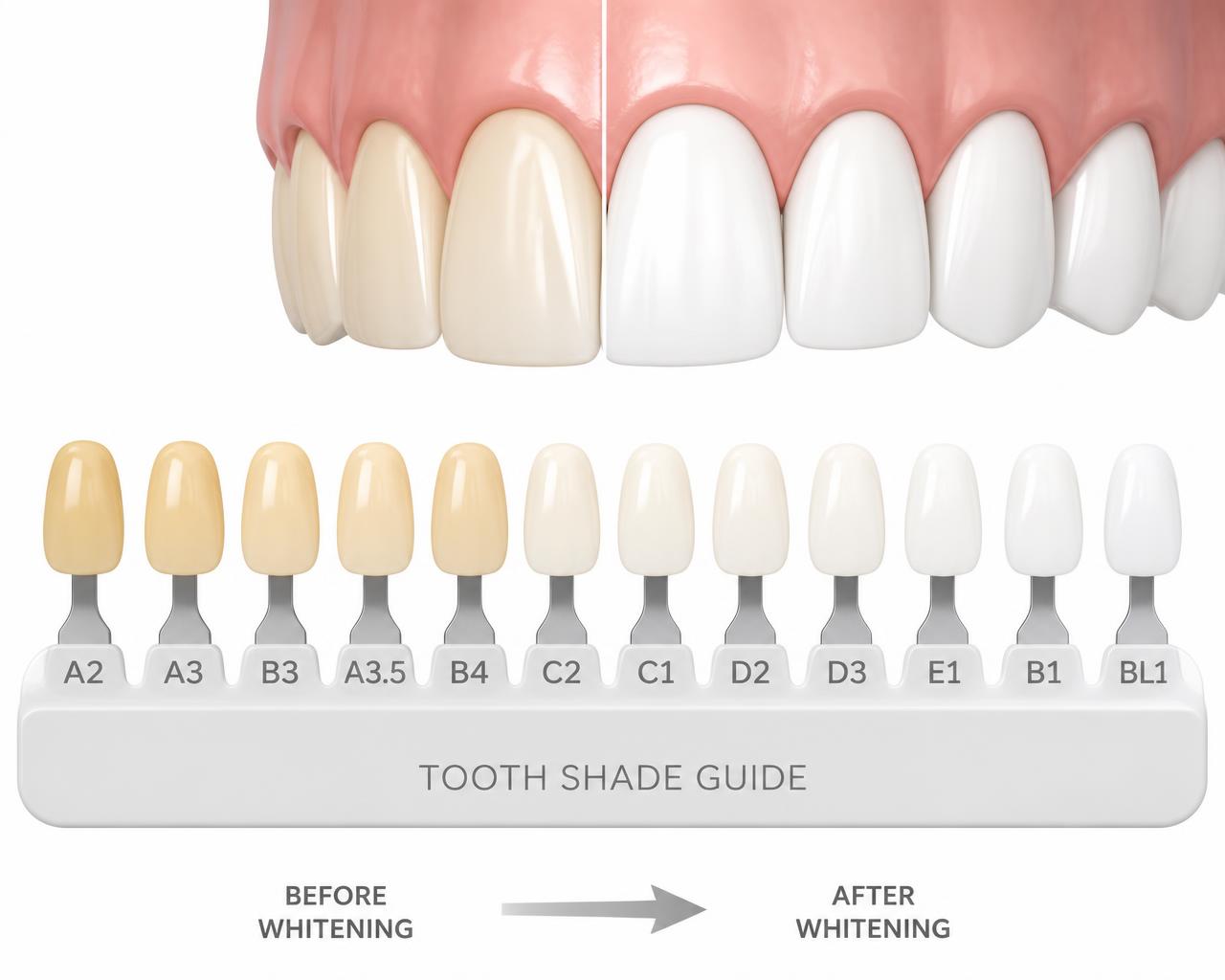
- A recorded starting shade, so the change is measured rather than guessed
Whitening only changes natural tooth structure. Existing crowns, veneers, bonding, and tooth-colored fillings keep the shade they were made in — which is why we check what is already in your mouth before starting.
At a glance
Teeth Whitening
- Treatment time
- About 1 hour in office, or 1–2 weeks at home
- Number of visits
- 1–2 (assessment, treatment or tray fitting)
- Sensitivity
- Common but temporary — usually 1–2 days
- Results duration
- Months to a couple of years, diet dependent
- Touch-ups
- Short sessions in your custom trays
or call (202) 363-2810
Compare
In-Office Whitening vs. Take-Home Trays
Both use professional-strength gel and both are supervised. The choice comes down to how fast you want the change, what it costs, and how you prefer to fit it into your week.
In-Office Whitening
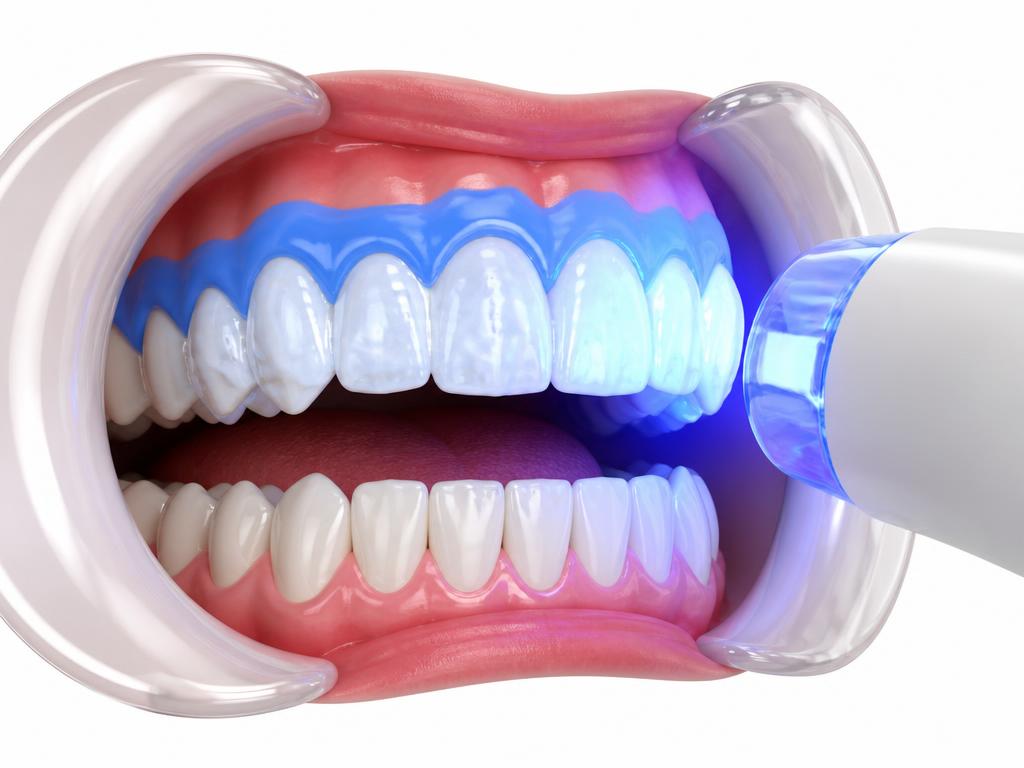
A single supervised appointment using a professional-strength gel applied in the chair, with your gums isolated and protected.
- Visible shade change in one visit — usually about an hour
- Highest whitening-agent concentration, used only under supervision
- Gums and lips isolated, so the gel stays on enamel
- Sensitivity is managed in the chair as it happens
- Higher per-treatment cost than take-home trays
Custom Take-Home Trays
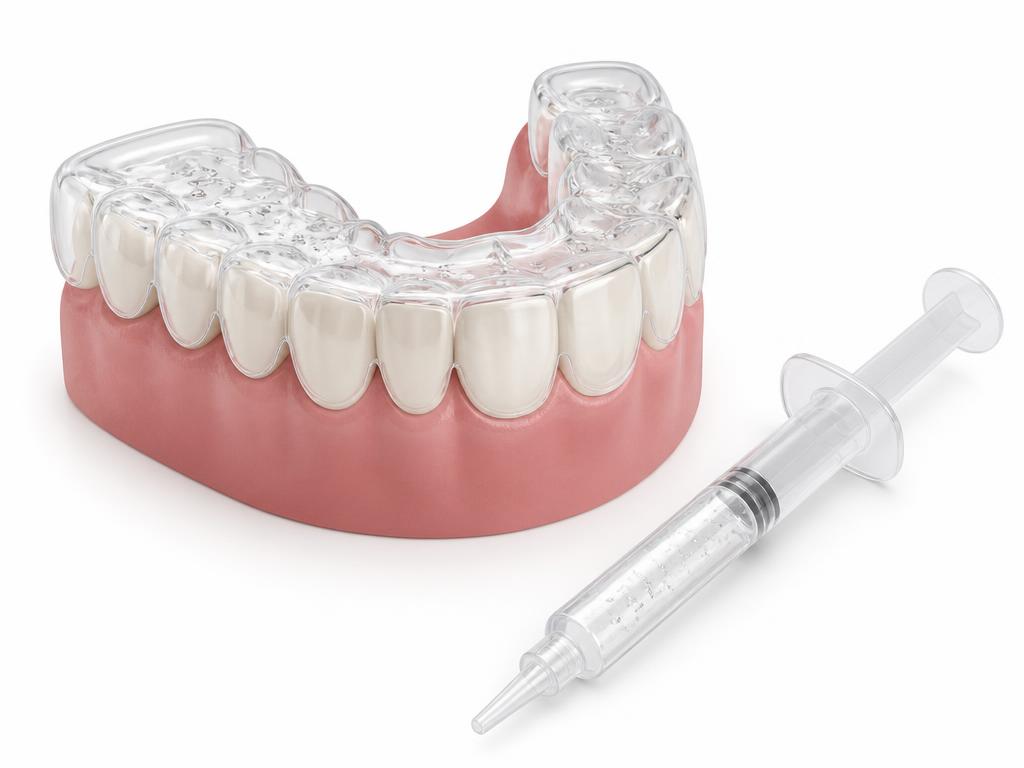
Trays molded to your own teeth plus dispensed gel, worn for short daily sessions over roughly one to two weeks.
- Whiten on your own schedule, at home
- Lower cost tier than a full in-office session
- Trays are reusable for future touch-ups — only gel is repurchased
- Results build gradually over one to two weeks, not in a day
- Depends on you wearing them consistently
Many patients combine the two: an in-office session for the initial change, then custom trays kept at home for touch-ups. We confirm which option fits your teeth and sensitivity at the consultation.
The Process
The Teeth Whitening Process
The first two steps are identical either way. The paths diverge at step three — in-chair application versus custom tray fitting — and rejoin at the results check.
Consultation & Shade Assessment
Visit 1
We record your starting shade against a shade guide, check for decay or gum issues that would rule whitening out, and identify which stains will lift and which will not.
Cleaning If Needed
Before whitening
Plaque and surface buildup block gel from reaching enamel evenly. If you are due for a cleaning, we do it first so the result comes out uniform rather than patchy.
In-Office Application or Tray Fitting
Where the paths split
In-office: your gums are isolated and professional-strength gel is applied in the chair. Take-home: we scan or impress your teeth and make custom trays that hold gel against enamel and off the gums.
Whitening Treatment
One visit or 1–2 weeks
In-office whitening runs through timed gel cycles in a single appointment. Take-home whitening is short daily sessions over one to two weeks, at the wear time we set for your sensitivity level.
Results Check & Touch-Up Planning
Follow-up
We compare your finished shade to the starting photo, discuss what will re-stain fastest in your diet, and set a realistic touch-up interval using your trays.
Candidacy
Are You a Candidate for Teeth Whitening?
Whitening works beautifully on some kinds of discoloration and does nothing at all for others. Knowing which one you have is the entire point of the assessment.
What whitening addresses well
- 1Surface staining from coffee, tea, and red wine
- 2Tobacco staining on natural enamel
- 3General yellowing that comes with age
- 4Dulling from darkly pigmented foods over years
- 5Healthy teeth and gums with no active decay
What whitening will not fix
Bleaching gel only acts on natural tooth structure. It cannot lighten porcelain or composite, and it has limited effect on discoloration that sits deep inside the tooth rather than on it.
Old fillings, crowns, and veneers keep their original shade. Tetracycline banding and trauma-related internal staining respond partially at best. In both cases, covering the tooth is what actually changes the color.
All three alternatives below are handled in-house by Dr. Kambez Shukoor.
Porcelain Veneers
For deep internal or tetracycline staining that bleaching cannot lift, veneers change the shade by covering the tooth.
Porcelain VeneersDental Crowns
Crowns and porcelain do not bleach. When an existing restoration is the mismatched tooth, it gets replaced rather than whitened.
Dental CrownsSmile Makeover
When color is only part of the concern — shape, spacing, and alignment too — whitening becomes one stage of a combined plan.
Smile MakeoverComfort
Managing Sensitivity During Teeth Whitening
Sensitivity is the single most common reason people abandon whitening halfway through. It is predictable, it is temporary, and it is the part supervision actually earns its keep on.
Why it happens
Whitening gel passes through enamel to reach the stained dentin underneath. That temporarily opens the microscopic tubules in dentin, so cold air, cold drinks, or pressure register more sharply than usual for a short period.
- Short, sharp cold sensitivity — sometimes described as zingers
- Occasional gum tenderness where gel touched soft tissue
- Typically peaks within 24 hours and settles on its own
How common and how long
Some degree of sensitivity is common and expected rather than a sign anything went wrong. For most patients it fades within a day or two of finishing a session and leaves no lasting effect on the teeth.
- Most people notice it at some point during a whitening course
- It is temporary — enamel is not being worn away
- Pre-existing recession or cracks can make it more noticeable
What we do about it
Sensitivity is managed rather than endured. Because whitening is supervised here, the protocol is adjusted for you instead of being fixed by whatever a retail box dictates.
- Desensitizing agents applied before or after treatment
- Lower gel concentration or shorter wear times when needed
- Spacing take-home sessions further apart instead of stopping
- Desensitizing toothpaste for the days around treatment
If sensitivity is already a daily issue for you, say so at the consultation — it changes which option we recommend and how the gel is dosed, not whether you can whiten at all.
Recovery
Recovery After Teeth Whitening
The first 48 hours
There is no downtime. Teeth are temporarily more absorbent right after treatment, so the only real rule is to keep staining foods and drinks away for a day or two.
- Skip coffee, tea, red wine, and cola for 24–48 hours
- Avoid berries, tomato sauce, curry, soy sauce, and beets
- No tobacco — it re-stains fresh enamel fastest of anything
- Cold sensitivity for a day or two is normal and fades on its own
Keeping the result
- Drink coffee, tea, and wine with water alongside, or through a straw
- Keep six-month professional cleanings to remove the surface film that dulls the shade
- Use your custom trays for short touch-ups rather than a full re-treatment
- Tell us if a filling now looks dark against your new shade — it can be replaced to match
| Timeframe | What to expect |
|---|---|
| Day 1 | Normal routine; cold sensitivity possible, staining foods avoided |
| Days 2–3 | Sensitivity settles; shade stabilizes slightly from day one |
| Week 1 | Full result visible; normal diet resumed with care |
| Ongoing | Cleanings, mindful staining habits, tray touch-ups as needed |
Investment
What Does Teeth Whitening Cost in Washington, DC?
We do not publish a single price, because whitening is quoted around the option you choose and how you plan to maintain it. Here is exactly what moves the number.
In-office vs. take-home
- In-office treatment sits at the higher tier — chair time and supervision
- Custom trays cost less and are reusable for years
- Combining both is quoted as one plan, not two separate fees
Single treatment vs. touch-up plan
- A one-time session is priced on its own
- A maintenance plan adds trays and periodic gel refills
- Gel refills alone are the lowest ongoing cost
What your case needs first
- A cleaning beforehand if you are due, so results come out even
- Replacing a filling or crown that no longer matches the new shade
- Cases where veneers, not bleaching, are the honest answer
At your consultation you receive an itemized written quote covering the option you choose and any maintenance — no surprise line items later. We explain monthly payment options on our financial information page, including CareCredit and Cherry financing.
Why Choose
DC Implant & Cosmetic Dentistry
Dr. Kambez Shukoor is a U.S. Navy veteran dentist who assesses, supervises, and follows up on your whitening himself, in one Connecticut Avenue office.
Design & Treatment in One Office
Dr. Kambez Shukoor assesses your shade, supervises whitening, and plans any follow-up cosmetic work himself — one team, one plan.
Cosmetic & Restorative Training
FAGD and fellowship-level training across cosmetic and restorative dentistry, with continuing education focused on esthetic case planning.
Preview Before You Commit
Shade photos taken before and after mean you can see the real change against your starting point instead of guessing.
Comfort-First Care
Sensitivity is anticipated and managed — desensitizing agents, adjusted concentrations, and spaced sessions rather than pushing through discomfort.
Honest Case Planning
If whitening will not lift your particular staining, we say so and show you what porcelain veneers or dental crowns would do instead.
Transparent Costs
Written treatment plans with itemized fees, insurance coordination where it applies, and financing through CareCredit and Cherry.
FAQ
Teeth Whitening Questions
The questions Washington, DC patients ask most often before whitening.
Related
Cosmetic Dentistry Services
Whitening is the most conservative way to change how your smile looks. These pages cover the rest of our cosmetic care.
Porcelain Veneers
Custom porcelain shells when shape and spacing need to change along with color.
Porcelain VeneersDental Crowns
Full-coverage restorations for teeth that need strength as well as appearance.
Dental CrownsSmile Makeover
A combined plan when several treatments work together on one smile.
Smile MakeoverClear Aligners
Straightening crooked or crowded teeth before whitening or veneers.
Clear Aligners