

Oral Surgery
Wisdom Tooth Removal in Washington, DC
Dr. Kambez Shukoor evaluates and removes wisdom teeth in our Washington, DC office — from straightforward extractions of fully erupted molars to surgical removal of impacted teeth — with sedation options for patients who are anxious about the appointment.

Google Rating
4.9 · 303 reviews
Availability
Same-day consults
Payments
Financing available
Definition
What Is Wisdom Tooth Removal?
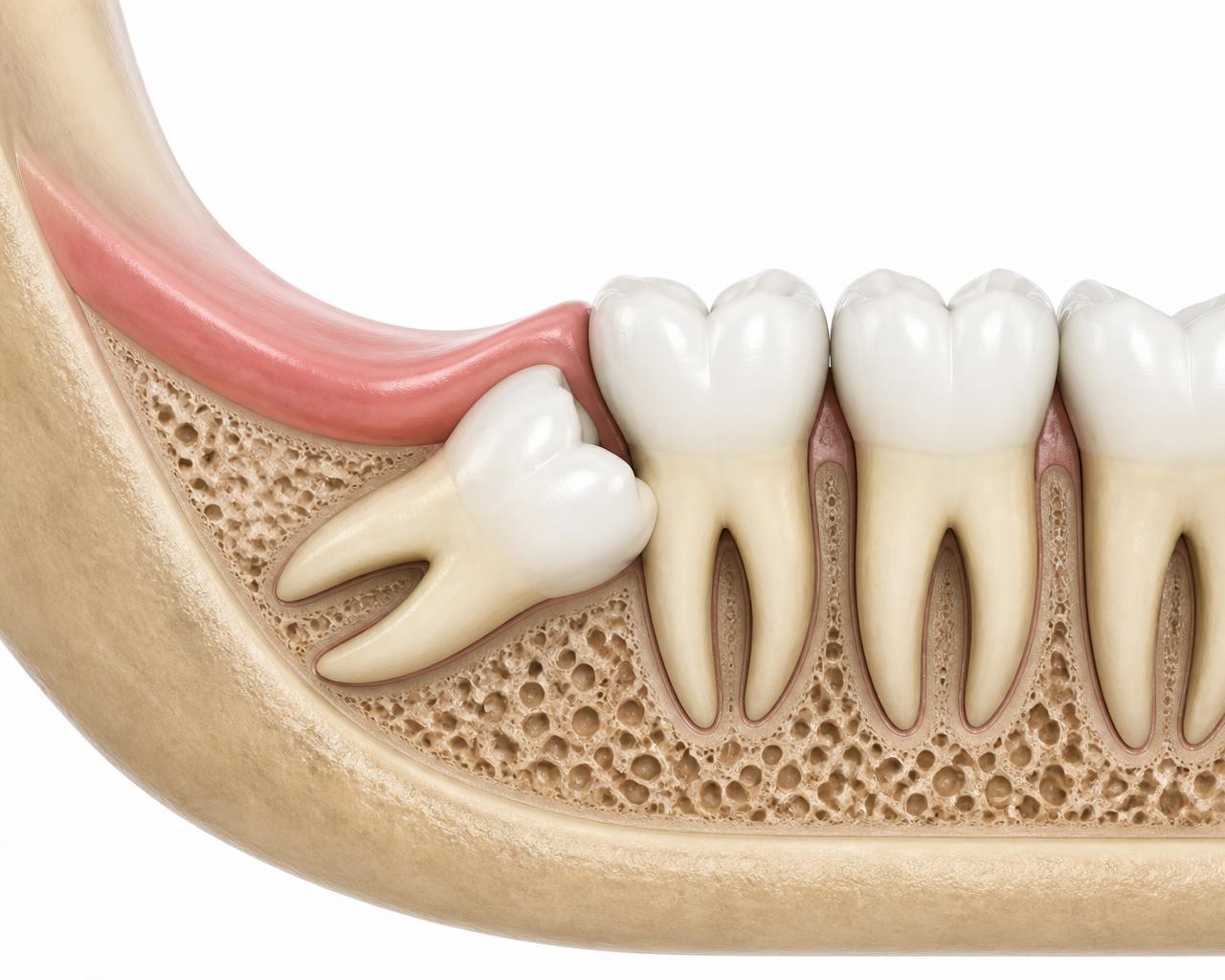
Wisdom tooth removal is the extraction of the third molars — the last four teeth to come in, usually between ages 17 and 25. Because most jaws don't have room for them, they often become impacted (stuck under the gum or bone) or erupt only partway, leaving a gum flap that traps bacteria and becomes prone to infection. For extractions other than wisdom teeth, see tooth extractions.
Not every wisdom tooth is a problem. Some erupt upright, bite normally, and can be brushed like any other molar. The decision comes down to position, symptoms, and whether the tooth is putting the molar in front of it at risk — which is why the first step is always an exam with X-rays, not an assumption. The ADA's patient guide to wisdom teeth covers the same ground independently.
Common impaction patterns
- Angled forward into the molar ahead of it — the most frequent pattern
- Horizontal, lying sideways beneath the gum and bone
- Vertical but trapped, unable to break through fully
- Partially erupted, with a gum flap that repeatedly becomes inflamed
What problems they can cause
- Recurring pain, swelling, and infection of the gum over the tooth
- Decay on the back surface of the healthy molar in front, where a brush can't reach
- Cysts forming around the crown of a fully buried tooth
- Pressure and crowding on the teeth ahead of it
At a glance
Wisdom Tooth Removal
- Procedure length
- About 20–60 minutes, by case
- Anesthesia
- Local, nitrous, or deeper sedation
- Typical age range
- 17–25, though any age is possible
- Recovery time
- A few days to two weeks
- Applies to
- One tooth or all four in one visit
or call (202) 363-2810
Two Routes
Simple vs. Surgical
Not all wisdom tooth extractions are the same procedure. Whether yours is simple or surgical depends entirely on how the tooth sits — and imaging answers that before you commit to anything.
Simple Extraction
The wisdom tooth has fully erupted through the gum and can be reached directly. It is loosened and lifted out without an incision, usually under local anesthetic alone.
- Shorter appointment — often 20 to 30 minutes per tooth
- Local anesthetic is usually enough, with nitrous available
- Little or no stitching, and a faster return to normal eating
- Swelling is usually mild and settles within a few days
- Only possible when the tooth has erupted and is accessible
Surgical (Impacted) Removal
The tooth is impacted below the gum or bone, or angled into its neighbor. A small incision is made and the tooth is often sectioned into pieces so it can be removed cleanly.
- Handles teeth that cannot erupt or are angled sideways
- Sedation options make the appointment comfortable start to finish
- 3D imaging maps nerve position before anything is touched
- Longer appointment, and stitches are usually placed
- More swelling, with a one- to two-week recovery arc
Many patients need one of each — an erupted upper tooth removed simply and an impacted lower one surgically, in the same appointment. Whichever applies, sedation options are discussed before surgery day, not on it.
The Process
The Wisdom Tooth Removal Process
From the first X-ray to the healing check, most patients are through the whole process in about two weeks.
Consultation & Imaging
Visit 1
X-rays — and a 3D cone-beam scan for impacted cases — show how each wisdom tooth is angled, how much bone covers it, and how close the roots sit to the nerve.
Anesthesia or Sedation
Surgery day
Local anesthetic, nitrous oxide, or deeper sedation, chosen for the complexity of the case and how anxious you are about the appointment.
Extraction
Same visit
Erupted teeth are lifted out simply. Impacted teeth are reached through a small incision and often sectioned so they come out with less pressure on the surrounding bone.
Closing & Initial Recovery
Same visit
Stitches are placed where needed, gauze controls bleeding, and you leave with written aftercare instructions and a clear plan for the first 24 hours.
Follow-Up Check
About 1 week
A short visit confirms the sockets are healing cleanly and removes any stitches that don't dissolve — especially important after surgical removal.
Candidacy
Do You Need It
Wisdom teeth are not removed on principle. The question is whether a specific tooth is causing problems, or is clearly going to.
Signs removal is needed
- 1Pain, pressure, or jaw stiffness at the very back of the mouth
- 2Swelling or repeated infection of the gum over a partly erupted tooth
- 3Imaging shows the tooth impacted or angled into its neighbor
- 4Decay starting on the back of the healthy molar in front
- 5A cyst forming around the crown of a buried tooth
- 6The tooth can't be cleaned properly, so it decays repeatedly
When monitoring is reasonable
- The tooth is fully erupted and upright in the arch
- It meets the opposing tooth and takes part in the bite
- There are no symptoms and no history of infection
- You can reach it with a brush and floss without a struggle
- Imaging shows healthy bone and no cyst around the crown
In that case the plan is simply to keep an eye on it — checked and re-imaged at routine exams, and removed later only if something changes.
Recovery
Recovery After Wisdom Tooth Removal
Protect the clot first
Nearly all wisdom tooth aftercare comes down to one thing: leaving the blood clot in the socket alone while it does its job. Suction, forceful rinsing, and smoking are the three things most likely to dislodge it and cause dry socket. You'll leave with written instructions specific to your case — follow those over anything general you read online, and call us if anything doesn't match.
The first 24 hours
- Bite firmly on gauze until bleeding stops; replace it as directed
- Ice on the outside of the cheek in 20-minute intervals
- No straws, no spitting, no smoking, no rinsing at all on day one
- Cool soft foods only — yogurt, smoothies by spoon, apple sauce
- Rest with your head slightly elevated and skip exercise entirely
Days two to seven
- Swelling and any bruising peak around day two or three, then ease
- Gentle warm salt-water rinses after meals from day two — no swishing hard
- Soft foods for several days; avoid seeds, chips, rice, and anything sharp
- Brush the rest of the mouth normally, staying off the surgical sites
- Sudden sharp pain around day three to five can mean dry socket — call us
Week two and beyond
- Most patients are back to a normal diet and normal activity
- Non-dissolving stitches are removed at the follow-up visit
- Jaw stiffness after surgical removal can take a little longer to fully settle
- The socket keeps filling in with bone beneath the gum for several more weeks
If pain, swelling, or fever is getting worse rather than better, contact us or see emergency dental care the same day.
| Timeframe | What to expect |
|---|---|
| Day 1 | Gauze, ice, cool soft foods, rest — no straws or rinsing |
| Day 2–3 | Swelling and bruising peak; salt-water rinses begin gently |
| Day 4–7 | Discomfort fades; soft diet continues; dry-socket window closes |
| Week 1 | Follow-up check; stitches removed if they don't dissolve |
| Week 2 | Normal eating and activity for most patients |
| Weeks 3–8 | The socket fills in with bone beneath the healed gum |
Investment
What Does Wisdom Tooth Removal Cost in Washington, DC?
We don't publish a flat price, because one erupted tooth and four impacted ones are not the same procedure. Here is what moves the number.
Simple or surgical
- A fully erupted tooth removed simply is the lowest-cost case
- Surgical removal of an impacted tooth takes longer and costs more
- Deeply buried or horizontal teeth sit at the top of that range
How many teeth
- Wisdom teeth are quoted per tooth, not as a single flat fee
- Removing all four at once means one visit and one anesthesia fee
- Staging one side at a time spreads cost across two appointments
Anesthesia level
- Local anesthetic is included in the extraction fee
- Nitrous oxide and deeper sedation are itemized separately
- Sedation level is chosen for comfort and complexity, then quoted upfront
After imaging, you receive a written plan with a fee for each tooth and each sedation option before anything is scheduled. We verify your insurance benefits — extractions are covered by many plans — and explain monthly payment options on our financial information page, including CareCredit and Cherry financing.
Why Choose
DC Implant & Cosmetic Dentistry
Dr. Kambez Shukoor is a U.S. Navy veteran dentist with advanced surgical training who performs extractions and sedation in our own Washington, DC office.
Surgery Done In-House
Dr. Shukoor evaluates and removes wisdom teeth in our own office, so there's no referral out to a separate surgical practice for most cases.
Advanced Surgical Training
FAGD, FICOI, and MICOI credentials backed by continuing education in oral surgery and sedation.
3D Imaging Before Surgery
Cone-beam scans map root angulation and nerve position ahead of impacted extractions, so the plan is set before the appointment.
Comfort-First Care
Sedation options, a slow explained pace, and clear aftercare for patients who are anxious about having teeth removed.
Honest Recommendations
If a wisdom tooth is healthy, well positioned, and easy to clean, we say so and monitor it at checkups instead of removing it.
Transparent Costs
Written treatment plans with itemized fees per tooth, insurance coordination, and third-party financing through CareCredit and Cherry.
FAQ
Wisdom Tooth Questions
The questions Washington, DC patients ask most often before having wisdom teeth removed.
Related
Related Care
Whether you're in pain now or just want to know where your wisdom teeth stand, these are the next steps.
Sedation & Anesthesia
How we keep surgical extractions comfortable, from nitrous to deeper sedation.
Sedation & AnesthesiaExams & X-Rays
Start here if your wisdom teeth have never actually been evaluated.
Exams & X-RaysTooth Extractions
Removal of other teeth, from straightforward cases to broken or decayed teeth.
Tooth ExtractionsEmergency Dentistry
Acute wisdom tooth pain, swelling, or infection that can't wait for a routine slot.
Emergency Dentistry