
Tooth Replacement
Temporary Tooth Replacement: How Teeth Flippers Help
Lost a tooth and waiting on a permanent replacement? Here is how a removable teeth flipper bridges the gap while you heal or plan your next step.
Losing a visible tooth is disruptive, and the definitive replacement usually cannot happen the same week. Bone and gum tissue need time to heal after an extraction, and implants need months to integrate with the jaw before a final crown goes on. A teeth flipper — a lightweight, removable partial denture — fills that gap in the meantime.
A flipper is not a permanent fix, and it is not meant to be. Its job is to restore your appearance and speech quickly and affordably while the rest of your treatment plan proceeds on the timeline it needs. Understanding what a flipper does well, and where its limits are, helps set the right expectations from the start.
What Is a Teeth Flipper?
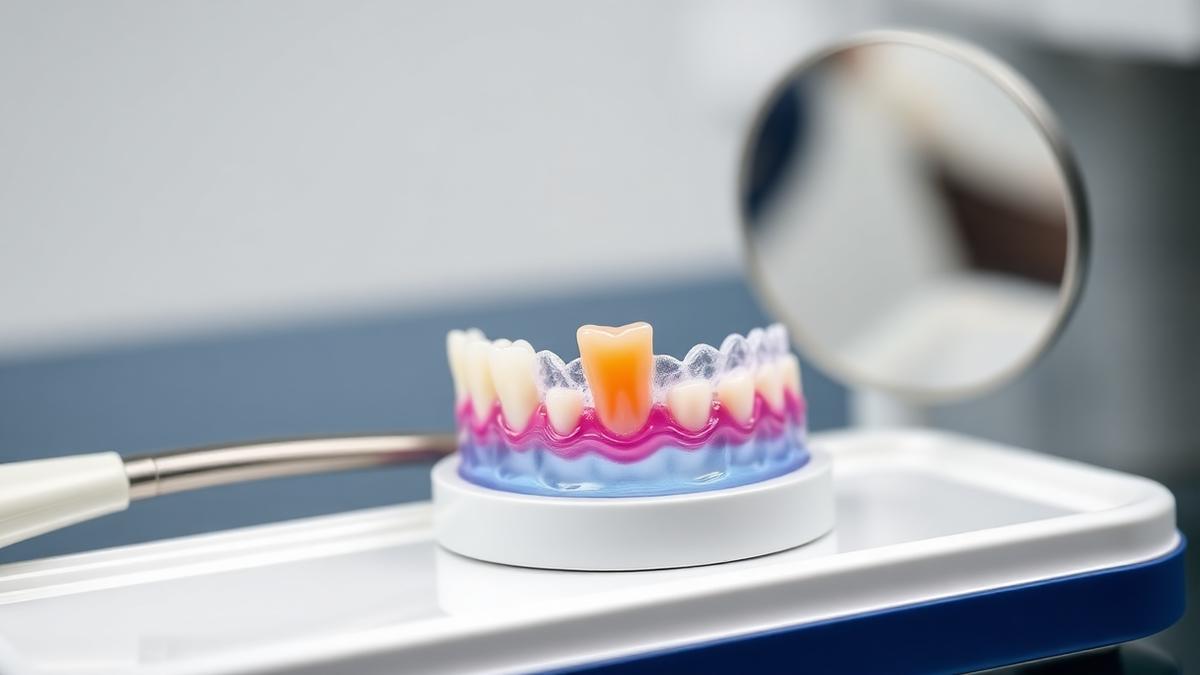
A flipper is a small acrylic plate that sits against the roof of your mouth or along the lower ridge, carrying one or more prosthetic teeth. It is removable, quick to fabricate, and one of the least expensive ways to replace a visible missing tooth in the short term. Our dental flippers page covers fabrication and fitting in more detail.
When a Flipper Makes Sense
- After an extraction. Gum and bone need to heal before an implant is placed — see tooth extractions.
- During implant healing. An implant integrates with bone over a period of months before the final crown goes on.
- While planning treatment. When you are deciding between an implant, a bridge, or a partial denture.
- After an accident. A knocked-out front tooth needs an immediate cosmetic solution.
- Before a specific event. A wedding or presentation you would rather not attend with a visible gap.
What a Flipper Does Well
- Restores the appearance of your smile immediately.
- Helps normalize speech, which a front gap can disrupt.
- Helps hold the space so neighboring teeth are less likely to drift.
- Is inexpensive relative to definitive options, and quick to make.
- Requires no alteration of adjacent teeth.
What It Does Not Do
A flipper rests on soft tissue rather than transmitting chewing force into the jawbone, so it does not prevent the bone loss that follows tooth loss — only a dental implant does that. Acrylic is also less durable than the materials used in definitive restorations, and the fit changes as your gum heals and reshapes, so periodic adjustments are a normal part of wearing one.
Flippers are also gum-supported, which makes them less suitable if you have active gum disease. That should be treated first — see periodontal disease.
Living With a Flipper
- 1Expect a short adjustment period for speech and for eating, especially in the first few days.
- 2Rinse after meals and clean the appliance daily with a soft brush and mild soap or denture cleaner.
- 3Store it moist when it is out so the acrylic does not warp.
- 4Report sore spots or rocking to your dentist — those are adjustment issues, not something to endure.
- 5Keep your definitive treatment on schedule; the flipper is an interim step, not a stopping point.
Comparing Temporary and Permanent Options
Other temporary options
A temporary bridge bonded to adjacent teeth is more stable than a flipper but involves preparing those teeth. A clear retainer-style appliance with a tooth added is discreet but not designed for regular chewing. Which fits best depends on where the gap is and how long the interim period will last.
Definitive replacements
A single tooth dental implant is the most stable long-term solution and the only one that helps maintain the jawbone. A fixed bridge restores function without surgery where implants are not a good fit. For multiple missing teeth, implant-supported dentures or an implant bridge may be the better option. Where bone has already resorbed, bone grafting can rebuild the site before an implant is placed.
Want a plan that gets you from today's gap to a permanent tooth? Contact our Washington, DC office and we will map out the right sequence for your situation.
Questions
Frequently asked questions
Talk it through with our team
Have a question this article did not answer? Our Washington, DC team is happy to help — call (202) 363-2810 or book online.
4444 Connecticut Ave NW #106, Washington, DC 20008