
Oral Health & Whole Body
Let's Raise Awareness of Oral Cancer
Oral cancer is most treatable when found early. Learn the risk factors, warning signs, and what a screening involves.
Oral cancer doesn't get talked about as often as other cancers, but early detection makes just as much of a difference here as it does anywhere else in medicine. When it's caught while still small and confined to the mouth, treatment tends to be far less invasive and outcomes tend to be far better.
The challenge is that oral cancer can be easy to miss in its early stages. A sore that doesn't heal, a patch of discolored tissue, or a small lump can look minor and go unnoticed for weeks. That's exactly why routine oral cancer screenings are built into regular dental exams — they catch changes long before most people would think to worry about them.
This article covers who is at higher risk, what symptoms to watch for, and what actually happens during a screening, so you know what to expect and why it's worth keeping on your calendar.
Who Is at Higher Risk
Some risk factors for oral cancer are within your control, and others aren't. Age and sex fall into the second category — risk increases after age 45, and men are diagnosed more often than women. Neither of these is something you can change, but knowing you fall into a higher-risk group is a good reason to keep screenings on schedule.
The risk factors that are within your control matter a great deal more in terms of overall risk. Tobacco use — smoked or smokeless — is the single largest contributor. Frequent, heavy alcohol use adds to that risk, and the two combined compound each other more than either does alone.
Additional Contributing Factors
- Extended, unprotected sun exposure, which raises the risk of cancer on the lips
- HPV infection, now recognized as a contributing factor in a growing share of cases
- Long-term neglect of oral hygiene, especially alongside tobacco use
- A personal or family history of cancer of any kind
Having one or more risk factors doesn't mean you will develop oral cancer, and having none doesn't guarantee you won't. That uncertainty is exactly why screenings are recommended for everyone, not just those in higher-risk categories.
Symptoms Worth Paying Attention To
Oral cancer symptoms are often subtle at first, which is part of why they're easy to dismiss as something minor like a canker sore or irritation from a rough edge on a tooth. Persistence is the key detail — anything below that lingers longer than a couple of weeks is worth having checked.
- A mouth or lip sore that doesn't heal
- An unusual lump in the mouth, on the lip, or in the neck
- Unexplained thickness or a rough patch inside the cheek
- Numbness in the tongue or another part of the mouth
- Red or white patches on the gums, tongue, or lining of the mouth
- Difficulty chewing, swallowing, or moving the jaw or tongue
- A persistent feeling of something stuck in the throat
- Chronic bad breath that doesn't respond to normal hygiene
None of these symptoms automatically means cancer — most of the time they don't. But because they overlap with far more common, benign issues, the only reliable way to tell the difference is to have them examined.
Why Early Detection Changes the Outcome
The earlier oral cancer is identified, the more treatment options are available and the less invasive those options tend to be. Cancer that is confined to a small area of tissue is generally far more manageable than cancer that has had time to spread to nearby lymph nodes or structures.
This is the core reason screenings exist as a routine part of dental care rather than something reserved for people with symptoms. A screening can flag something long before it would otherwise draw attention.
What Happens During a Screening
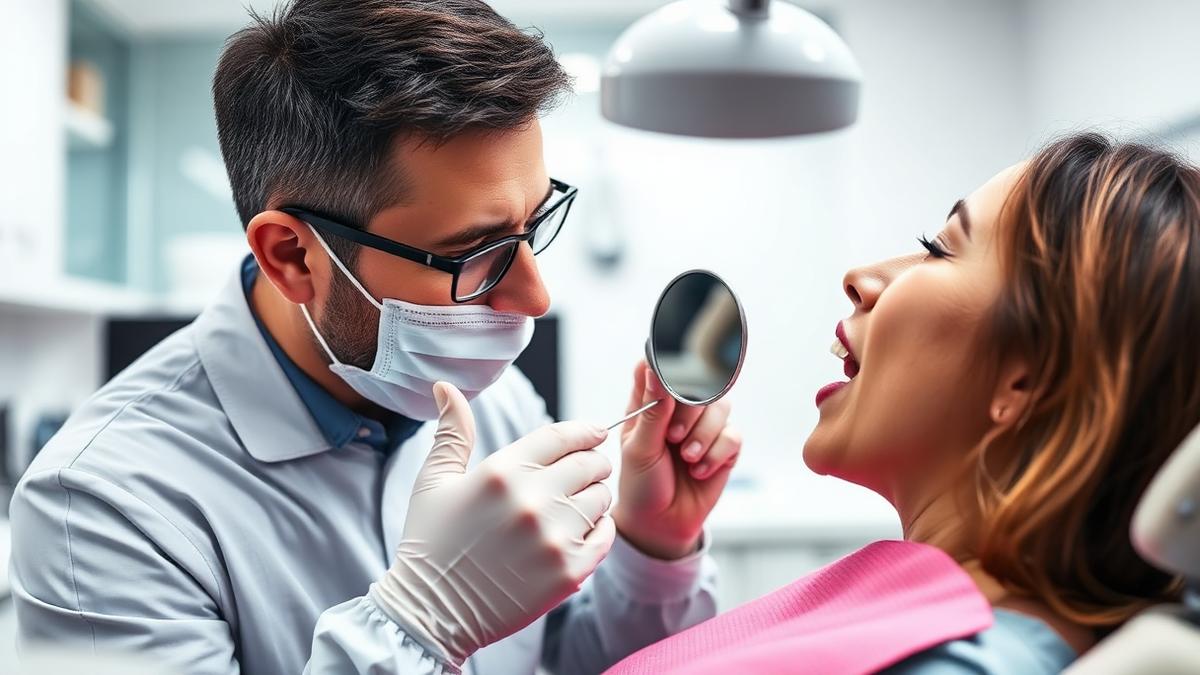
An oral cancer screening is quick and painless, and it's typically included as part of your regular dental exam rather than scheduled separately. Your dentist visually and manually examines the lips, cheeks, tongue, floor and roof of the mouth, throat, and neck for anything that looks or feels out of the ordinary.
If something warrants a closer look, the next step is usually a referral for further evaluation or a biopsy — the screening itself doesn't diagnose cancer, it identifies whether something needs to be investigated further. Most findings turn out to be harmless, but ruling that out with certainty is what protects your health.
Reducing Your Personal Risk
While not every risk factor is avoidable, several practical steps can meaningfully lower your personal risk over time.
How Your Dentist Fits Into the Picture
Regular dental exams check for more than cavities and gum disease — an oral cancer screening is part of nearly every routine visit, which means keeping up with your appointments is itself a form of prevention. If you're already on schedule for your cleanings, you're already benefiting from this extra layer of monitoring.
If it's been a while since your last exam, or if you've noticed a symptom that has lingered longer than it should, don't wait for your next scheduled visit to bring it up.
Schedule a Screening in Washington, DC
Awareness only helps if it leads to action. At DC Implant & Cosmetic Dentistry in Washington, DC, oral cancer screenings are part of every comprehensive exam, and we're always glad to take a closer look at anything you've noticed between visits.
Call (202) 363-2810 or request an appointment to schedule your exam and screening.
Questions
Frequently asked questions
Talk it through with our team
Have a question this article did not answer? Our Washington, DC team is happy to help — call (202) 363-2810 or book online.
4444 Connecticut Ave NW #106, Washington, DC 20008