
Preventive Care
Laser Dentistry in Washington, DC
Dental lasers treat gum tissue and decay with less bleeding and faster healing. Here is how laser dentistry is used at our DC practice.
If you're considering laser dentistry in Washington, DC, you're likely looking for a more comfortable, efficient way to care for your teeth and gums. Traditional dental methods often involve drills, scalpels, and numbing injections, while modern laser technology can accomplish many of the same treatments with less trauma to surrounding tissue.
At DC Implant & Cosmetic Dentistry, we use dental lasers for a range of procedures, from treating gum disease to preparing teeth for fillings. The technology doesn't replace good clinical judgment, but it often makes routine and surgical procedures faster to heal from and more comfortable to sit through.
Here's a closer look at how laser dentistry works, what it's used for, and what to expect if it's recommended as part of your care.
What Is Laser Dentistry?
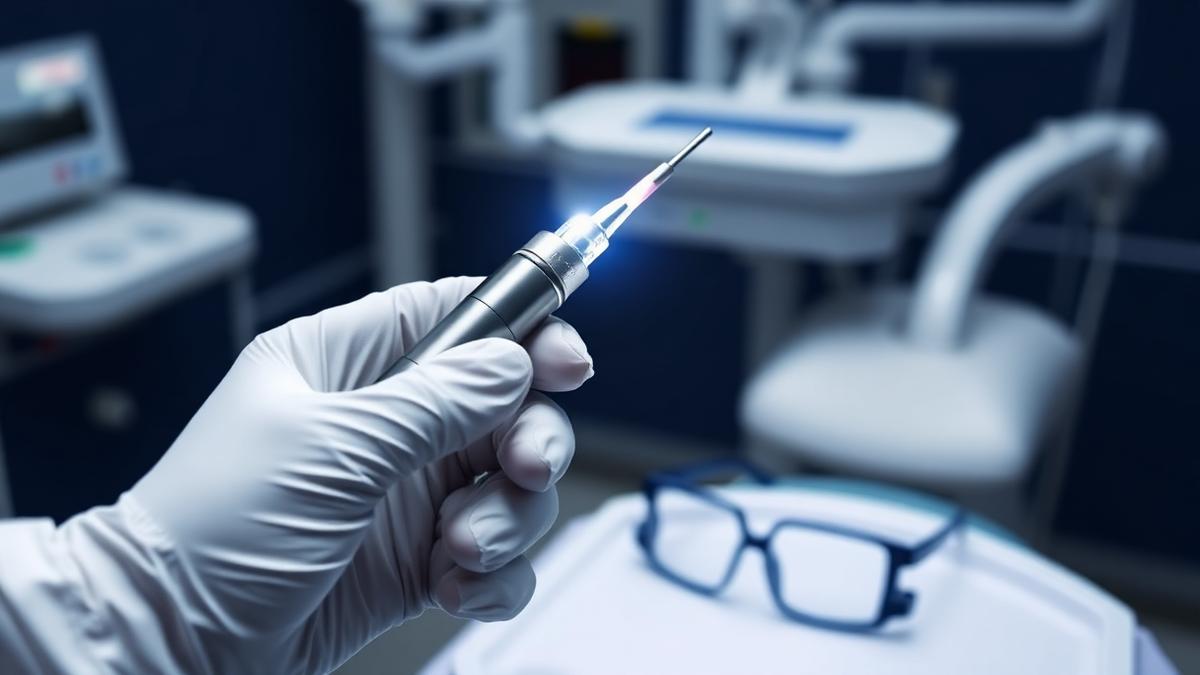
Laser dentistry uses a focused beam of light to perform procedures that would traditionally require a drill or scalpel. When the light hits the target tissue — whether that's decayed tooth structure or inflamed gum tissue — it creates a precise reaction that allows the dentist to remove or reshape that tissue with minimal effect on the surrounding healthy areas.
Hard Tissue vs. Soft Tissue Lasers
There are two broad categories of dental lasers. Hard tissue lasers are used on the teeth themselves — for example, preparing a tooth for a filling or removing old decay. Soft tissue lasers are used on gum and other oral tissue; because they're absorbed by water and blood, they tend to seal blood vessels and nerve endings as they cut, which is part of why soft tissue laser procedures often involve less bleeding.
Common Laser Dentistry Procedures
Gum Contouring and Reshaping
If your gum line looks uneven or your teeth appear shorter than you'd like, a soft tissue laser can reshape the gum tissue to create a more balanced smile line.
Laser Periodontal Therapy
For patients dealing with gingivitis or periodontitis, lasers can be used to remove diseased tissue from gum pockets as part of a broader periodontal treatment plan, helping reduce bacteria and support gum tissue reattachment.
Cavity Detection and Preparation
Lasers can help identify decay in its early stages and, once identified, can sometimes be used to prepare the tooth for a filling with less removal of healthy structure than a traditional drill.
Frenectomy (Tongue-Tie and Lip-Tie Release)
A frenectomy releases a restrictive fold of tissue under the tongue or lip. Performing this with a laser typically means less bleeding and a shorter recovery for both children and adults.
Benefits of Choosing Laser Over Traditional Methods
Patients often choose laser-based treatment because of the comfort it offers, but the benefits go beyond that.
- Minimally invasive — no drills or scalpels for many procedures, and often no stitches
- Faster recovery — less trauma to tissue generally means less swelling and a quicker return to normal activities
- Reduced need for anesthesia — because lasers are gentler and seal nerve endings as they work, some procedures require little or no numbing
- Lower infection risk — the laser's energy helps reduce bacteria in the treated area during the procedure
Laser Dentistry vs. Traditional Dentistry
Traditional tools like high-speed drills and scalpels rely on friction and cutting to remove tissue, which can cause more discomfort, more bleeding, and a louder, more anxiety-inducing experience. Lasers use focused light instead, generally resulting in less bleeding, a quieter appointment, and often a faster return to your normal routine — though the right choice always depends on the specific procedure and your dentist's clinical judgment.
Cost and Insurance Considerations
The cost of laser dentistry depends on the specific procedure being performed rather than a flat rate for using a laser. Most dental insurance plans reimburse based on the procedure itself — such as a filling or gum treatment — rather than the tool used to perform it, so your existing coverage typically applies the same way it would to a traditional version of that procedure. Our team can help you understand your specific benefits before treatment. If cost is a concern, ask our office about available financing options.
What to Ask When Choosing a Laser Dentist
Not every dental office has the same laser equipment or training. When evaluating a provider, it's reasonable to ask what type of laser they use for your specific procedure, how often they perform it, and whether you'll still need to be numbed for the treatment. A dentist who is comfortable answering these questions in detail is generally a good sign of experience with the technology.
What to Expect at Your First Laser Visit
If you've never had a laser treatment, the process is straightforward. Protective eyewear is worn by both you and the dental team to shield your eyes from the light, and beyond that, preparation is similar to a standard dental visit. Afterward, because the laser often seals tissue as it works, you may notice less of the raw, tender feeling associated with a scalpel. We typically recommend avoiding very hot or spicy foods for 24 hours, and most patients need nothing more than an over-the-counter pain reliever if any discomfort occurs.
Schedule Your Consultation
If dental anxiety, needle aversion, or concern about a long recovery has kept you from getting treatment you need, laser dentistry may be worth discussing. Dr. Shukoor and the team at DC Implant & Cosmetic Dentistry can walk you through whether a laser-based approach is appropriate for your situation. Contact us to schedule a consultation at our Washington, DC office.
Questions
Frequently asked questions
Talk it through with our team
Have a question this article did not answer? Our Washington, DC team is happy to help — call (202) 363-2810 or book online.
4444 Connecticut Ave NW #106, Washington, DC 20008